Sting operation Sting operation Sting operation
UW alumna Annie Reading approached an unlikely collaborator for her honeybee apiary.
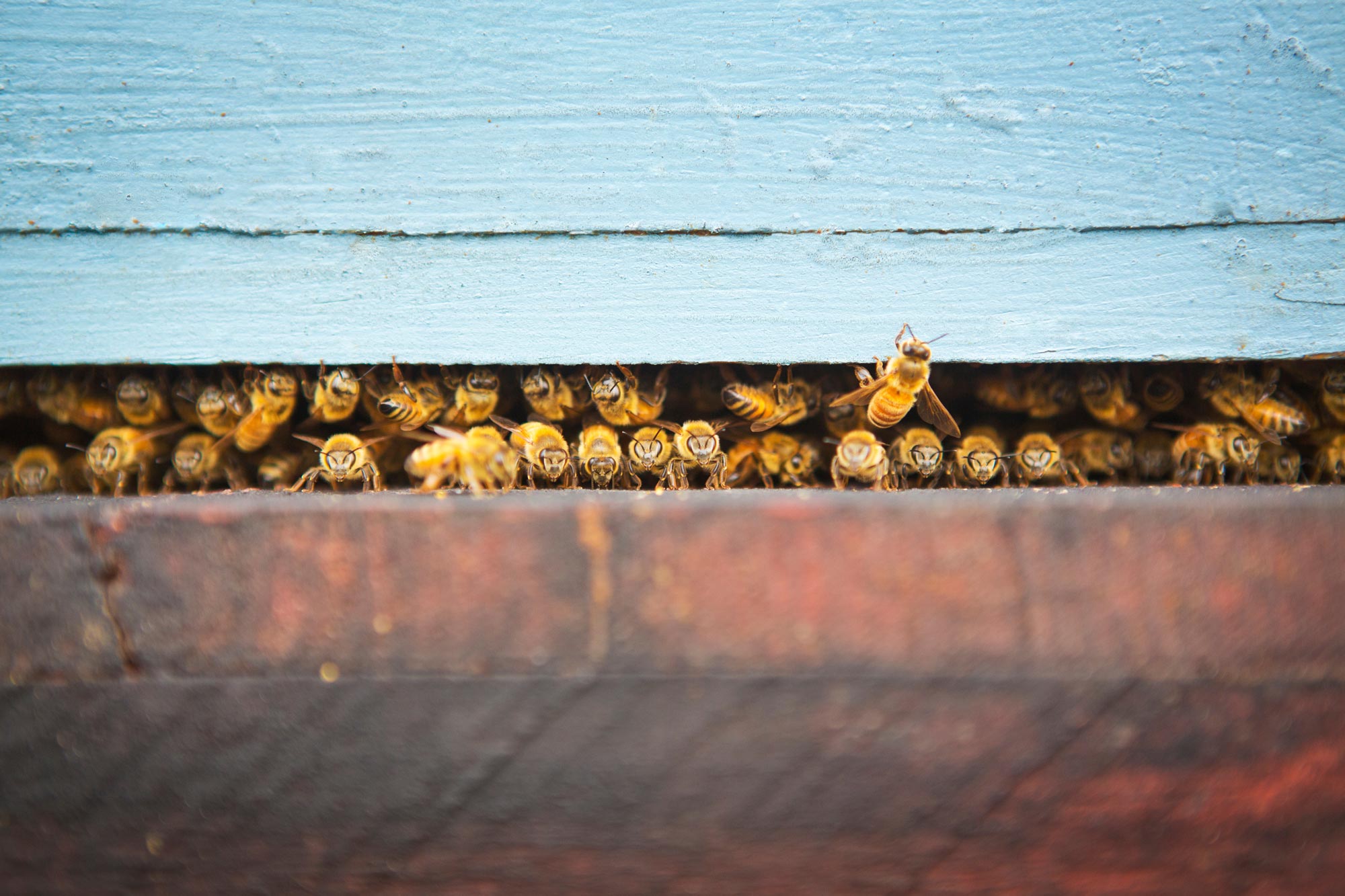
UW alumna Annie Reading approached an unlikely collaborator for her honeybee apiary.
In the lobby of Evergreen Washelli Funeral Home and Cemetery, there's a box hanging from a wall that encourages mourners to "tell the bees." Visitors will also spot honeycomb art, jars of honey and—just outside the window—a hexagonal observation beehive.
Clearly, something is abuzz at the 140-year-old cemetery, a sprawling property of some 140 acres which straddles a notorious stretch of Aurora Avenue North.
In Evergreen Washelli’s southeast corner, accessible from an auxiliary gate off Ashworth Avenue North, there’s a 7.5-acre wetland area. Unsuitable for hosting buried bodies, it has instead been used as a place where displaced dirt from graves is relocated. For decades, it was covered in trees, bushes, and debris—but then came the bees.
A Maryland native, Annie Reading, ’18, moved to Seattle to get her master’s at the University of Washington. Her focus was on outdoor education and urban agriculture, and her fieldwork found her putting in extended hours at IslandWood, an environmental education nonprofit on Bainbridge Island. It was there that she fell in with a group of honey heads and “fell in love with beekeeping,” she said.
Reading’s first job in beekeeping was with a multinational firm. When it began concentrating on commercial work, Reading and a few colleagues—Colin Johnson, and Niya Weedon and fellow UW grad Madison Opp, ’16—felt the need to splinter off, so as to maintain their focus on pollinator education.
To get her venture off the ground, Reading needed to find a place to put some hives. Scanning Google Earth for large swaths of green space, she said she started “cold-calling and popping into places”—places like Evergreen Washelli, where she encountered the cemetery’s longtime superintendent, Aaron Sholes.
“She approached me about the possibility of placing a beehive somewhere in the cemetery,” recalled Sholes. “I immediately thought of an undeveloped part of our cemetery that’s very wooded and off to the side. I said, ‘I’ve got this 7.5-acre piece of land and how would you like to have more than one hive?’ She was ecstatic.”
Catacomb Bee Collective was born.
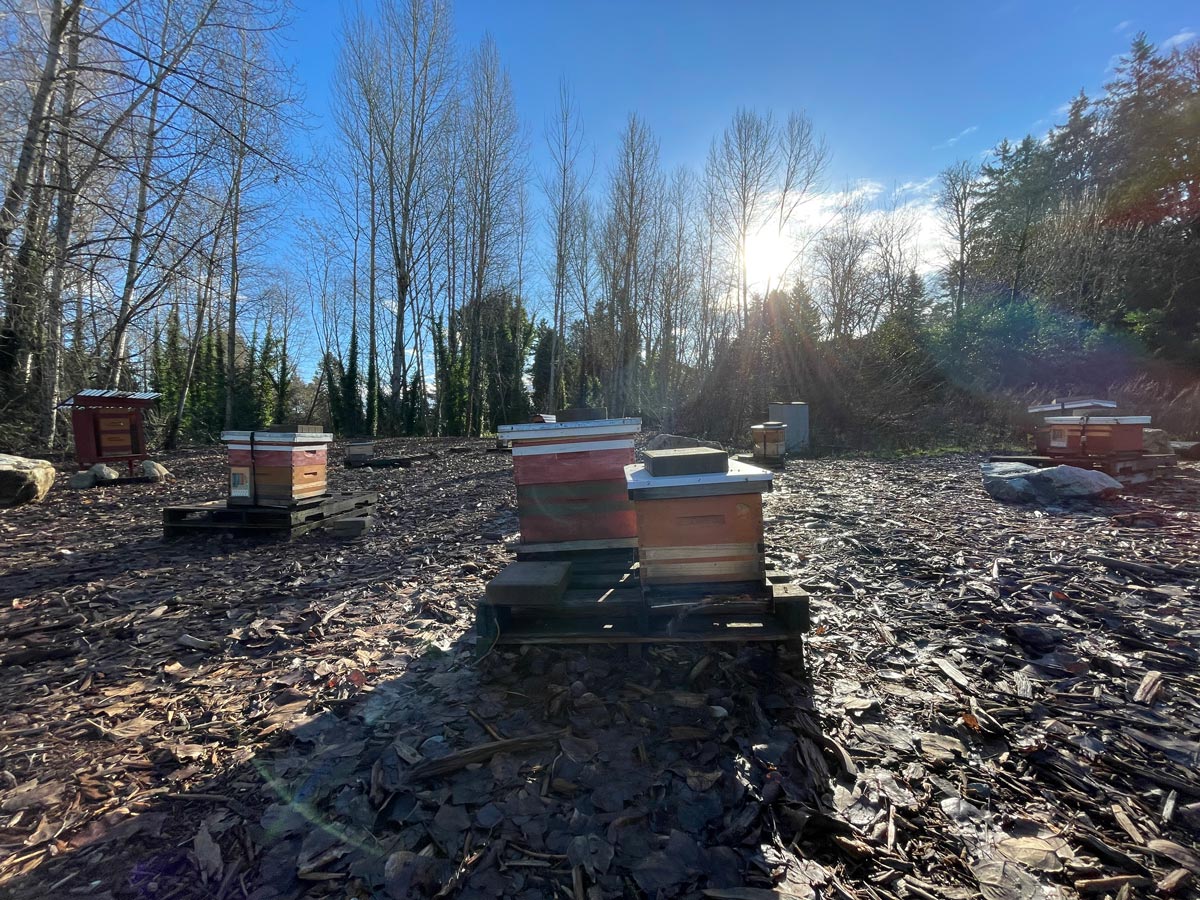
A green space at the southeast end of Evergreen Washelli hosts cabinets full of bee hives. Photo by Caitlin Klask.
“He’s just a total kindred spirit,” Reading said of Sholes. “He said he had a section of land he couldn’t develop because it was a wetland and would love to let someone steward that space for a useful purpose. That was three years ago. Evergreen Washelli now gives honey from our bees to each of the families they work with. They’ve also revamped their herbicide and environmental practices to be more pollinator-friendly.
“It’s grown into such an incredible partnership, but there was comically little intention at the beginning. It’s turned into something that’s, like, I think beekeeping in cemeteries is the best idea ever.”
The practice of telling the bees dates back to the 18th century. In some cultures, bees were akin to family members, so when a relative died, it was a simple matter of respect to inform the bees of their passing.
Reading and her colleagues dutifully share the messages from Evergreen Washelli’s lobby with their honeybees – all 300,000 of them, housed in handmade hives of various shapes and sizes, some salvaged from old cabinets, desks, and dressers.
Just as Evergreen Washelli has embraced Catacomb’s beekeeping as part of its identity, so too has Catacomb let death darken its door. There’s the obvious nod in the name, for one, as well as the skulls that adorn Catacomb’s jars of honey.
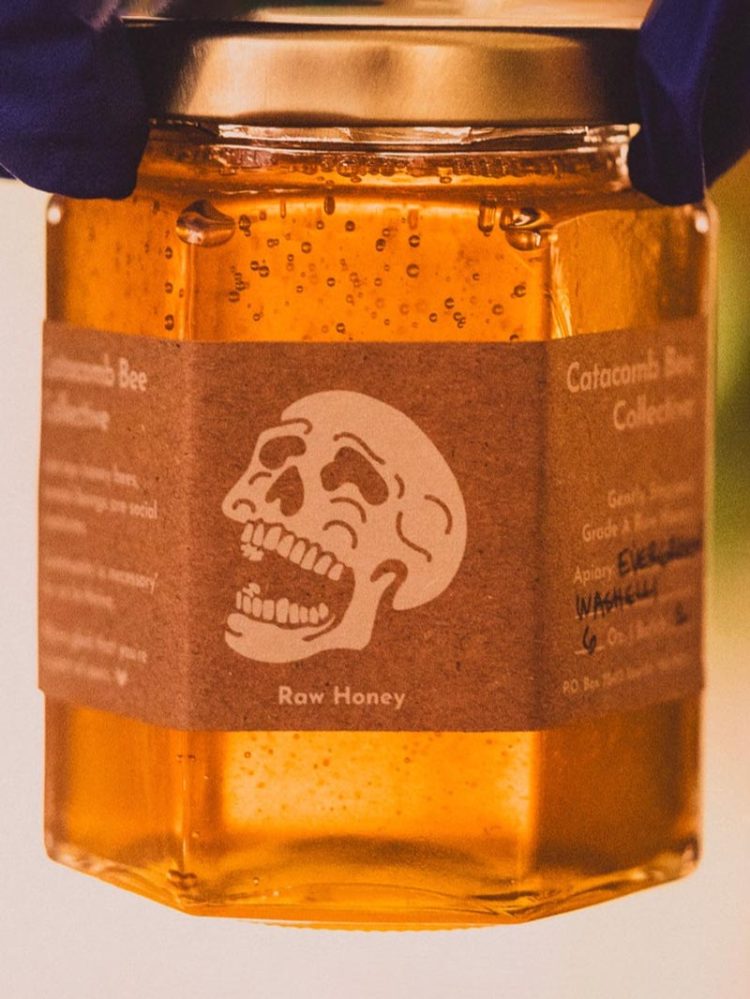
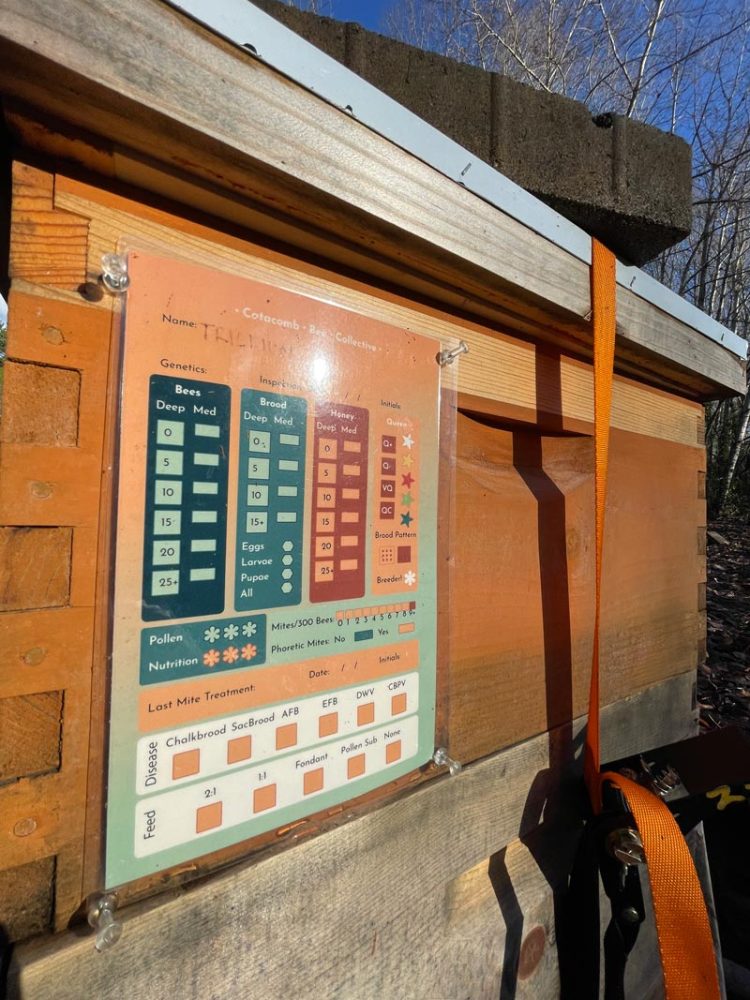
Catacomb hosts schoolchildren as well as community and corporate groups at its apiary, all the while dispelling traditional notions of what a cemetery can be used for. This is especially profound in the particular neighborhood in which it rests, known as a hotbed for sex work.
Sholes is well aware of this burden. In its large reception room, Evergreen Washelli regularly hosts community festivals and meetings of the Aurora Reimagined Coalition, which is working to improve conditions along the Highway 99 corridor. (The group’s logo reads “99 Problems.”) The cemetery grounds are open to the public, and it’s not uncommon to spot staff from nearby UW Medical Center Northwest taking walks amidst the tombstones. There’s also been talk of putting bike paths in the cemetery.
“We want to be a little respite for people,” said Sholes. “The more the community is out and about, the more we can get past the reputation.”