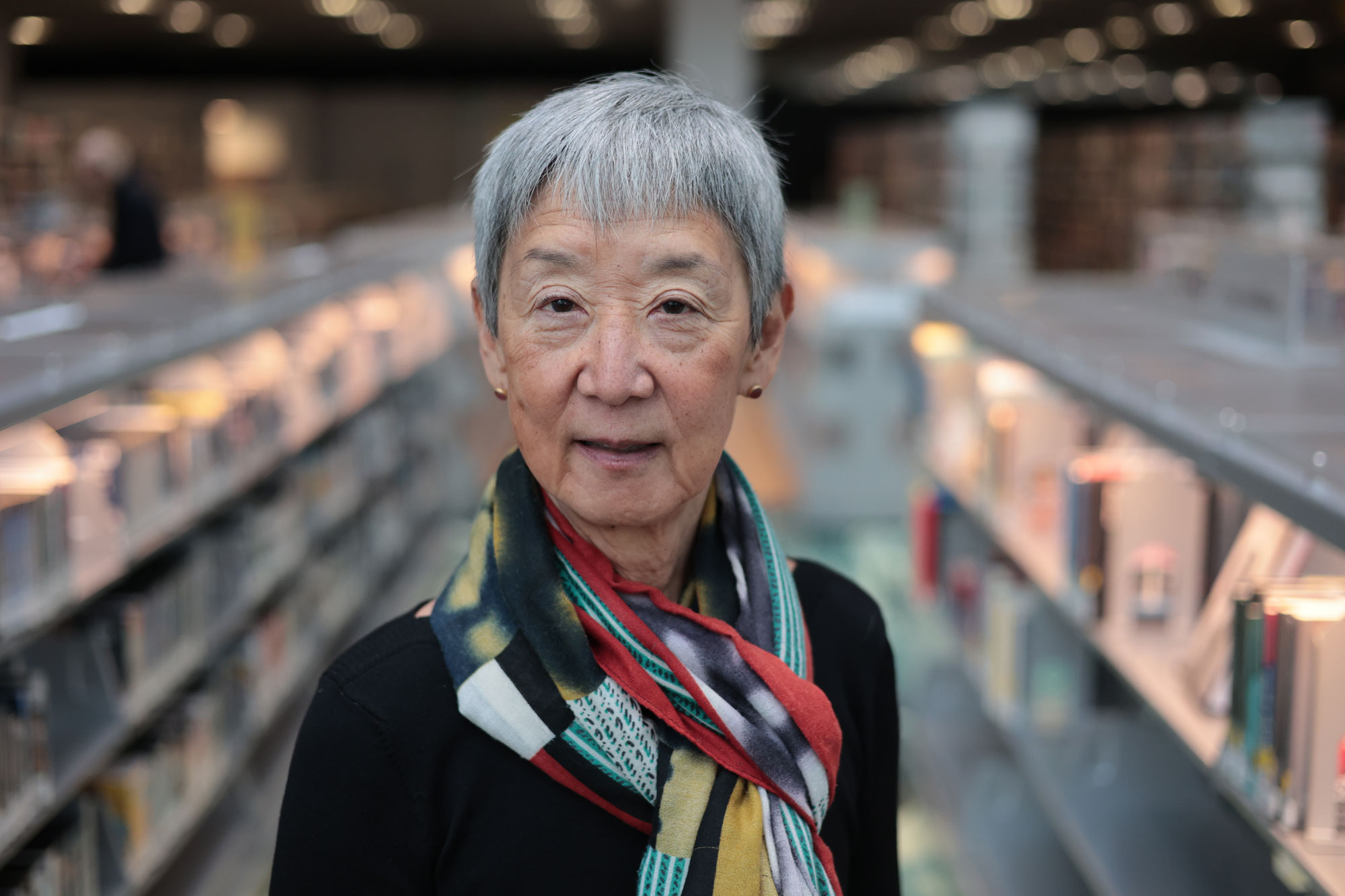
Telling an untold story Telling an untold story Telling an untold story
Pulitzer-winning reporter Evelyn Iritani uncovers the diplomatic exchange of American and Japanese civilians while the two countries were at war.
By Jon Marmor | Photos by Anil Kapahi | March 3, 2026
One of the most important stories from World War II was lost to history—until today, that is, thanks to former The Daily reporter-turned-Pulitzer-Prize-winner Evelyn Iritani, ’78.
A former Seattle Post-Intelligencer and Los Angeles Times reporter, Iritani grew up in Pullman and wanted to escape to the big city. So she came to the UW, where she was pleased to discover a feisty university newspaper and a large Asian American community.
Iritani spent a dozen years at the Los Angeles Times and was part of the team that won the 2004 Pulitzer Prize in National Reporting for a series called “The Walmart Effect.” She started working on her new book, “Safe Passage: The Untold Story of Diplomatic Intrigue, Betrayal, and the Exchange of American and Japanese Civilians by Sea During World War II” in L.A. and completed the writing after she moved back to Seattle. In exquisite detail, she chronicles how the United States and Japan engaged in an unheard-of diplomatic effort to trade American civilians in Japan for Japanese civilians in America, all while both nations were engaged in a bloody war in the Pacific Theater in the early 1940s.
During a recent visit to a Maple Leaf coffee shop, Iritani was quick to credit the UW for this hard-to-believe story. In the first place, it would never have come to light if it weren’t for history professor Richard McKinnon, who told her about the exchange during an interview for the Seattle P-I. “After Professor McKinnon told me this story, I had to look into it,” she says. “I wondered, why would Americans be in Japan during World War II?” She also turned to her alma mater for her research, and found UW Libraries and its Tateuchi East Asia Library, especially helpful.
“As I dug deeper, I discovered a long relationship between Japan and the Pacific Northwest. ...It was a far more complicated and tragic story.”
Evelyn Iritani, '78
“Safe Passage,” which will be released by Farrar, Straus and Giroux on March 10, chronicles how the “herculean efforts” of American diplomat James Hugh Keeley made this unlikely exchange possible despite obstacles ranging from “resistance from within and outside the government, shipboard conflicts among passengers and the moral compromises involved in securing their safe passage.”
The roots of this story date to the 1990s when Iritani was assigned a P-I story about the purchase of a Port Angeles paper mill by a Japanese company. “As I dug deeper, I discovered a long relationship between Japan and the Pacific Northwest,” she says. She interviewed McKinnon, a Japan expert, who provided a window into Japanese history and culture that would be grist for her first book, “An Ocean Between Us: The Changing Relationship of Japan and the United States, Told in Four Stories From the Life of an American Town.” McKinnon told her that he was born in Hokkaido, Japan, and that he and his American father were caught there during the war and traded to America. Unfortunately, they had to leave Richard’s Japanese mother behind. “I never heard of the exchanges,” she says. However, it would be decades before she was able to return to the story.
-
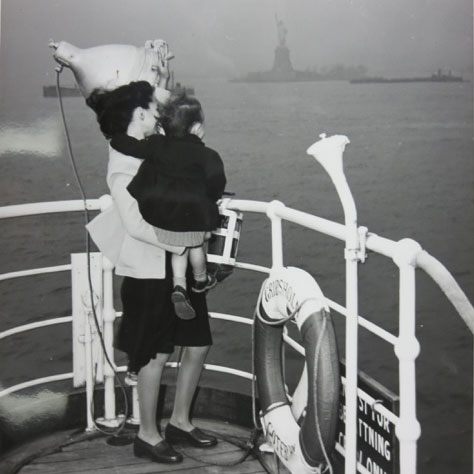
- Iritani credits the UW for inspiring her to pursue this remarkable World War II story and conducted much of her research at UW Libraries, particularly the Tateuchi East Asia Library.
-
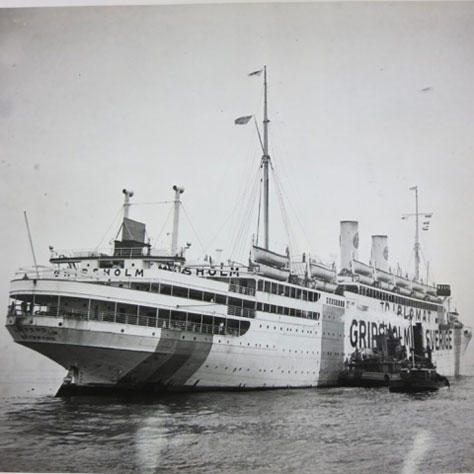
- Iritani credits the UW for inspiring her to pursue this remarkable World War II story and conducted much of her research at UW Libraries, particularly the Tateuchi East Asia Library.
-
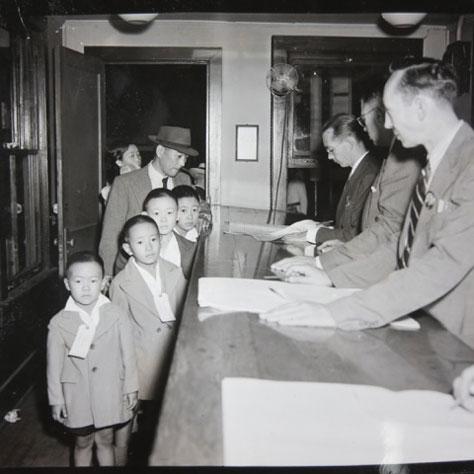
- Iritani credits the UW for inspiring her to pursue this remarkable World War II story and conducted much of her research at UW Libraries, particularly the Tateuchi East Asia Library.
Iritani discovered nearly 6,000 people were traded in two exchanges in 1942 and 1943, but her assumption of happy endings turned out to be a fantasy. “It was a far more complicated and tragic story,” she says.
Her research took her to National Archives, presidential and university libraries all over the U.S., as well as to Asia, Europe and Latin America. Many U.S. documents were newly classified, but vital maritime records could not be located. In Japan, many government files were destroyed during the war.
A Swedish luxury liner, the MS Gripsholm, was chartered by the U.S. government to ferry the civilians to safety. Iritani found that most of the Americans in Japanese-occupied Asia—which included many missionaries—had suffered greatly and were thrilled to be rescued. But nearly all of the Japanese on the U.S. mainland had been falsely labeled security threats and imprisoned, and two-thirds of them were U.S. citizens. Most of them had deep roots in America and did not want to be sent to Japan, where they would be viewed as enemies. But having lost everything, some agreed to be traded. Desperate to find people to exchange for Americans, the U.S. government struck deals with Latin American governments to round up Japanese residents and ship them to the U.S. where they were added to the exchange pool.
“I credit the UW for inspiring this book,” Iritani says.