Research briefs from this spring at the University of Washington
We've compiled a few updates from the UW's world-class researchers.
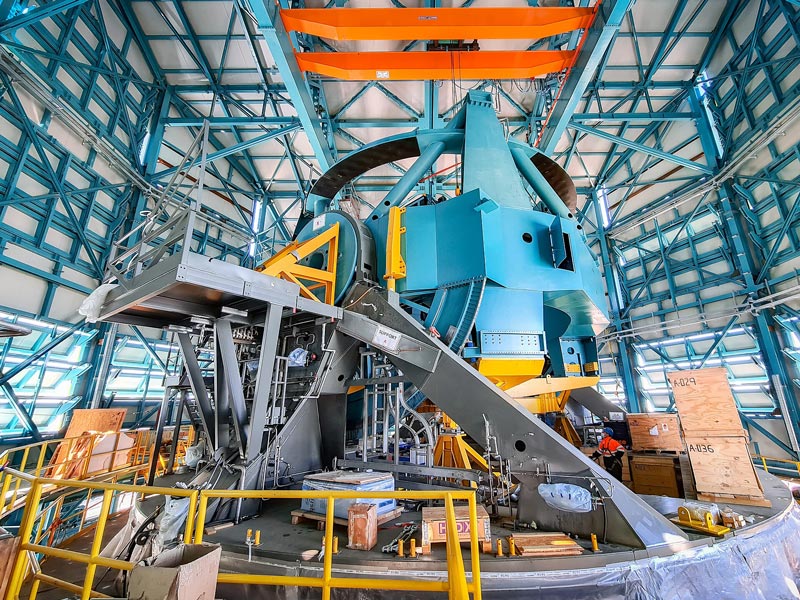
The Simonyi Telescope while under construction construction atop Cerro Pachón in Chile. Courtesy Rubin Observatory/NSF/AURA.
Across disciplines, from Chile to Montlake, the UW is the home of researchers who make the world a better place. Catch up on research news from one of the top public universities in the world.

An artist’s rendering of 2025 MN45 — the fastest-rotating asteroid with a diameter over 500 meters that scientists have ever found. Photo: NSF–DOE Vera C. Rubin Observatory/NOIRLab/SLAC/AURA/P. Marenfeld
Asteroid on steroids
A team led by UW astronomers has discovered the fastest-ever spinning asteroid with a diameter over half a kilometer. The asteroid, which was found by analyzing data from the Simonyi Survey Telescope at the Vera C. Rubin Observatory in Chile, is 0.4 miles in diameter and completes a full rotation every 1.88 minutes. “In some of the very first test images taken with the Vera C. Rubin Observatory, we’re already breaking records with the discovery of the fastest-spinning large asteroid found to date,” says Sara Greenstreet, UW affiliate assistant professor of astronomy.
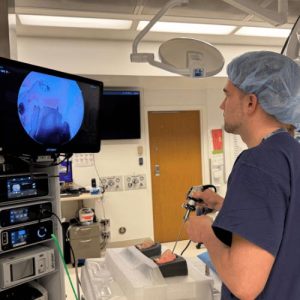
Graham Harris, a UW medical student assisting with the VISTA project, captured an endoscopic video of the 3D-printed model the team will use to create 3D reconstructions of the scene. Photo provided by Nicole Gunderson.
Safer surgery
Researchers from the UW mechanical engineering department and UW Medicine have developed a solution to help surgeons perform safer, more complete and more precise endoscopic procedures in the sinus and skull.
The UW-developed VISTA (vision-integrated surgical tracking assistance) system can provide much-needed guidance by creating 3D models of the surgical field of tissue that is being taken out. The models are then used to update medical imaging taken before surgeries to show surgeons how much tissue has been removed and to quantify how close their medical tools are to critical structures such as the eye and brain.
The shape of things to come
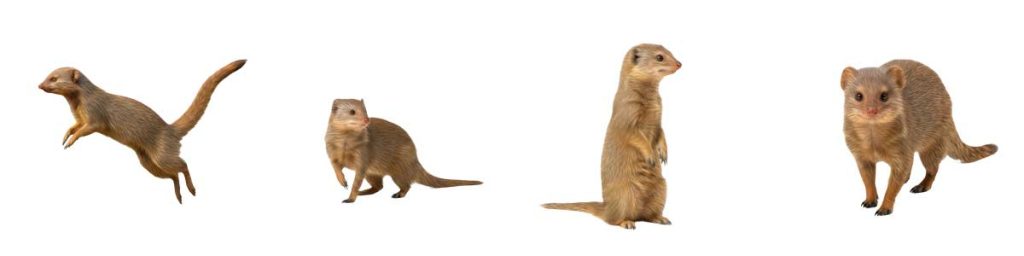
The ancestors of today’s furry cats and dogs once looked similar to the modern mongoose, a mammal with a long body and small, round ears. In fact, all members of the order Carnivora, which includes a variety of species such as bears, wolves and even seals, evolved from these mongoose-like creatures. UW researchers found that the Eocene-Oligocene Transition, which took place around 34 million years ago, led to changes in body shape between different carnivore families.
Robust recognition
The UW has again earned prestigious recognition for the impact and importance of the connections that faculty, students and staff have with local, regional and global communities. All three UW campuses were honored with the Carnegie Foundation Community Engagement reclassification, placing the UW among 277 peer institutions nationwide. “Community engagement isn’t peripheral to our mission—it’s central that we move the UW forward in service of the greater good,” says UW President Robert Jones.