A beautiful group of letters
Karen Cheng, who authored one of the most important typography books of the last 50 years, teaches her students about the beauty of designing typefaces.
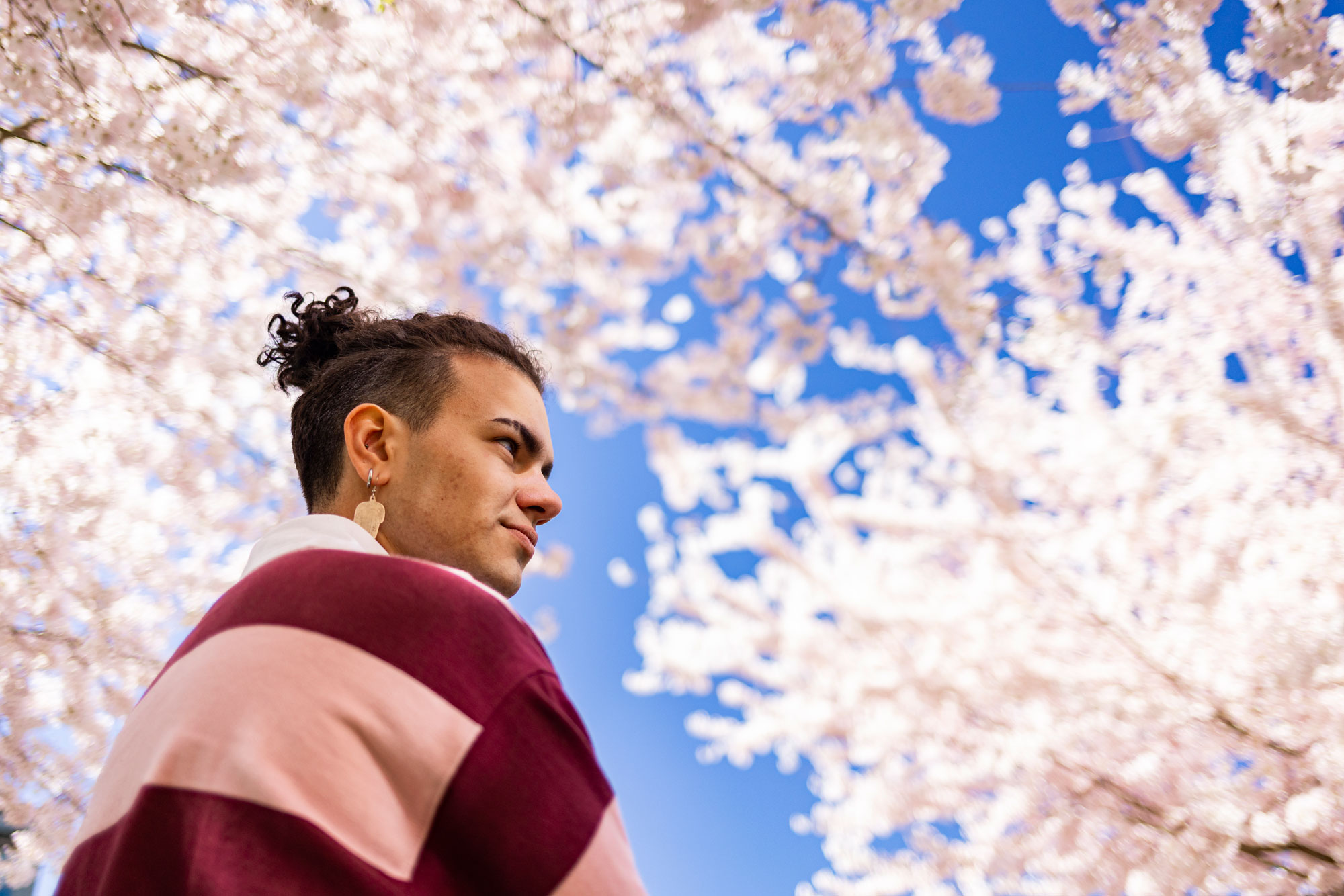
As Auburn’s poet laureate, Mateo Quispe is reimagining poetry in public spaces.
The University of Washington has produced its share of poet laureates, from current Washington State Poet Laureate Derek Sheffield, ’90, ’99, to Redmond Poet Laureates Laura Da’, ’01, and Nancy Mburu, ’19. But Mateo Quispe, a queer and trans Peruvian American poet and senior in the Comparative History of Ideas program, may be the only student ever to hold a laureateship while at the UW.
Quispe arrived on campus in 2024, the same year that he was appointed fifth Poet Laureate of the City of Auburn, where he grew up. He first attended Pacific Lutheran University, where he studied music composition and played the French horn. A creative writing class with poet Rick Barot turned him more deeply toward poetry. “It says so much with so little,” Quispe says. “It’s condensed, like a seed. It has worlds in it.” He transferred to the UW to take advantage of more English classes in a larger academic department.
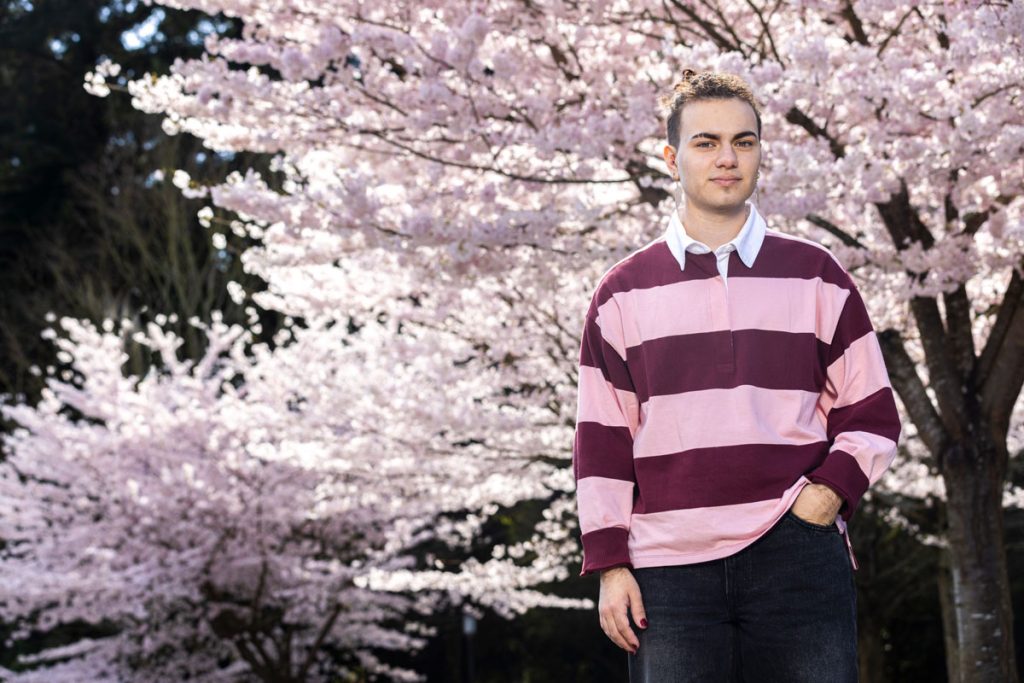
For his graduating thesis, Mateo Quispe, ’26, is working with Muckleshoot Tribe carvers to create poetry-themed book nooks in the shape of canoes.
Even before studying with Barot, Quispe had been drawn to poetry. At 19, he was selected as the 2023-2024 Seattle Youth Poet Laureate, a role that came with a book deal and placed him in a cohort with 10 other young poets. He was mentored by former Seattle Civic Poet Jourdan Imani Keith and poet Nanya Jhingran, ’19, ’20, ’23, and read his work at Town Hall Seattle as the opening reader for former U.S. Poet Laureate Joy Harjo. He also shared his work at the White House Youth Policy Summit.
These experiences helped Quispe grow beyond the page, expanding and reimagining his practice. As a student in CHID, he has enjoyed the freedom to explore across disciplines.
“It’s the closest thing to an Indigenous epistemology—math is not separate from art and science,” Quispe says. “Being an interdisciplinary student looking at two separate subjects together—that’s just how I think.”
For his final thesis, Quispe brought together his public service work as a poet laureate with his academic studies through the Canoe Poetry Nook Project. Working with Indigenous carvers from the Muckleshoot Tribe, he has commissioned a series of poetry book nooks in the shape of life-sized canoes. Inspired by both public art and Little Free Libraries, the nooks will house a curated non-circulating selection of poetry, with an emphasis on Indigenous works, alongside books related to Coast Salish art and literature. Later this year, the structures will be placed in public spaces, including the Auburn Senior Center, Postmark Center for the Arts, the Holman Library at Green River College and several Muckleshoot community sites.