Community builders
Three Seattle institutions—Common Area Maintenance, Northwest Folklife and The Royal Room—are centering community in their programming.
Take a look inside the Washington State History Museum’s groundbreaking exhibition centering Indigenous histories and futures.
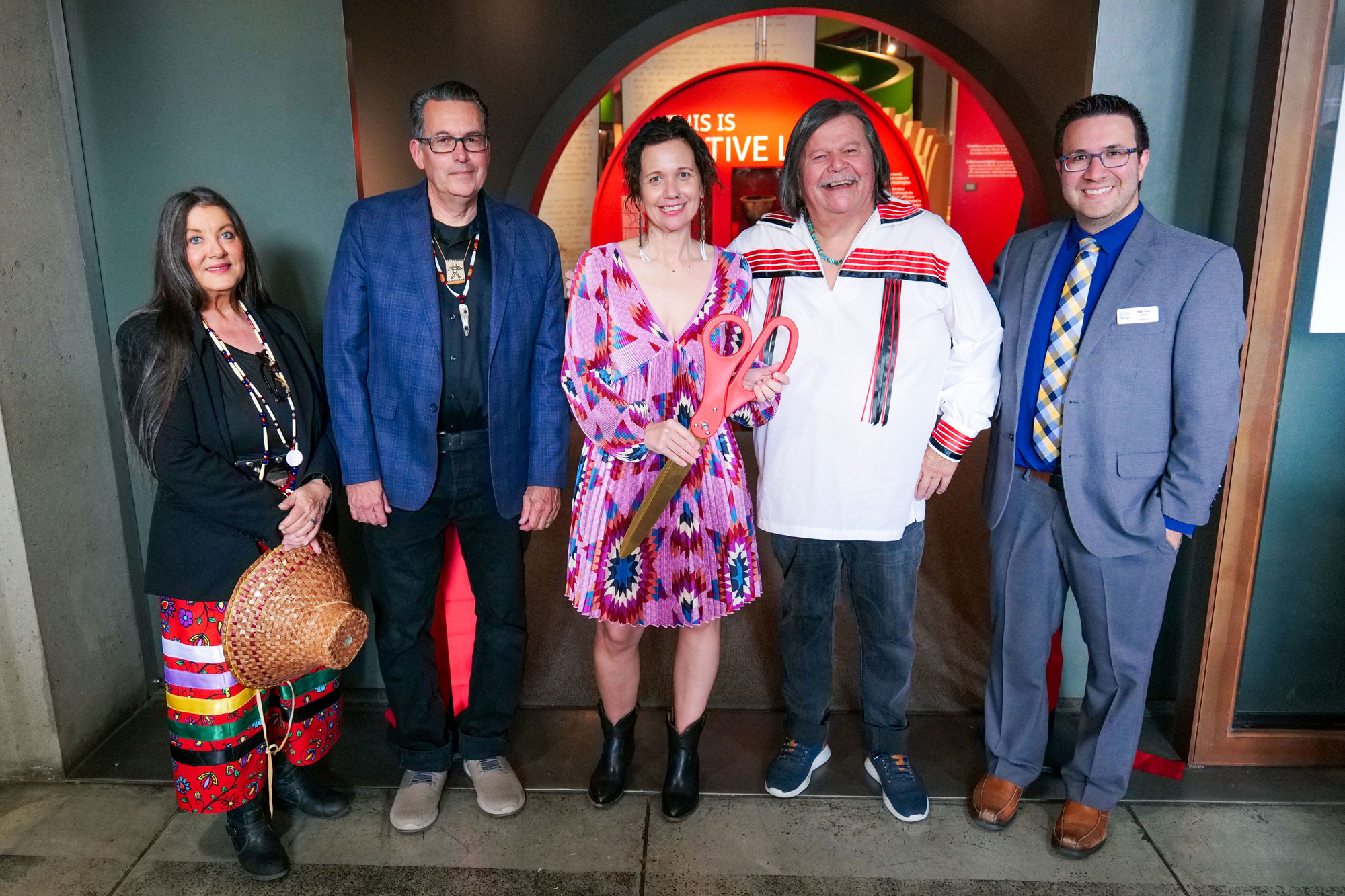
Last fall, the Washington State History Museum opened “This Is Native Land,” a permanent 3,000-square-foot exhibition that weaves the stories of Indigenous peoples into the fabric of the 30-year-old institution. Co-curated by Associate Professor Danica Sterud Miller (Puyallup) and Todd Clark (Wailaki), tribal liaison for the Washington State Historical Society, the project engaged more than 100 Native contributors from more than 60 tribes.
Key collaborators include elder Philip H. Red Eagle, ’83, ’87 (Dakota and Puget Sound Salish); artist Joe Feddersen, ’83, (Colville); Owen Oliver, ’21 (Quinault); current UW museology student Markus Teuton, ’24 (Cherokee); and museum staff, including head of collections Maggie Wetherbee, ’00, and director of audience engagement Mary Mikel Stump, a former UW student. Viewpoint spoke with Miller, who is on faculty at UW Tacoma, for a look at the making of “This Is Native Land.”
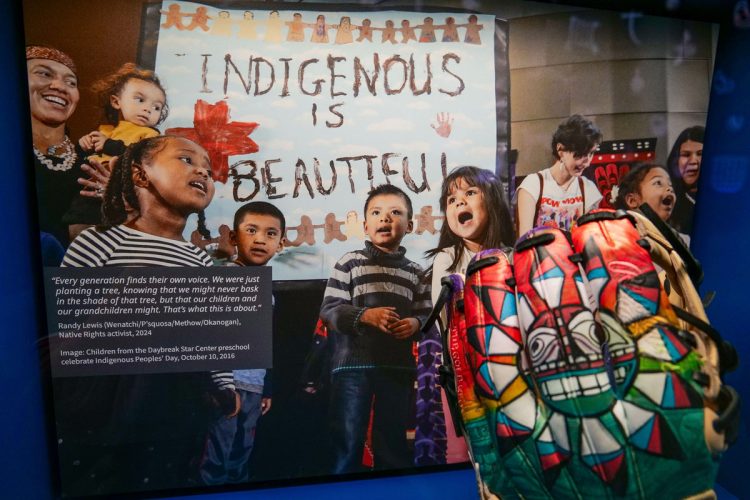
The museum wanted to completely reimagine its Great Hall of Washington History with a focus on Indigenous peoples of Washington state. Most of my academic work is on Indigenous sovereignty, and the museum leadership thought that this was an important perspective I could bring. From the outset, Todd Clark and I knew that we didn’t want to create an exhibition that presents Native people as belonging only to the past.
Historically, museums have often framed Native peoples as figures of the past—a narrative that helps justify land theft and genocide. If we aren’t of today and the future, then you don’t have to honor the treaties. Museums have historically supported and reinforced that rhetoric.
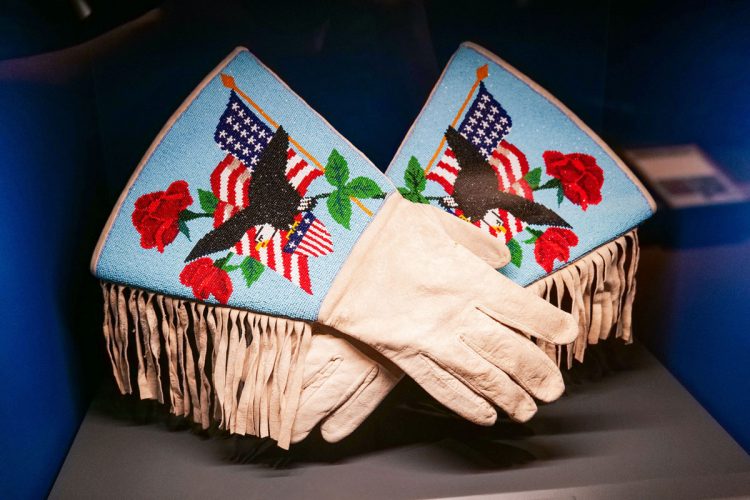
For this exhibition, we worked with more than 100 Native contributors from more than 60 tribes. We convened a board of elders and tribal representatives from across the state and listened closely to their guidance. They wanted the truth told—not just the painful parts of our histories, but also our joy and resistance. They were also clear that they didn’t want our peoples represented as artifacts behind glass. The objects reflect living cultures and are things that we use and take pride in every day. We hired weavers to create baskets that would be touched. While some things are protected behind glass, we made an effort to create tactile, interactive elements. We wanted to be part of today.
We began in 2021 and had nearly four years to complete the project, which is unusual in terms of grant cycles. [The project was funded, in part, with a $250,000 federal grant]. The timeline gave us a real gift, providing us the opportunity to do things in a slow way and to work with all the different community members who are often asked to contribute their time and knowledge.
As an academic, I’m used to working independently. But here, we worked in full partnership with curators, staff and a design team at the museum.
We quickly realized that we couldn’t tell just one story—we needed to tell many stories. When you walk through the show, there are listening stations and places where you can sit down and experience multimedia storytelling that reflects how Native peoples share knowledge and culture. The design team and filmmakers centered Native voices in these approaches.
We also included contemporary art, which is unusual in a history museum. These works capture the Indigenous contemporary experience through Native art that brings in joy and humor. When you enter, you’re met with a neon piece by RYAN! Feddersen (Coeur d’Alene). You get to choose between two different directions: the past or the future. You’re going in both directions, of course. The work brings in a thoughtful and critical understanding of what’s past and future, and that situates you in the space.
My work is focused on community-based scholarship at the local Puyallup and Tacoma levels. I am not a curator. The slow, deliberate work of this exhibition resulted in real community engagement. It’s not just about creating relationships but maintaining them.
The opening celebration reflected that commitment. It was an Indigenous-led event, and all of our contributors were invited. About 90% of the people in the museum that day were Native.
As a permanent exhibition, “This Is Native Land” will be on view for at least 20 to 25 years. It’s the foundational narrative for the institution. This was challenging work from the very beginning, but Todd and I were always clear about what we didn’t want to create, and the museum leadership gave us the time and trust to do it right. I’m honored to have been a part of it, and I’m very grateful for whatever impact it might have on our community.
“This Is Native Land” is on permanent view at the Washington State History Museum, 1911 Pacific Ave., Tacoma.