Stitched in community Stitched in community Stitched in community
Five years ago, Nikki Lorenzo bought a small embroidery machine. Now, she runs an embroidery studio where joy and community are stitched into every piece.
By Aleenah Ansari | Photos courtesy of Nikki Lorenzo | June 4, 2026
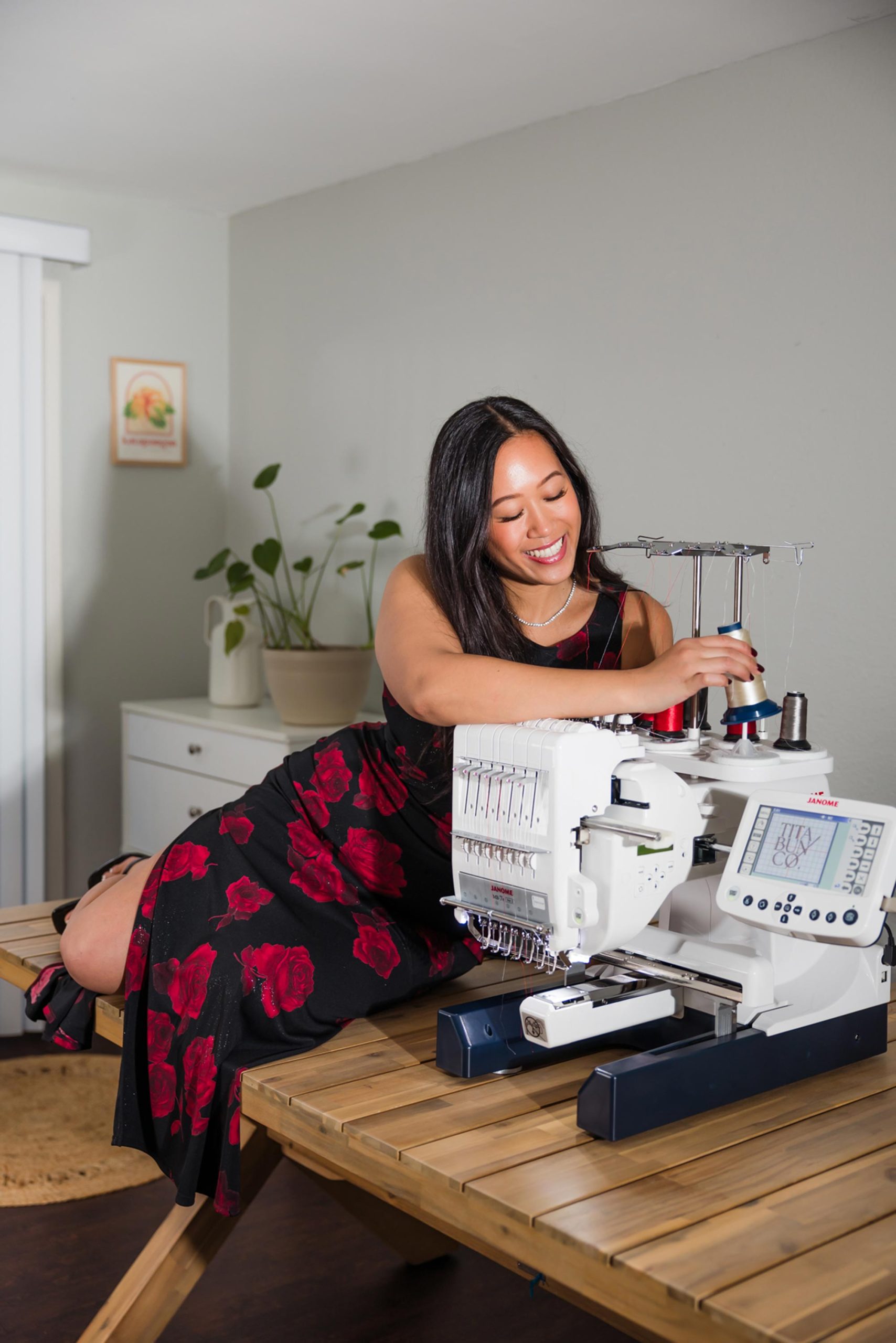
In 2021, Nikki Lorenzo, '21, decided to buy a small embroidery machine on Facebook Marketplace, a decision that changed her life forever. Now, Lorenzo runs Tita Bun Collective, a Seattle-based embroidery studio where everyday pieces become something personal. She offers live custom stitching and engraving for community pop-ups and gatherings and is gearing up to open her own storefront through Seattle Restored.
I sat down with Lorenzo to talk about how her business has evolved since she first got an embroidery machine, how her work is rooted in community and what it really takes to advocate for yourself.
This conversation has been edited for clarity and length.
The name Tita Bun carries a lot. Can you tell me about the meaning behind it?
The name holds two meanings that feel true to who I am. In Tagalog, tita means auntie, someone who brings warmth and gathers people together. But in Hawaiʻi, where I grew up, tita can also describe a confident woman, someone who knows herself. I wanted both of those words to live in the name because they’re part of me.
A huge part of my perspective on business comes from watching my mom run her daycare from our home in Hawaiʻi. She built an established business through consistency, relationships and hard work long before social media or branding were major parts of small businesses. Watching her build something so trusted and community-centered showed me that people connect most deeply with businesses that feel personal, genuine and rooted in care. I think that mindset naturally carried into how I run Tita Bun Collective.
When did you decide to go all-in on running your business?
I got my first embroidery machine off of Facebook Marketplace in 2021, during the pandemic, and started designing and taking my art to markets and pop-ups. Early on, I debated buying my website domain because I was afraid it wouldn’t succeed. After four years, I quit my corporate job, went all-in and bought a second embroidery machine. Once I did, I had to figure out how to keep growing my business. Now, I’m getting ready to open a storefront and imagining the vision for the business. It all feels like divine timing.
How did your time at UW factor into where you are now?
I majored in Geography with the newly-launched Data Science option. The program taught me how to think analytically about people and spaces—who they are, where they are and how communities function. As a business owner, I look at all of that and think about who I’m serving, where I come from and how to showcase the stories of my community through art. This was also a reminder that no matter what you study, the skills you learn are transferable.
Beyond academics, I also found community in Pi Nu Iota, a Filipina sisterhood. Coming from such a small town, I thought college would look a certain way, and then I found a community that made space for people like me. Those relationships matter.
What does the work look like now, and how has the model evolved?
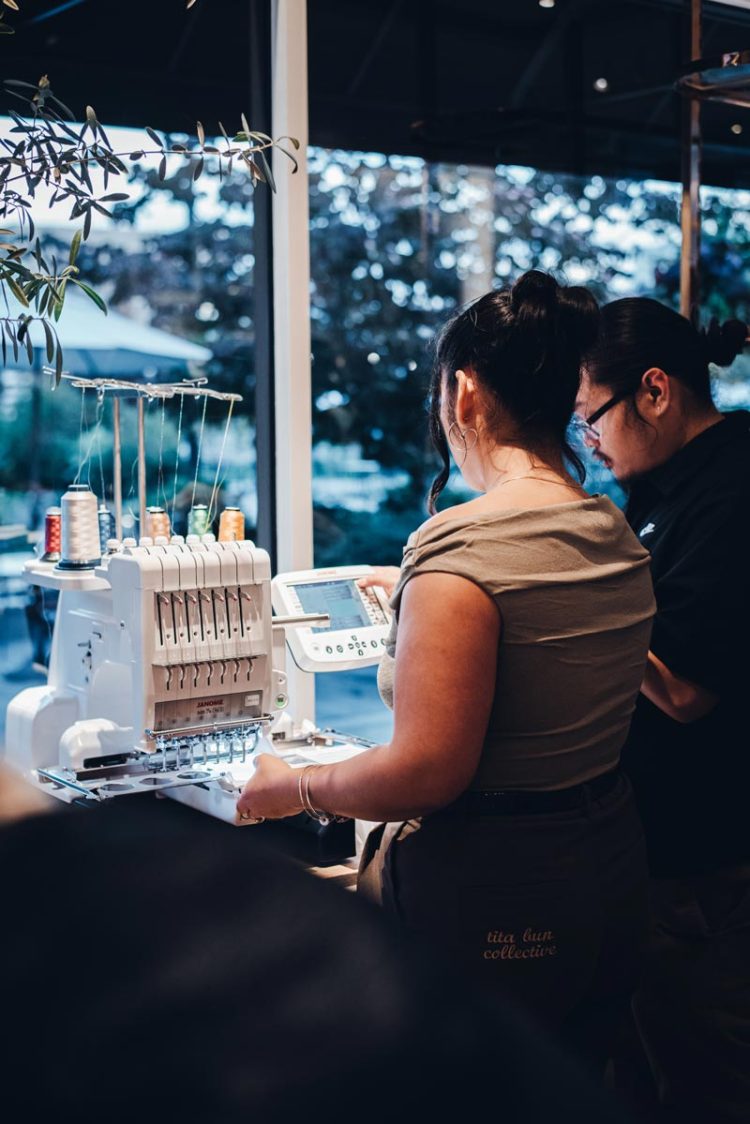
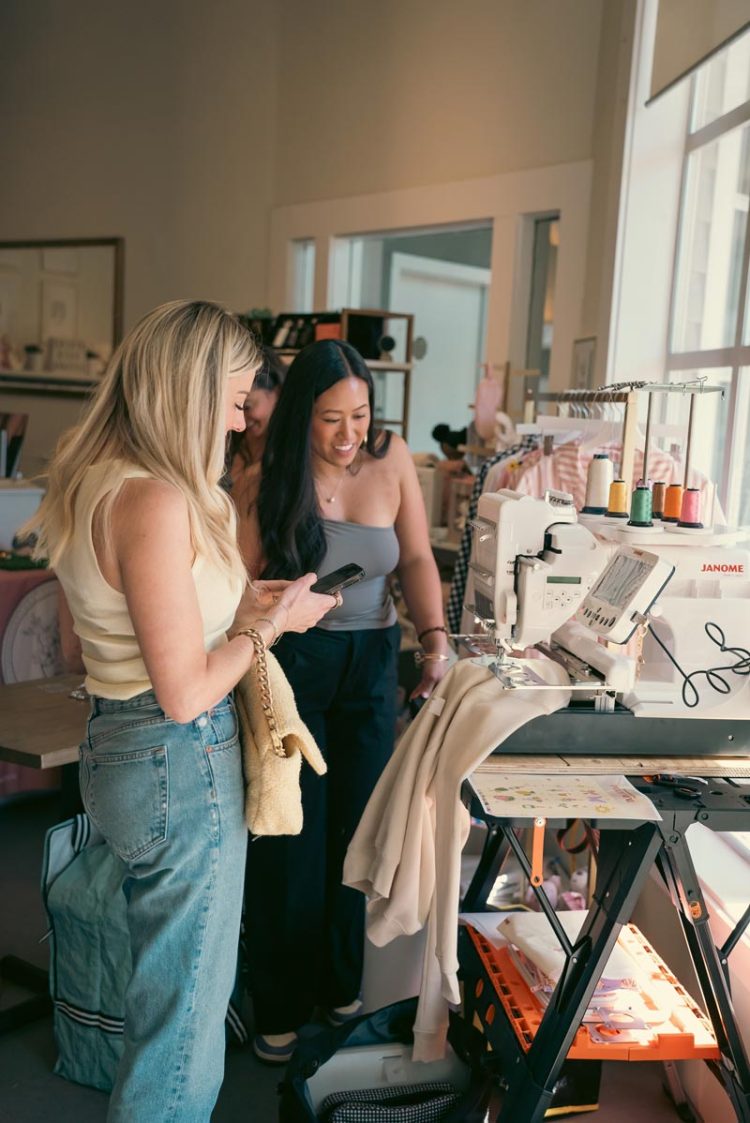
For the first few years, I was doing a lot of custom work for clients, and I learned about pricing and scope through trial and error. About a month and a half ago, I switched to primarily doing events rather than custom designs. Now, I bring my seven-needle machine to private events and offer live embroidery with a rotating menu of flash designs, and people can choose what speaks to them. I also use a laser engraver for community events, which works on wood, stainless steel, leather and lifestyle items like compact mirrors and gua shas. I recently switched to a bundle model and offer three tiers that include time, pieces and the option for custom work. It’s easier for everyone, and it lets me show up as an artist, not just a vendor.
What’s been the most challenging part of getting here?
Advocating for myself. With live embroidery, no one else in Seattle is doing what I do quite this way. I’ve connected with people who do similar work in other states, and they’ve been generous about sharing rates and what they’ve learned. But early on, it was hard to hold my ground. I had to learn to say “no” to some potential clients, which enabled me to say yes to things that were right for me.
You’re currently working with Seattle Restored to open a brick-and-mortar location for your business. What’s your vision for the space?
The concept is “tattoos for your clothes.” People can shop our collection or bring in their own pieces, which can be customized using a menu of embroidered designs and monograms. There will also be a Sari Sari-style* gift section where people can shop for products made by friends who are small business owners.
*Sari Sari stores operate similarly to neighborhood general stores and serve as an important economical and cultural space in the Philippines.
If you could go back to when you started this business, what advice would you give yourself?
Trust the process and stop waiting for proof before investing in yourself. I was so scared to spend money on the business before I could fully see where it was going. Recently, I hired someone to re-do my website, which is where the majority of my private clients find me. I brought on an event team and have learned to delegate so I have more bandwidth.
At the end of the day, what’s the worst that can happen? If something doesn’t go the way I planned, I can always pivot.
Follow Tita Bun Collective on Instagram for shop updates and upcoming events, and check out the soft opening of the brick-and-mortar store for Tita Bun Collective on June 13 at 616 S Jackson Street.
About the author: Aleenah Ansari (she/her) is equal parts storyteller, creative problem solver, and journalist at heart who’s rooted in the stories of people behind products, companies, and initiatives. She writes about travel, entrepreneurship, mental health and wellness, and representation in media for Insider, The Seattle Times, Byrdie, and more. You can usually find her searching for murals, reading a book by a BIPOC author, or planning her next trip to New York. You can learn more at her website.