News and research briefs from the UW: Summer 2026
Tracking ravens, protecting rare bats, using hypnosis for chronic pain...UW researchers are at the cutting edge of discovery.
Catch up on the latest research breakthroughs and big news around the University of Washington.
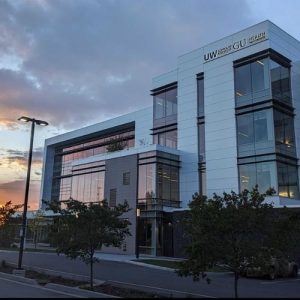 A healthy alliance
Ten years after launching their regional partnership, Gonzaga University and the University of Washington continue to expand health-care training in Eastern Washington.
In 2022, an 80,000-square-foot center for medical education, health sciences and innovation opened at 840 E. Spokane Falls Blvd. Today, the UW School of Medicine–Gonzaga University Health Partnership supports more than 500 clinical partners across the region.
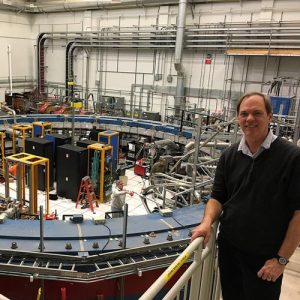 Muon moment
Physics professor David Hertzog and Professor Emeritus Peter Kammel are part of an international team that won the 2026 Breakthrough Prize for Fundamental Physics. The $3 million award is shared among roughly 400 scientists, including 17 other researchers from the UW. It celebrates decades of work to better understand the muon—a subatomic particle with anomalous properties. This collaborative effort could ultimately lead to the discovery of entirely new particles.
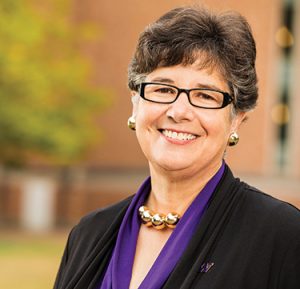 Cauce honored
President Emerita Ana Mari Cauce received of the 2026 Charles E. Odegaard Award, the UW’s highest honor of leadership in diversity, equity and inclusion. She is recognized for a long career at the UW defined by a belief in the dignity of every individual and the transformative power of education. She has been a champion for access and fostering belonging for underrepresented and marginalized students.
 Peace Corps prestige
The UW is again ranked No. 3 on the list of top volunteer-producing institutions since the international program launched in 1961, trailing only the University of California-Berkeley and the University of Wisconsin-Madison. More than 3,175 UW graduates have gone on to service opportunities abroad as volunteers.
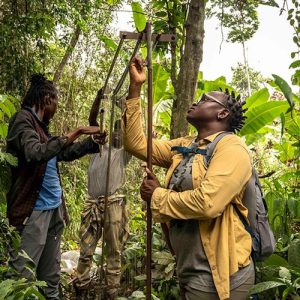 Wildlife champion
Iroro Tanshi, a Nigerian conservationist working as a UW postdoctoral researcher, has earned global recognition after turning a personal encounter with wildfire into a successful campaign to protect a rare bat species. She was awarded the Goldman Environmental Prize in April for her work safeguarding the endangered short-tailed roundleaf bat, which she rediscovered in Afi Mountain Wildlife Sanctuary nearly 50 years after it was last seen.
 Hypnosis and chronic pain
UW researchers are studying a new way to provide relief for people suffering from chronic pain from spinal-cord injuries. Hypnotic suggestion could help lower the overall perception of chronic pain. “Often the tissue can be healed but the brain is still on high alert,” says Charles Bombardier, ’79, UW clinical psychologist and professor in Rehabilitation Psychology and Neuropsychology.
 Smart as a raven
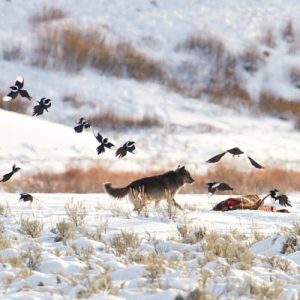
For years, researchers assumed that common ravens, who are notorious scavengers, were following wolves in Yellowstone National Park to get their scraps. But John Marzluff, UW professor emeritus of environmental and forest sciences, found that ravens don’t follow wolves, they remember common hunting grounds and regularly check them by relying on spatial memory to monitor the wolves’ favorite hunting grounds.
 Borderland violence
Fatal police violence against Indigenous people is concentrated in and around reservations. Roughly three in four Native people killed by police from 2013 through 2024 were on or within 10 miles of a reservation, despite only about 50% of Indigenous people living there, researchers at the UW and Drexel University found. They published their findings in the Journal PNAS.
“My prior research has documented how policing on and around reservations functions as a form of sovereignty threat—where Indigenous peoples, their movement and their presence on their own lands are treated by law enforcement as problems to be managed,” says Theresa Rocha Beardall, co-author and associate professor of sociology. “This is the first study to measure what that looks like at the national level.”
 Second hand
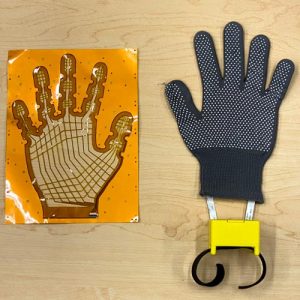
Devin Murphy, an electrical and computer engineering student in Assistant Professor Yiyue Luo’s Wearable Intelligence Lab, is trying to capture the sense of touch. The OpenTouch Glove Project, part of a collaboration with two labs at MIT, uses flexible circuit boards embedded across the hand to measure pressure at multiple points, transmitting data wirelessly to generate a real-time “heat map” of how force is applied during grasping.
 Seismic shift
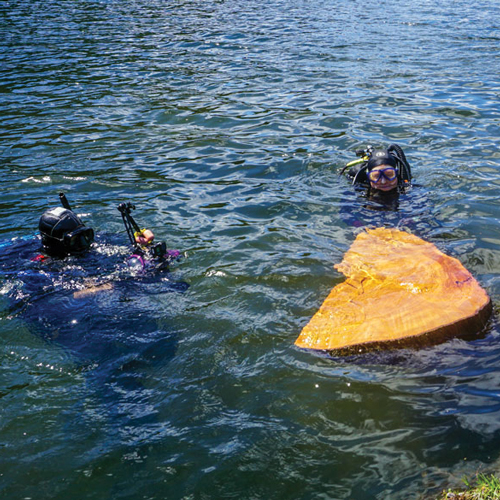
More than 1,100 years ago, an earthquake on the Seattle fault reshaped the Puget Sound region. Researchers estimated that this fault will produce a large earthquake every 5,000 years or so. However, a recent UW analysis pushes that estimate back to 11,000 years.