After a career in educational leadership, double-dawg Stephan Blanford now heads Earshot Jazz
Stephan Blanford talks about his unconventional childhood, the world-class Seattle jazz scene and his plans for Earshot Jazz.
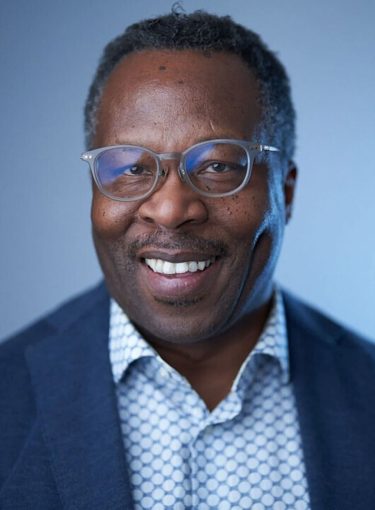
Few people ever get the chance to take their “drop everything and just say yes” job. Stephan Blanford is one of the lucky few.
Blanford refers to himself as a “double Husky,” having earned his master’s degree in public administration in 2005 and a doctorate in educational leadership and policy studies in 2010. Last year, as the former Seattle Public Schools board director was approaching the end of a self-imposed five-year stint as the Children’s Alliance’s executive director, he noticed an article in the Seattle Times about how that same job was about to be available at Earshot Jazz, an organization best-known for its eponymous print publication and fall festival.
“I met with my predecessor probably 10 years ago and was interested in serving on his board,” Blanford, a lifelong jazz fan who lives in the Central District, said of an interaction with former Earshot executive director John Gilbreath. “I was like, ‘If that job ever comes up. I really want it.’”
He got it and, since January, he’s been running Earshot from its Fremont headquarters, which is where UW Magazine engaged Blanford in a conversation about what he calls “Black America’s gift to the world.”
UW Magazine: Where did you grow up?
Blanford: My dad was in the military, so we grew up all over the United States, plus Alaska, Hawaii and Japan.
What was your dad’s path to the military?
He came from a family that was very low income in northern Florida, which I always say was southern Alabama. The Army afforded him the opportunity to see the world. The fact that we got out of the South, got a chance to see the world and had access to high quality education while he was in the military was a game-changer. It put my sister and I, my brothers, on a very different course than we would have been otherwise.
Where were you born?
In Colorado. We left 30 days after I was born and then didn’t go back until I was a junior in high school.
What was it like moving around so much? Cool? Unsettling?
Everyone I knew was also doing the same thing, so you just knew it as normal. When I graduated from high school, I’d been in Colorado for two years, and my best friend was sitting next to his best friend, so the three of us were really close and tight. And they started kindergarten together. And they were talking about, we’re friends, but you’re always kind of the outsider because you haven’t been around as long. And at that moment, I realized, “Oh, this thing that I went through was not like most people.” And there’s some downsides to it, but mostly, you know, I have a brother who was born in Japan, and I lived there for three years, and most of my cousins can’t imagine anything like that.
Your dad was a big jazz aficionado.
Yep. He loved Jimmy Smith, the organist, but he listened to a lot of Coltrane and Miles, ’60s jazz, a lot of the titans of the day.
Was there a period of time where you fell out of love with jazz?
It was always some portion of what I would listen to, but there were times, especially in early college, that I wasn’t listening to it as much. Interestingly, I was with my college buddies [from Colorado State University] last week. And they were like, “This is absolutely the perfect job for you, because you listen to so much jazz, and you were the only person listening to jazz back then.”
For so many people, jazz is very cool. And then for other people, it’s not cool at all. Is there another musical genre that’s so polarizing?
I think country and western is pretty polarizing. Most people I know don’t like country western music. It is just not their preference, and it’s not my preference. My dad was stationed probably 50 miles north of Nashville, and we’d have to do country western dancing, square dancing. That was a requirement at the school. And I remember just being like, “This is not my culture. This is not my thing.”
How frequently does Earshot program shows outside of the festival?
We’re trying to have at least one show every quarter. We’ve got 10 or 11 venues.
What would you say the Seattle jazz scene is like at this point?
It’s pretty robust in comparison to other large cities. If you look at total number of attendees at festivals, we’re actually punching a little below our weight. My predecessor would say that that has, in large measure, to do with being selective, choosing musicians who are not well known but are on the rise, so you’re breaking artists. I think there’s some movement possible in that and my board is giving me the responsibility to really assess and figure out what the market will bear.
I think, over time, you’ll see hopefully more diversity in terms of the number of artists and the types of music that they’re presenting. I’m really excited because I figure more is better, and so I want to try to figure out a way to diversify the audience.
I think the jazz scene here is rich, and I’m discovering a lot. So far it’s been really exciting to get a chance to meet some of the local artists and hear what their aspirations are and how we can be in support of them.
We live in a city with at least two national-caliber high school jazz bands: Garfield and Roosevelt. Do you work directly with those kids?
Yeah, we have, and I see great opportunities for that to continue. Part of the reason that I was interested in joining the board of Earshot was, as a school board director, I would see Garfield and Roosevelt perform pretty regularly. I’d hear stories of them traveling all over. As a matter of fact, one time, I was coming back from a jazz festival in Europe and heard all this commotion in the back of the airplane, and I walked back there, and it’s Garfield kids. They’d played Montreux.
We have world-class jazz, not only in Seattle Public Schools, but some of the other school districts are high-performing as well. That part is something that we really want to try to foster, and in particular, that’s a passion of mine because I’ve got relationships with the school district. I’m also very cognizant of the fact that many of the jazz bands are not very diverse. And in particular, you think about Quincy Jones going to school at Garfield. I know his family is passionate about trying to figure out ways to make sure that the kids that live in the neighborhood also have opportunities to be in that jazz band.
Does Garfield’s jazz band skew whiter?
Yeah, both at Garfield and at Washington Middle School, which is a feeder for Garfield—very homogenous.
Why do you think that is?
As in so many different areas now, money becomes a differentiator, and having access to jazz education becomes more and more expensive. That’s not saying anything about the quality of the jazz. It’s all high quality and the kids that are performing are awesome. But I think in a progressive city like this, we need to make sure that there are no barriers. Getting instruments and getting high quality jazz education is something to work on.
What can Earshot do about that?
I’m hoping to meet with some of the administrators of Seattle Public Schools and try to figure that out. They recognize that that’s an issue. So how can we be helpful in solving it? An organization like Earshot can’t say, “Well, we have the solution and go and give it to the district,” because that doesn’t work. The district usually can’t sustain it over time. We’ve got to figure a way to be in a really authentic partnership with them.
Who are your favorite artists?
Depends on the day, you know? Lately, I’ve been listening to a lot of Thelonious Monk. For the longest time, I didn’t understand him, and now I understand him in a way that I can’t stop listening to him. He had a quote that I read recently that I think sums him up really well. He said, “I know guys that can play the white keys. I know guys that can play the black keys. I’m trying to play the cracks in between the keys.” That makes total sense when you listen to him. He uses space so well.
What is it about jazz, as opposed to other genres, that makes it unique and how does it nourish you?
For me, especially as I have gotten older and read more of the history of jazz, it truly is Black America’s gift to the world. I’ve seen jazz played on stages on five continents. Knowing the history and knowing the struggle that those men and women went through in order to get on stages and to get access to instruments, it’s just something that’s so inspiring. When we lived in Japan and I was listening to jazz as a little kid, it was something that helped me to understand who I was and to feel a lot of pride in being a Black American. This art form is populated by lots of different people, but at the forefront of it is a lot of Black men and women. For a young kid growing up, it’s like, “Yeah, we can be great. Here’s the evidence.”
If you could get what you just said into schools, the minds of young Black kids, that’d be super powerful. Do you feel like they get that kind of message at all now?
I think jazz has a problem in that, for too many people, they see it as only those old Black men and women playing music that doesn’t really work in this time. And a big part of my mission is trying to help people to understand, whether they be kids or adults, that this old music has manifested in so many different ways, and it’s updated all the time. It’s worthy of a listen, a serious listen, not as background music. To see five people up onstage working in a system together, there’s an analogy there that we need in these really difficult times that we’re living through, to find compromise and to make something work together.
What are some fond memories of the education you got at the UW?
When I started my master’s degree, I was in a cohort with other students who were mid-career professionals, so we weren’t brand new to public administration. And our ability to bring our problems of practice, to present them and get feedback from other practitioners, to marry together theory and practice and make it better, that was a highlight. Neither of my parents graduated from high school, and being the first in the family to go to college, I took it really seriously and tried to be studious. I tried to learn things that I could then bring to bear in my career.
Every job that I’ve had has been focused on one measure of social justice or another. It’s been inspiring to get the opportunity to exercise more and more influence on the things that I care about, and a lot of that has to do with my degree.
The next Earshot Jazz Festival takes place October 9–25, 2026.