Computer graphics pioneer Loren Carpenter (1947–2025) brought movies to life
Loren Carpenter’s genius as a pioneer in computer graphics gave the world the dazzling world of classic Pixar movies we love.
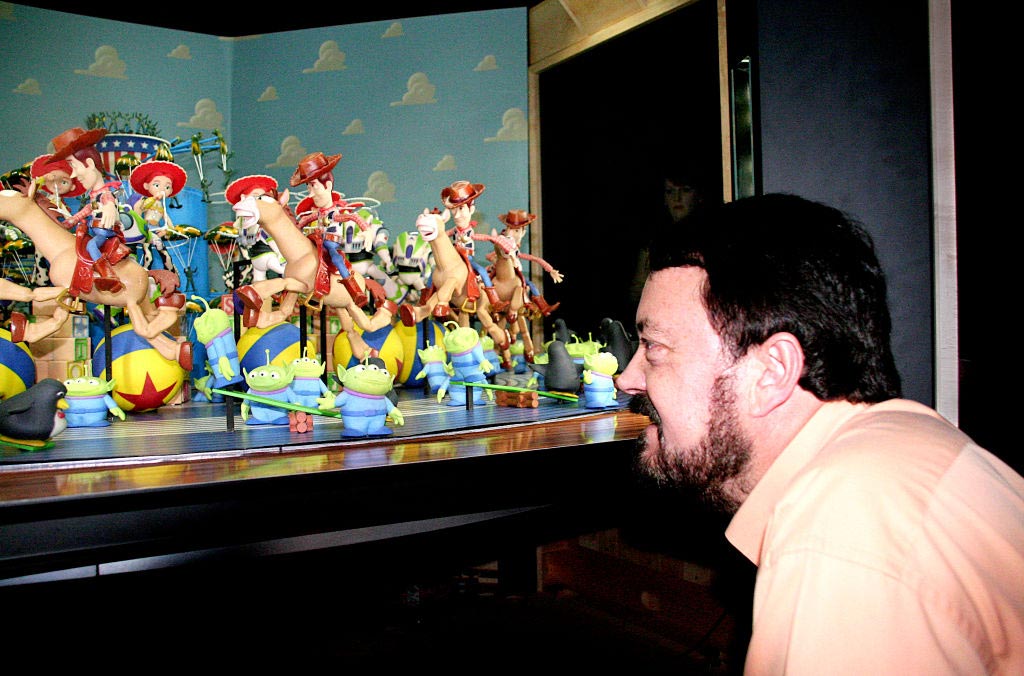
Those of us who love Pixar movies such as “Toy Story,” “Cars” and “Monsters, Inc.” owe a debt of gratitude to Loren Carpenter, ’74, ’77, an internationally acclaimed pioneer in computer graphics. He co-invented the Reyes rendering algorithm and was one of the authors of the photorealistic RenderMan software that created Pixar’s movies.
Before he became co-founder and chief scientist at Pixar, Carpenter worked at Boeing Computer Services in Seattle. While there, he earned a bachelor’s degree in mathematics and a master’s in computer science from the UW. Even then, he was a tech star. According to the Visual Effects Society, he advocated for using computer technology to improve Boeing’s mechanical design processes, “which were still entirely done by hand on paper.”
In 1980, he gave a presentation at a major conference that showed how his software could generate landscapes. In addition to receiving a standing ovation, he also received a job offer to join Lucasfilm’s Computer Division, which later became Pixar (a name he coined). He helped create a scene in “Star Trek II: The Wrath of Khan” with the first fractally landscaped planet.
For his trailblazing work in the development of the RenderMan software, he received the Academy Award for Scientific and Engineering Achievement in 1993. In 2001, he shared the Academy Award of Merit for his work. Carpenter’s credits went on to include “Star Wars: Return of the Jedi,” “Wall-E,” “Up” and many other now-classic films.
After Disney acquired Pixar, he became a senior research scientist at Disney Research, and in 2014, he became a scientist at the Institute of Noetic Sciences. There, his contributions included new instruments for recording and analyzing quantum background noise and instruments for sending and amplifying mind-photo interaction. (“Noetic” refers to the mind, intellect or rational processes.)
“The Institute of Noetic Sciences was fortunate to benefit from Loren’s rare gift of seeing what others couldn’t,” says Claudia Welss, executive chair of the institute. She adds that “Loren reminded us all that the divide between art and science, and between science and spirit, are illusions, and he did so with a passion, heart and humility that changed us just by his presence.”
Carpenter died Dec. 20 at the age of 78.