From survivor to scientist From survivor to scientist From survivor to scientist
A childhood hurricane set Ángel Adames-Corraliza on course for a MacArthur award.
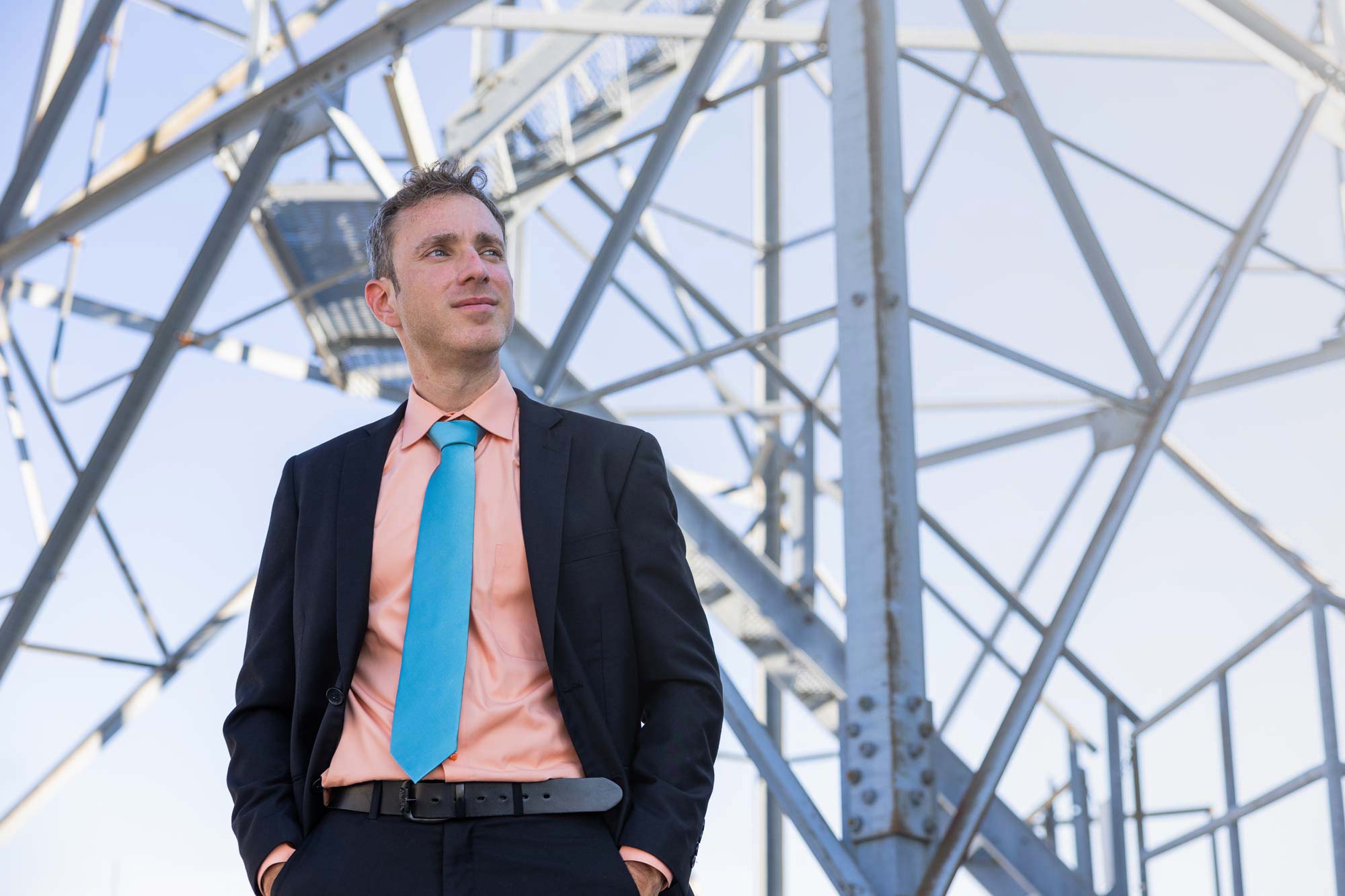
A childhood hurricane set Ángel Adames-Corraliza on course for a MacArthur award.
When Ángel Adames-Corraliza was 10, a Category 4 tropical cyclone named Hurricane Georges tore its way across Puerto Rico.
“We were up all night. The walls were trembling,” he says. “It was terrifying.”
The next morning revealed the devastation brought by 150-mph gusts. “I had this childish conception about nature, that it was a noble, welcoming place,” he says. “Then a hurricane comes and destroys everything.”
Twenty-seven years later, Adames-Corraliza, ’13, ’16, has been awarded a MacArthur Fellowship—also known as the “Genius Grant”—for his work unraveling the forces that govern tropical weather. The storm that upended his childhood world gave him a purpose.
He studied physics in college in Puerto Rico to prepare for graduate studies in atmospheric science. An internship the summer of his sophomore year landed him at the University of Washington in the lab of Thomas Ackerman, professor of atmospheric sciences and director of the Cooperative Institute for Climate, Ocean and Ecosystem Studies (then known as the Joint Institute for the Study of the Atmosphere and Ocean). His assignment: study the photometry of snow. “Which is not tropical at all,” Adames-Corraliza says with a laugh. “I had never seen snow before.”
Still, the adventure—one of his first trips away from home—provided a chance to test his plans. “The program was what I’d dreamed of: a wonderful opportunity to work in one of the best departments, with well-known experts,” he says.
Returning to the UW for graduate school, he focused one of his projects on the Madden–Julian Oscillation, a vast envelope of thunderstorms that traverses the planet in the tropics. “It’s the size of Russia,” he explains, “and travels at about 5 meters per second.” Despite its enormous influence on global weather, the MJO has been a mystery to climate modelers. Adames-Corraliza developed an analytical framework that made it easier for scientists to capture and study the phenomenon.
These days, he develops theoretical models to advance the understanding of the structure and thermodynamics of easterly waves, sometimes called tropical depressions, and explore how they interact with monsoons and the El Niño–Southern Oscillation. “Where we live—in the northern United States—the most dramatic weather is actually temperature fluctuations, which can change wildly in a matter of hours,” he says. “But in the tropics, the temperature doesn’t change that much, but the weather changes quite a bit.”
While the scientific community historically focused on middle-latitude climate, there is mounting demand from developing nations in the tropics to have their own climate models and forecasts to prepare for events like droughts and floods, he says.
In announcing the award, the MacArthur Foundation recognized Adames-Corraliza for laying a foundation for more accurate weather forecasts and stronger models of tropical climate variability, ultimately benefiting the billions of people who live in tropical regions.
But now another kind of storm worries Adames-Corraliza. “We’re in a time of hostility toward climate and weather science,” he says. “It’s unfounded.” Before learning about his MacArthur Fellowship, the associate professor at the University of Wisconsin-Madison considered scaling back his research amid dwindling federal funding for climate science and the suppression of what were once publicly available climate reports. “I was thinking, what’s the point?” he says.
The MacArthur award changed that. The fellowship, providing $800,000 in unrestricted funds over five years, gives him renewed purpose.
“It’s offered me a platform to share my enthusiasm for climate science,” he says. “And to make clear that we’re in a time of abundant data—and considerable need—but not enough scientists to work on it.”
For Adames-Corraliza, the questions that began with a childhood hurricane now power a lifelong pursuit to understand the storms that shape our world.