Fiction foray Fiction foray Fiction foray
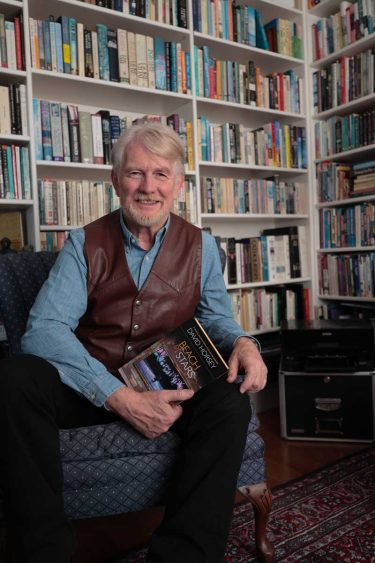
Pulitzer-Prize winning editorial cartoonist David Horsey tells stories in long hand with his novel “Beach of Stars.”
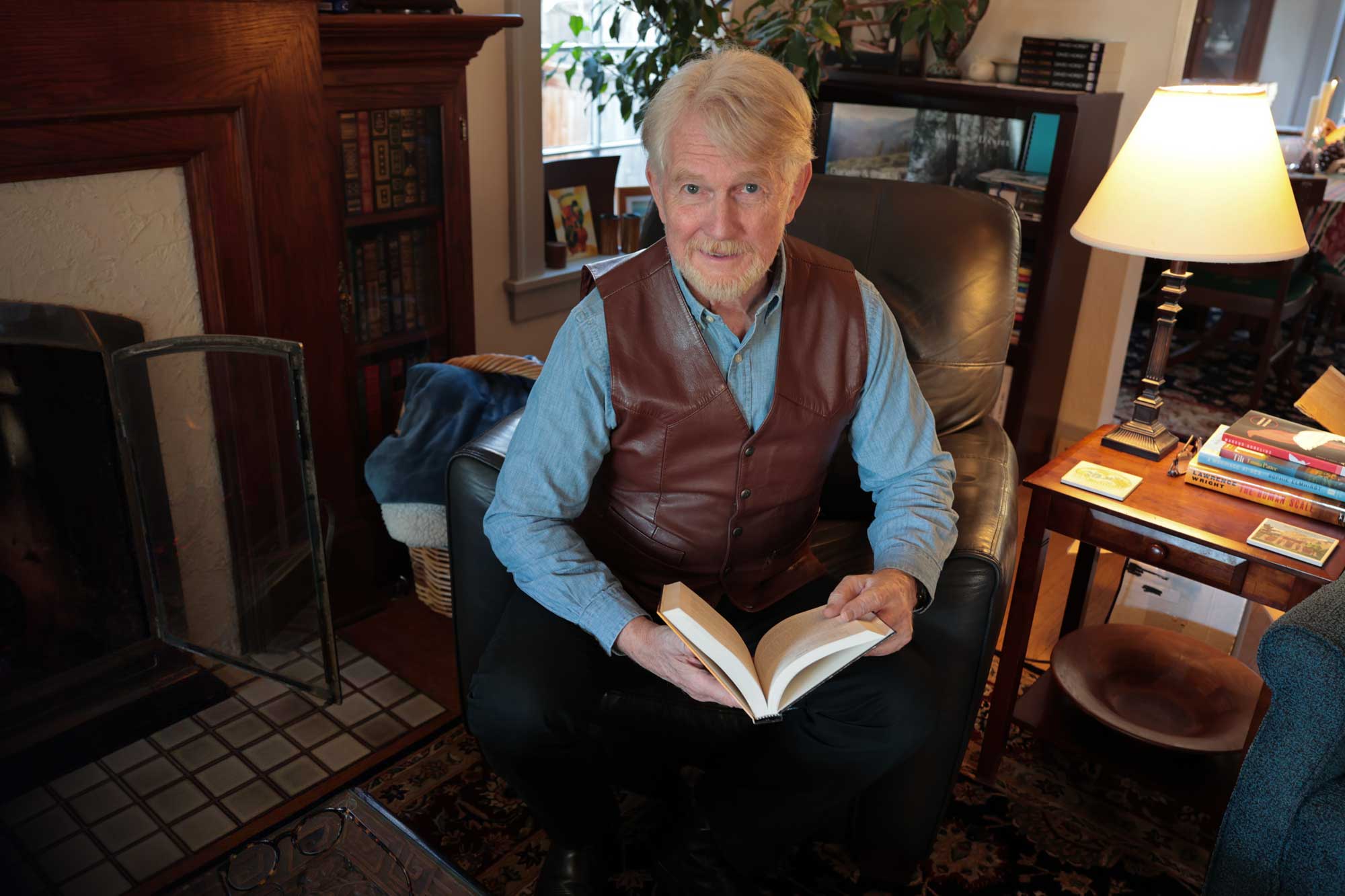
Pulitzer-Prize winning editorial cartoonist David Horsey tells stories in long hand with his novel “Beach of Stars.”
David Horsey is known far and wide for his snappy editorial cartoons, winning two Pulitzer Prizes for his work at the Seattle P-I, Los Angeles Times and Seattle Times. While he has published 11 books of his editorial cartoons, “Beach of Stars,” which was published in December, was his first foray into the world of fiction. And the kudos keep rolling in.
Timothy Egan, ’81, a National Book Award winner and former writer at The Daily, says “Beach of Stars” is “a wonderful novel” and a “masterful bit of storytelling.” UW Professor Emeritus Charles Johnson, also a National Book Award recipient, calls the novel “amazingly good.” It opens with a 21-year-old college student working a summer job in Mexico when his decisions lead him to a life of “impulsive actions, bad things and happy coincidences.”
The new novelist answered a few questions about his work.
I’ve always thought of myself as a storyteller, it’s just that, until now, most of my stories were delivered in the extremely short form of a political cartoon. For quite a while, though, I’ve had ideas for several novels in my head and one of them finally worked its way out.
This particular book has been in a nearly-finished state for several years, and my wife was refusing to read any of it until she could see the words between the covers of a book she could put on a shelf. My first test of success was for her to not hate it when she read it. I peeked in on her when I knew she was finishing. She had tears in her eyes as she read the last page. The ending is quite poignant, so I knew it worked for her. Or maybe she was just relieved that it was finally done.
The first whispers of the idea began forming in my mind way back in 1989. A couple of my Seattle friends were living in Guadalajara for a year and, about halfway through their time down there, they decided they needed their car. They called me up and asked if I’d drive their old Subaru all the way to Mexico. This was just a couple weeks before Christmas. I had two little kids and a wife who told me it would be insane to make the drive. She was sure I’d be killed by a drug gang.
Of course, I could not refuse an adventure and it turned out to be a great road trip through a fabulous country I’d never seen. That planted the seed for a story about a guy who impulsively takes off from his normal life for a road trip to Mexico and has a rendezvous with a woman from his past. UW folks will be intrigued to know my fictional protagonist is portrayed as a University of Washington student early in the book.
A long, long time. After that drive through Mexico at the end of the ’80s, I wrote a short story that was the very beginning of the tale. Through the 1990s, I kept expanding the story until it was a sprawling novel that an editor in New York said had the core of a good book if I cut about two-thirds of it. I put that first effort on the shelf for about 15 years and went on to other things, but the characters kept roaming around in my imagination.
About five or six years ago, something inspired me to try to tell the story again with a streamlined plot and many major changes. The final version was done about a year ago. Like I said, a long, long time.
I have often compared doing cartoons on a daily deadline to performing a jazz riff. You just belt it out, good or bad, and then move on to the next one. A novel is like writing a symphony with many themes, motifs and movements. Radically different creatures, but both sprung from imagination.”
Some of my critics would say I do nothing but fiction in my cartoons and columns. But, aside from that, this novel is my first work of actual fiction.
“Creative people should never allow themselves to be locked in one narrow category when their talents can be taken in many directions.”
David Horsey, '75, reflecting on advice from UW Professor Charles Johnson
I met Charles Johnson about five years ago at a social event at the Rainier Club, where we are both club laureates. He was eager to meet me because, as a young man, he worked as a cartoonist. His career as a novelist, philosopher, essayist and teacher has been stellar, of course, but he still loves cartoons and considers himself a member of the tribe.
When we were talking, I mentioned that I was working on a novel. I said it almost apologetically. I was embarrassed to admit I was tinkering in a field in which he is a master. He got an appalled look on his face and admonished me that writing a novel was a wonderful opportunity to write something and get every word as right as possible. In his view, creative people should never allow themselves to be locked in one narrow category when their talents can be taken in many directions. After that conversation, I got very serious about finishing “Beach of Stars” and making it as good as I could.
I have started a second book and even have a title—“Sneaker Wave.” The main character is a California surfer who shuns social media and tech, but gets caught up in the mad world of Silicon Valley, right-wing media, podcasters and conspiracy theorists. It’s a simpler book than “Beach of Stars” and a bit of a political satire. I hope to do at least one more book after that. I can’t call myself a serious author with just one book on the shelf.