Servant leader
While his military honors are many, it’s Jordan Houghton’s work with grassroots community and veterans that means the most to him.
Eli Sanders, '24, the Pulitzer Prize-winning journalist who spent 15 years at the paper, is coming back to lead The Stranger.
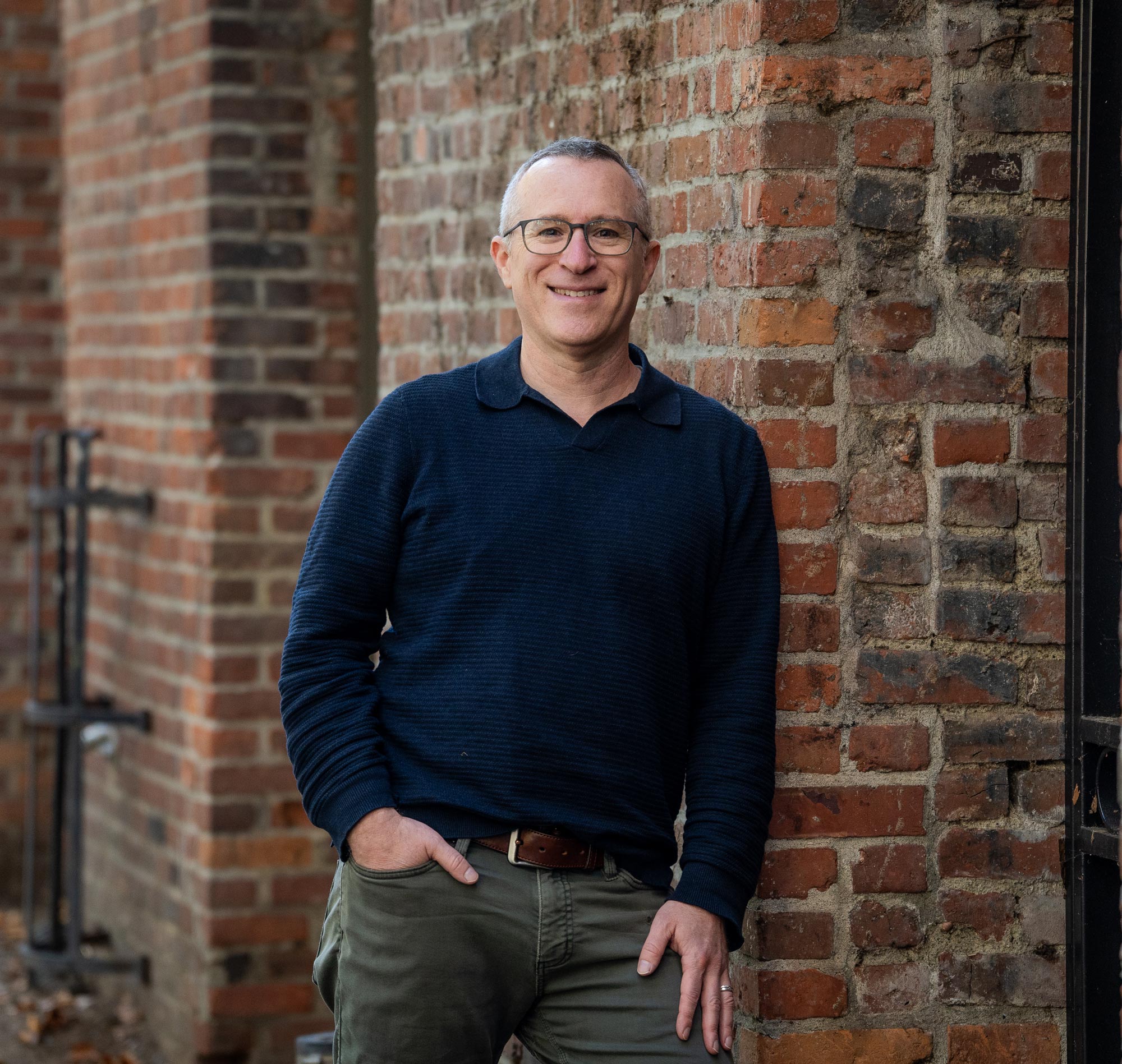
Eli Sanders, ’24, was recently hired as editor-in-chief of The Stranger, Seattle’s alternative newspaper. In his new role, Sanders will lead The Stranger’s newsroom into its next chapter: sharpening news coverage, holding Seattle’s powerful to account and keeping arts and culture coverage as opinionated and indispensable as ever, online every day and in print every month. A Seattle native and graduate of Garfield High School, Sanders spent 15 years at The Stranger, most recently as associate editor, before leaving in 2020.
In 2012, Sanders won the Pulitzer Prize for Feature Writing for “The Bravest Woman in Seattle,” his account of a survivor of the 2009 South Park attack and the courtroom testimony she gave against the man who killed her partner. It remains The Stranger’s only Pulitzer, and one of just a handful ever awarded to an alt-weekly. Sanders later expanded the story into the book “While the City Slept” (Viking, 2016), a finalist for the Washington State Book Award and the Dayton Literary Peace Prize. His writing has also appeared in The New York Times, The American Prospect and Salon.
In advance of assuming his new role, Sanders sat down with University of Washington Magazine to discuss what studying law taught him, journalism and his plans for The Stranger.
My goal in going to law school was always to find a way to merge my new legal training with my journalism experience. Journalistic work is often trying to get the attention of lawmakers or law enforcement, or it’s trying to flag issues that may ultimately need to be resolved in the courts. I’d seen how journalism can be a powerful tool for pushing those in power to make changes, for raising public awareness and for forcing a reckoning on issues that have simply been overlooked. I’d also seen how the law is very frequently a key part of the way issues raised by journalistic work get worked out. And so I wanted to learn more about the law, and I wanted to be able to use the law myself. The goal going in to law school was to find a way, on the other side, to use my law degree to support journalists and journalism.
In law school, I learned that the legal community is often frustrated by the way that the law and the courts are covered by the media. My sense is that this comes from a good place, a place of wanting the legal and court communities to be covered accurately and wanting the law explained to the public clearly, all with the worthy goal of making the law more accessible. Journalists, by the way, generally have the same goal when it comes to writing about legal issues. But the law is another language. It isn’t easily accessible to most people, including most journalists. Without a law degree, it’s just hard to translate information that, untranslated, feels impenetrable to the average reader. So I would say that law school amplified my sense that the law and journalism are in many ways searching for the same things—verifiable facts, relevant stories, truth, justice—and it also deepened my sense that the two communities sometimes have a hard time understanding each other.
Law school also gave me a wider view on the many, many different ways that the law can affect people’s lives and be used as a tool for change, as well as the ways it’s been used and misused historically.
After graduating from UW Law, I clerked for two years with federal District Court Judge Robert S. Lasnik, ’78. Before he became a judge and lawyer, he was a journalist. And we actually met once during my journalism years when Judge Lasnik and I were both at an event to foster better communication between the media and the courts, the annual Bench-Bar-Press Committee luncheon. My experience in the federal court system only heightened my sense of the law’s power and importance. It also contributed to my sense that the law needs people who can explain it clearly to the wider world. The lack of understanding of the courts and legal system can be part of the fertile soil where misinformation, cynicism and distrust grow.
At UW, I did a lot of work with the Center for an Informed Public, which was co-founded by professor Ryan Calo. I helped their team look into misinformation in local elections. When you think about misinformation—there’s a lot happening at a national level. But misinformation can be impactful at the local level, too. Perhaps even more impactful at the local level, given that it takes a relatively small number of votes to change the outcome of a City Council or school board race. During law school I wrote an article for The Atlantic magazine looking at misinformation on Nextdoor and how it may have impacted local races on Mercer Island. It was story about a small community political brawl, which is a type of story I love, and I never would have tripped into that had I not been working for the center that summer.
Another journalism project I was involved in came while I was working with the School of Law’s Technology, Law and Public Policy Clinic. I contributed research to an investigative series on tax breaks that Washington state had granted to data centers. That series ran as a partnership between the Seattle Times and ProPublica.
And then I also spent time during law school helping the Washington Coalition for Open Government with its lawsuit against Washington state lawmakers who have asserted legislative privilege to withhold documents from the public generally, and journalists in particular. That lawsuit is still ongoing.
My scholarship required me to work in public service for five years after finishing law school. In my application to the program, I envisioned two specific post-law-school paths: Working for a nonprofit media law organization like Reporters Committee for Freedom of the Press or working for a media outlet that fits the Gates program’s definition of public service—helping that media outlet translate the law for readers while also using the law on behalf of journalism. Working for The Stranger fits into that second path. I was at The Stranger for a long time before law school, and when this opportunity came out of the blue it was an unexpected full circle moment that just felt very right. I’m excited to sharpen The Stranger’s news coverage and continue our strong arts coverage and influential election endorsements, plus our newly returned Genius Awards that recognize people in the arts community. I really believe that when The Stranger is at its best, Seattle is better for it.
“I want us to be doing work that is relevant, urgent, has an impact and makes individual readers say to other people, 'Did you see that thing in The Stranger?'”
Eli Sanders, '24
I haven’t officially started at The Stranger yet, but my understanding is that no AI is being used to generate our stories. You’ll find that policy at a lot of media outlets. People want to know that a human being wrote the news they’re consuming. The Stranger is all about human, street-level takes on the city and real reactions to real life. You can’t get that from AI.
At the same time, tech is a tool. It can be used for good or ill. You have to think about how you use it and keep its nature as a tool in mind and in perspective. When it comes to AI, we also have to make sure as a society that it stays a tool and doesn’t get the idea to become something else. But in the journalism realm, there are writers who use AI to transcribe recordings of interviews (and probably have for a long time). That’s an OK use in my mind, as long as you’re going back and checking for AI’s mistakes. There may be other limited ways to use AI to gain some efficiencies that help journalists without turning over the process of writing or reporting or making judgment calls.
So much of what journalists do bumps up against the law—whether writing about a ballot initiative, a new law that’s been proposed or an issue in the community that needs legislation to address it, or ICE activity that may run afoul of the law or trample individual rights. These are just a few examples of how the issues journalists explain and raise awareness of often trace right back to the law and the Constitution. So there’s great potential and power in being able to more clearly explain the law’s intersections with the issues we cover.
In terms of my vision for The Stranger, I want us to be doing work that is relevant, urgent, has an impact and makes individual readers say to other people, “Did you see that thing in The Stranger?” I want people talking to one another about the information, analysis, news and criticism we put out.
Right off the bat, I’ll have a lot of organizational and administrative work to do. But my goal is to also write. The Stranger has a long history of editors who write. I’d like to be in that mold. I noticed in my previous time as a journalist that all the stories that grabbed me most strongly were stories that in some way or another connected to the law. I’ve just always been interested in collisions with the law, getting inside the legal process, using the law to aid the public’s right to know. I’m also interested in people—profiles of interesting humans. And I love stories that illuminate something unknown or secret about Seattle.