Out of scope Out of scope Out of scope
UW Libraries’ Special Collections department is a trove of treasures that tell the story of the UW and the Pacific Northwest.
UW Libraries’ Special Collections department is a trove of treasures that tell the story of the UW and the Pacific Northwest.
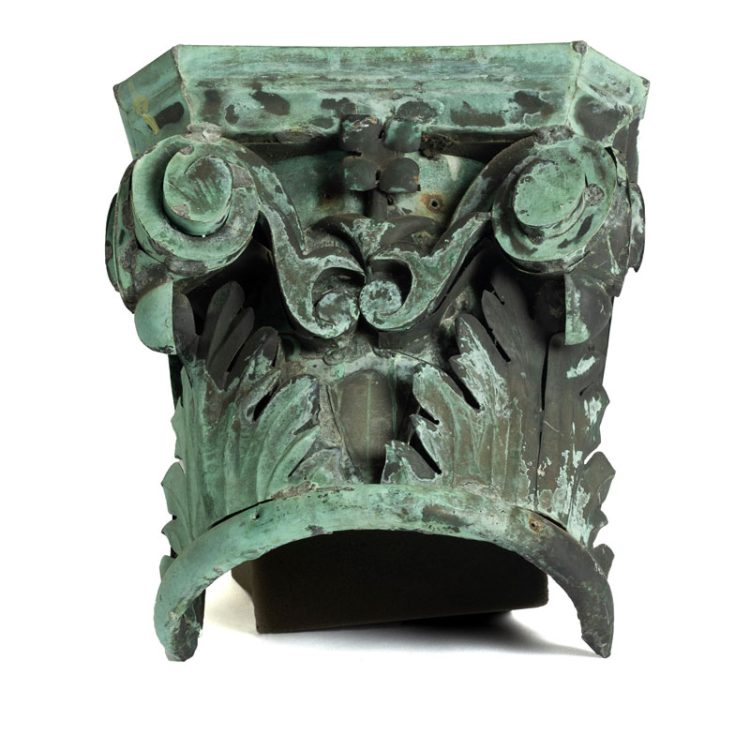
History doesn’t always fit in a box. Not a 1960s kidney dialysis machine, nor a salvaged architectural fragment from a demolished building, nor a spectrometer probe once used to measure particulate matter. Definitely not the carved wooden log that served as the first UW student yearbook.
These are some of the objects that land in the hands of University archivist John Bolcer, ’94. Members of the UW community bring him artifacts they hope to donate to the University’s Special Collections. Most of these strange but significant objects fall outside the acquisition scope of the department. So Bolcer must ask: Would the UW want this?
The answer lies in what the object can bring to light. “We have to negotiate what can help tell the story [of the University],” Bolcer says. “Most of what we receive fits in a box.” And those items that don’t—the oversized and unconventional—might be the best for bringing history to life.
Since the 1920s, UW Libraries has collected materials reflecting the history of the Pacific Northwest and the University itself: nearly 20 miles of shelving holding boxes of books, newspapers, magazines, archival papers, records, photographs, architectural drawings, audio recordings and film. But there are exceptions to the rules, and there are times when a special artifact brings history vividly to life.
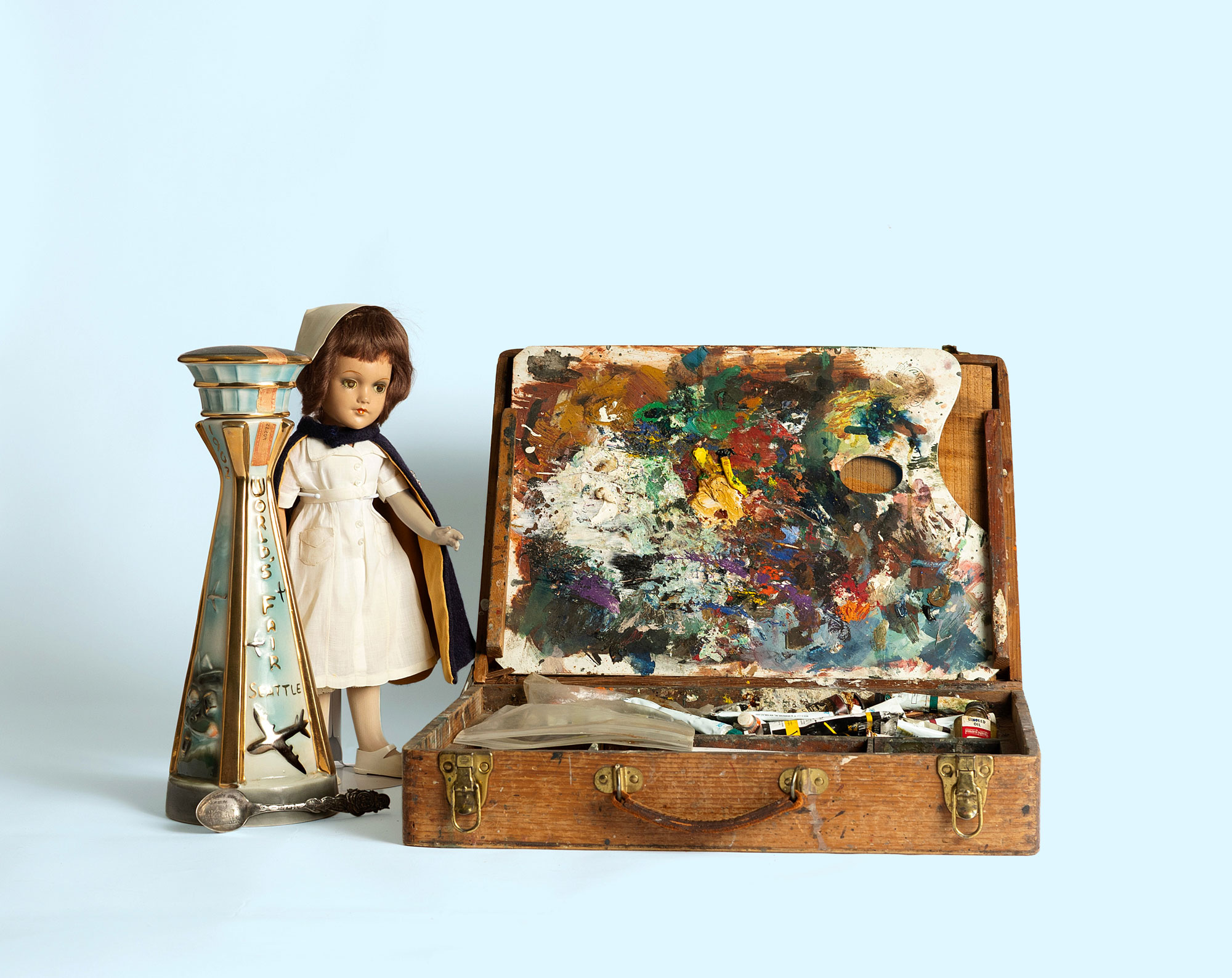
In the basement of the Allen Library, the current exhibition “Out of Scope” features a trove of unusual objects that found their way into the library over the decades. Curated by Bolcer, with Special Collections Director Lisa Oberg, ’90, and other library staff, the show puts roughly 200 artifacts on display. From fragments and architectural remnants of long-lost campus buildings and former Northwest School artist Paul Horiuchi’s paint case to artifacts of student life, such as a vintage purple freshman beanie or a 1950s dissection kit embossed with the name of its owner—a female science student.
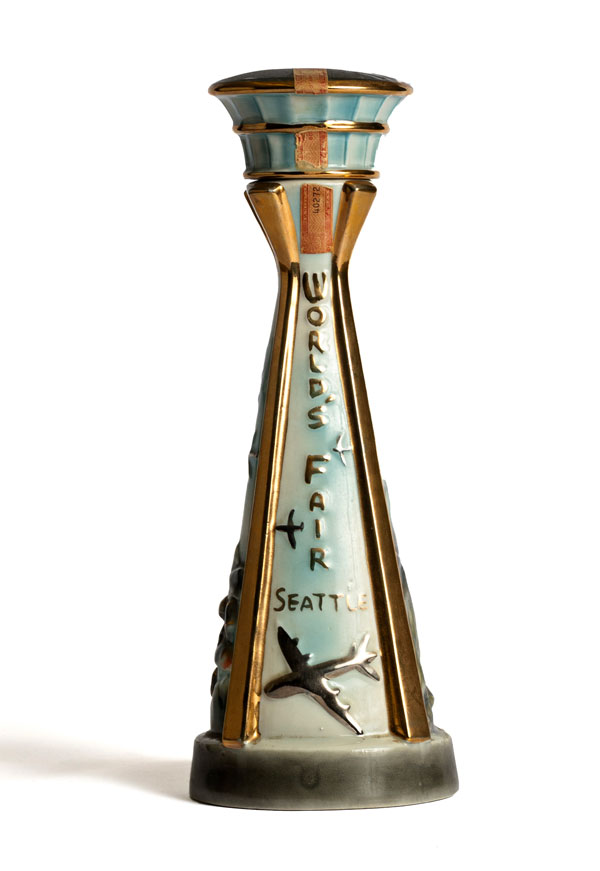
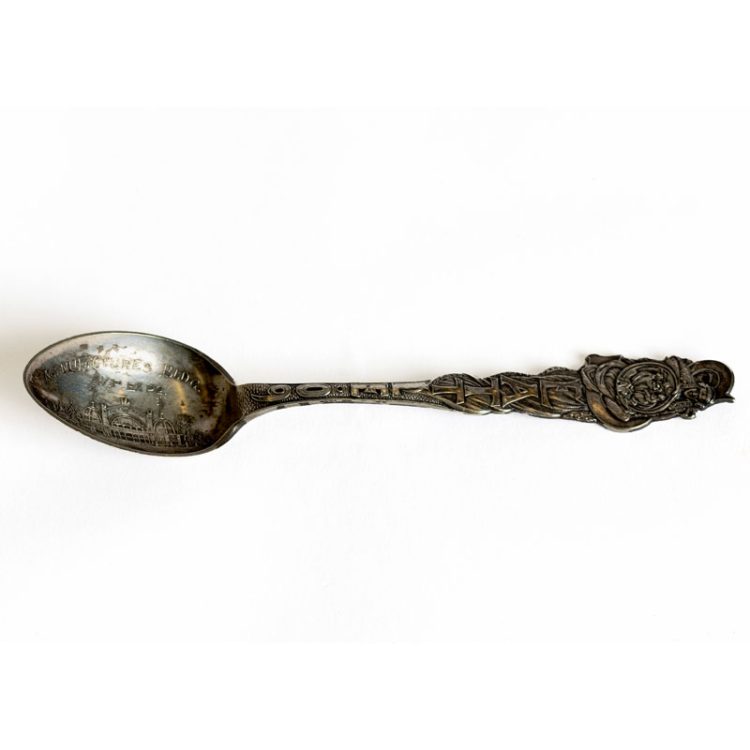
Each display case holds the curators’ favorite objects organized by history or theme. Visitors encounter objects that are both everyday and aspirational: vintage UW sports ephemera, materials related to the Alaska-Yukon-Pacific Exposition, obsolete recording equipment, vintage surgical tools—including Civil War-era bone saws—and even a Gutenberg printing press. “We are the holder of rare and unique and weird and wonderful stuff,” Oberg says. “It’s not to say the rest of the library isn’t as wonderful, but this is a treasure in your midst.”
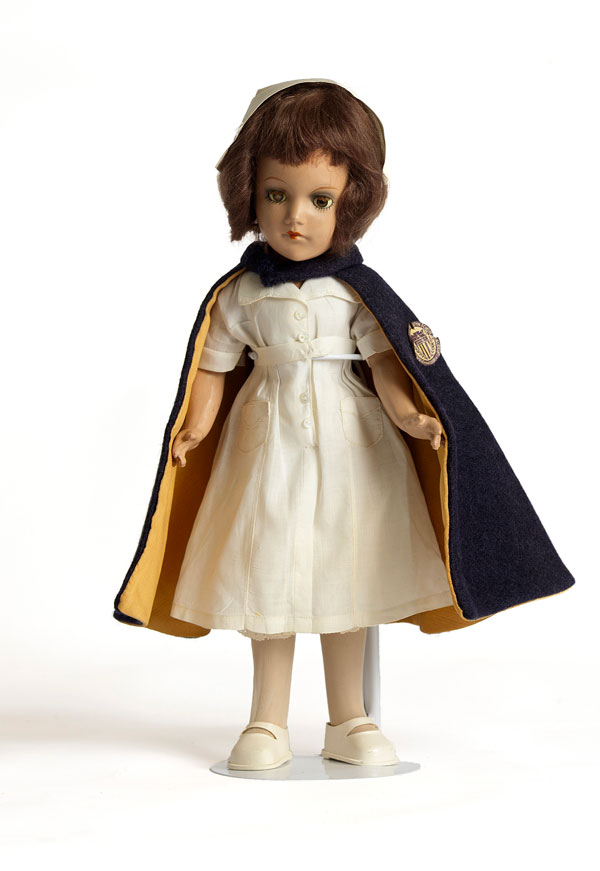
There are even more quirky offerings on view beyond the collection of old-fashioned paper nursing caps or photographs from a Scottish terrier dog show.
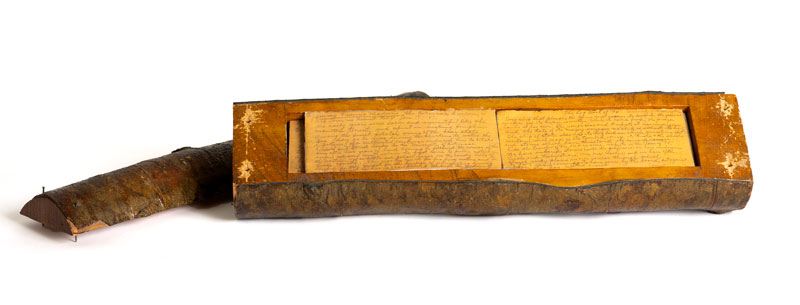
This novelty yearbook, fashioned from a real tree with sheaves of wood as pages before the first Tyee was published, contained graduating seniors’ names and details inscribed on each sheet in handwritten script. When displayed, a facsimile page is used to protect the sheets of wood from light.
The first student yearbook, which was handcrafted in 1894 as a single edition, occupies its own case. It’s nothing like the old Tyee yearbooks. Carved from a rustic wooden log that still has its bark intact, the improvised “log book” plays with the notion of a ship’s manifest and holds individual shingles of wood inscribed with a spidery handwritten scrawl containing the names and personal details of that year’s graduates. Because the shingles will fade with prolonged light exposure, a facsimile of the top page is used for the display. It’s a playful novelty piece and a snapshot of student humor and history.
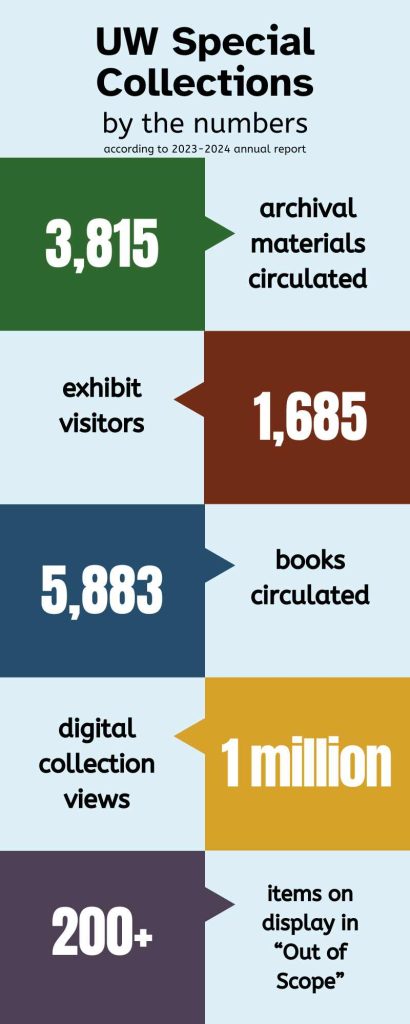 The benefit of an exhibition like “Out of Scope” is its ability to capture attention and point people toward resources where they can dig deeper. “The exhibits are the hook,” Bolcer says. “They give a sense of the breadth of the collections. This show is 1% of one million items—a tiny fraction of what we have.” Each item prompts questions. A freshman beanie from the 1950s might open inquiry into student life at the time and lead to further discoveries like a campus poster that details “rules” for freshmen and consequences of being found without a beanie: getting tossed in Drumheller Fountain. That could lead to “an examination of past norms in relation to contemporary concerns about hazing,” Bolcer says.
“Students love to understand what student life was like before them,” Oberg says. “Student scrapbooks were the Instagram of the 1920s, when people saved every ticket stub or pressed corsage.” For Oberg, these physical touchstones allow students to explore researching with primary source material. The materials can be physically handled; white gloves are required only for photographs and more fragile materials.
Oberg regularly pulls objects from Special Collections to share with classes and school groups. Each year, middle and high schoolers from all over Seattle visit UW Libraries to prepare their presentations for National History Day. Students conduct primary and secondary source research and create a project that presents their findings at local, state and national levels. Oberg recalls showing a 13-year-old who was researching the Civil War a handwritten letter from that time. “It was written in 1861,” Oberg says. “She asked if it was the real thing and just sat down and stared at it. She couldn’t believe that something was as old as her life 10 times over.
“My larger concern is that small museums will fold. When a small museum that was the passion of a single person dies, the collection ends up on the curb or on eBay.”
Lisa Oberg, '90, Director of Special Collections
“Not all students become converts to doing historical research. But everyone who comes here leaves with a different understanding and appreciation [of our archives],” she says. Through examining artifacts in the collections, students become more aware of whose histories are told and whose are left out. Oberg acknowledges there are gaps, but to be stewards of that history is “an essential task of libraries.”
UW Libraries maintains an off-site storage facility filled with boxes of materials that have yet to be digitized. The UW Special Collections team describes and catalogs materials at the box and folder level. Curious and tenacious researchers may be rewarded with unexpected finds once they dig in. The process can feel like a treasure hunt.
The wealth of materials has drawn historians and writers from around the world. Local authors who’ve done research at Special Collections include David Guterson (“East of the Mountains”), Daniel James Brown (“The Boys in the Boat”), Timothy Egan (the Edward Sheriff Curtis biography “Short Nights of the Shadow Catcher”), David B. Williams (“Too High and Too Steep: Reshaping Seattle’s Topography”), Coll Thrush (“Wrecked”), Paul de Barros (“Jackson Street After Hours”), Paula Becker (“Looking for Betty MacDonald”) and Nicolette Bromberg and David Martin (“Shadows of a Fleeting World: Pictorial Photography and the Seattle Camera Club”).
Along with authors and historians who mine the collections for material, architectural historians researching landmark applications, homeowners tracing their properties and the general public—the largest off-campus user group—all rely on Special Collections.
“Researchers have come all the way from France to look at bioethics related to kidney dialysis in our Scribner collections,” Bolcer says. “We’ve had people from all over the world who study ecological and environmental histories come to look at the impacts of the Bikini Atoll surveys conducted by UW researchers in conjunction with nuclear testing.”
During the pandemic, Special Collections librarians hosted virtual visits with international researchers using overhead document cameras. These remote sessions remain popular, expanding access to the collections that once required travel. But preserving history and making it accessible to all comes at a cost.
Oberg says the library holdings provide an expansive index to regional history, documenting nearly 1.1 million items. The abundance, however, belies a more fragile reality. The libraries were hoping to be able to digitize the Special Collections catalog, but funding has dried up. Cuts to the National Endowment for the Humanities have terminated approved preservation grants, and when grant-funded staff positions finish their current contracts, the library will lose critical staff expertise. “We have not felt the full impact yet,” Oberg says. “But my larger concern is that small museums will fold. We will have a crisis with those collections. When a small museum that was the passion of a single person dies, the collection ends up on the curb or on eBay. We can’t take in all the collections from the small regional museums. And places like the Washington State History Museum or MOHAI all have space considerations and collecting scopes. I worry that the smaller organizations will feel the direct impact.”
The UW team anticipates changes to the collections’ user base as the pool of students and researchers shrinks in the wake of diminished funding. “I worry about the ability of students to pursue degrees and careers in history and the liberal arts more generally,” Bolcer adds.
Most of what comes to the UW’s Special Collections fits in a box. But objects that spill beyond the archive’s boundaries—whether by size or scope—are often the ones that reveal the most vivid stories. Preserving these items goes beyond the matter of storage, but it often comes down to choosing what histories the collection is willing to hold.
“Out of Scope” will be on view in the Allen Library through Sept. 18, 2026. Special Collections is open Monday through Friday from 1 to 4:45 p.m. Advance appointments are recommended to ensure availability of materials.