Our moment in history, our shared responsibility Our moment in history, our shared responsibility Our moment in history, our shared responsibility
The UW’s story is rooted in resilience, reconciliation and commitment to future generations.
By Leonard Forsman | Illustration by Anthony Russo | March 2026
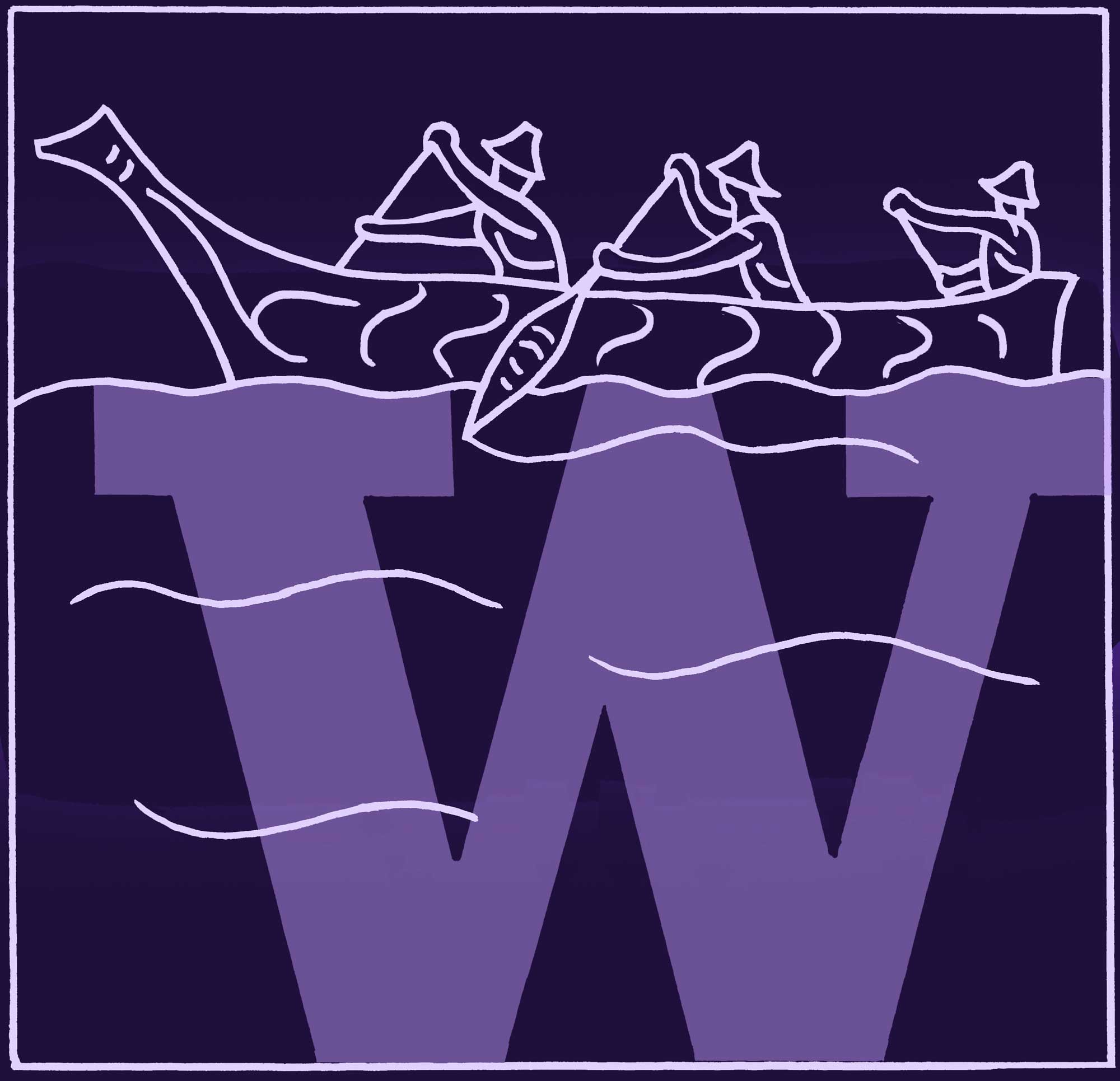
We often tell the story of the University of Washington as if it emerged fully formed in 1861. In fact, its origins are rooted in an earlier and far more complicated history.
In 1854, Territorial Governor Isaac Stevens conceived of a university for Washington Territory at the same moment tribal leaders, including my ancestor Chief Seattle, made the difficult decision to renounce violence and sign the 1855 Treaty of Point Elliott.
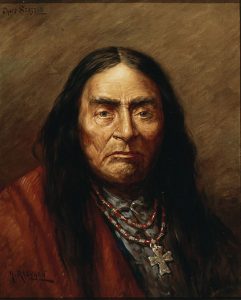
Chief Seattle painted by Henry Raschen
What followed was a difficult century for my people and for other tribal nations. The later decades of the century after that have been better, marked by the recognition of treaty rights and the resurgence of tribal cultures, progress to which the University has meaningfully contributed through the School of Law, the Burke Museum and the School of Fisheries.
The University’s own early history was also marked by struggle. It took decades to get this ambitious idea off the ground. The UW closed three times in the 19th century, did not award its first degree until 1876 and endured long periods of underfunding before growing into the institution we know today. Now, the University enrolls more than 60,000 students and graduates roughly 10,000 Huskies each year. Its faculty, researchers and students generate knowledge, skills and civic leadership for a complex nation and world. Its clinicians serve all patients, regardless of circumstance, from trauma care at Harborview Medical Center to cancer treatment at Fred Hutch to rural dental clinics through the Regional Initiatives in Dental Education program. The University of Washington is vast in reach and purpose.
Gov. Stevens had some ideas that history rightly judges harshly, and others that some would consider forward thinking. The creation of a public university, eventually built along our ancestral waterways, was among the latter.
Chief Seattle also held a vision. In a time of conflict among tribes and with white settlers, he chose a path of peace and the possibility, however uncertain, of his people’s survival, even at great cost in the short term. In 1856, just one year after signing the Treaty of Point Elliott, he expressed the hope that elders might live to see schoolhouses built for the instruction of their grandchildren, as promised by treaty. That hope still calls to us today.
In my roles as chairman of the UW Board of Regents and chairman of the Suquamish Tribe, I believe this shared history offers a lesson. Divisions and suffering can be overcome, though sometimes on a longer time scale than we would wish, when people commit to common goals.
Tribal wisdom calls on us to steward the land, waters, plants, animals and people of this place. The UW fulfills that responsibility through transformative education, pathbreaking research and outstanding medical care. It touches lives across Washington, the five-state WWAMI medical education region serving Washington, Wyoming, Alaska, Montana and Idaho, the nation and beyond.
Chairman Leonard Forsman is the first Native person to serve on the UW Board of Regents. He graduated from the University with a degree in anthropology in 1987.