Going beyond
All three UW campuses have been recognized for getting their hands dirty and collaborating with their communities. UW student Callie Murakami gets into the thick of it at Padilla Bay.
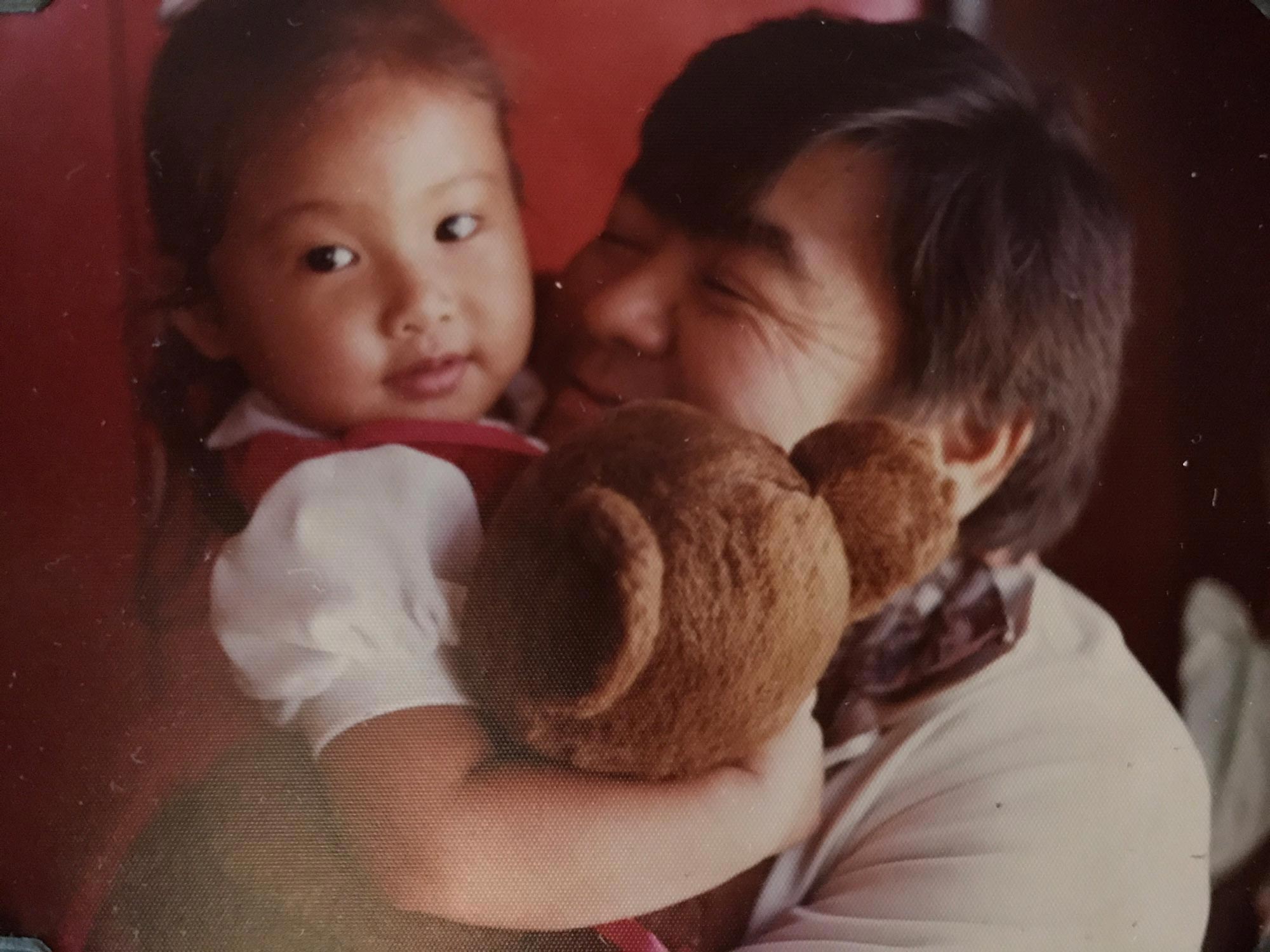
Author Tamiko Nimura traveled into the past to recover her family’s history and her father’s childhood.
In 2014, Tamiko Nimura, ’00, ’04, boarded a bus to Tule Lake—the site of the largest concentration camp for Japanese Americans during World War II—in search of a place she had never seen but that had shaped her family’s history. It was where her father spent nearly four formative years of his childhood.
The journey led her deep into her family’s past, into her father’s unpublished memoir and ultimately into work that would become her debut book “A Place for What We Lose: A Daughter’s Return to Tule Lake” (UW Press). Blending historical research with personal vignettes, Nimura weaves her father’s words together with her own reflections to explore her family’s experiences in the Tule Lake War Relocation Center. In doing so, she engages with those traumatic histories as acts of love, resilience and reckoning.
As she re-engaged with her father’s story, Nimura hoped to encounter him again and to receive, in some way, the fathering she lost. She hoped to recover words of support and wisdom to carry her through her own terrible times.
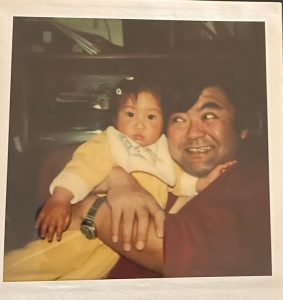
Tamiko Nimura with her father, Taku Frank Nimura, in the 1970s.
Nimura was 10 when her father, Taku Frank Nimura, died of an illness likely related to asbestos exposure at his workplace, the library at California State University, Sacramento. The building where he worked as a librarian was under construction. While laborers wore protective gear, library staff did not. His death left an immense void in his daughter’s life and a grief so powerful that for decades she avoided visiting his grave or reading his memoir.
But in 2014, after being denied tenure at the University of Puget Sound, Nimura boarded a bus bound for California to meet her elderly aunt Sadako, who had also been incarcerated in Tule Lake as a young person. Nimura traveled down the West Coast to experience an interfaith memorial service honoring the 331 Japanese Americans who had died at Tule Lake, plus discussions, workshops and bus tours of the concentration camp site that could help those on the pilgrimage see and imagine the past.
Established in 1943, Tule Lake became a maximum-security camp for those the government labeled “troublemakers” for protesting their unlawful imprisonment and refusing to answer a controversial loyalty questionnaire. Under martial law, the camp was governed by curfews and armed patrols. When Tule Lake finally closed in 1946, the grave markers and the tarpaper-wrapped barracks, evidence of this ugly chapter of American history, were removed. Today, little remains beyond the concrete foundations of former latrines.
“When I first stepped off the bus, I felt how hot and dry the landscape was,” Nimura says. “I searched right away for the Tule Lake landmarks I’d seen in old photos and that my father wrote about in his book: ‘Castle Rock and Abalone Mountain.’ And I felt myself searching for barracks, even though I knew they were not there anymore.”
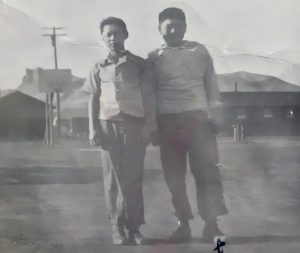
A photo from the Tule Lake Segregation Center where author Tamiko Nimura’s father, Taku Frank Nimura, right, was imprisoned from age 10 to 14.
Nearby in a small museum at the Tulelake-Butte Valley Fairgrounds, Nimura paged through a thick directory of those imprisoned and found her father’s name alongside other family members. And in the safety of a community of fellow travelers who had descended from the Tule Lake experience, Nimura gave herself the space to grieve. She felt the enduring impacts of the racism that had harmed her family through unjust, unconstitutional incarceration and its reverberations throughout her own life.
Publisher’s Weekly calls the book a “gut-wrenching work of intergenerational dialogue” and says the back-and-forth structure of her words and her father’s “works beautifully.”
Traveling between her father’s wartime accounts of his life as a child at Tule Lake and Nimura’s present-day reflections upon her father’s writings, “A Place for What We Lose” excavates a family archive to recover what history tried to erase. Through a familiar form that her librarian father also deeply loved, Tamiko creates a structure that holds both commemoration and space for grief.
The book culminates in a letter from Nimura to her father following her visit to Tule Lake and her discovery of a childhood photograph that she had never seen before. She thinks about her own daughters and realizes it wasn’t a father whom she found by reading his manuscript. Instead, she encountered a younger version of him who she comforts with caring words, “You will leave here. I will come back for you.”
Photos courtesy of Tamiko Nimura.