A dorm that feels more like home
A renovated dorm will open on the UW campus in fall 2027.
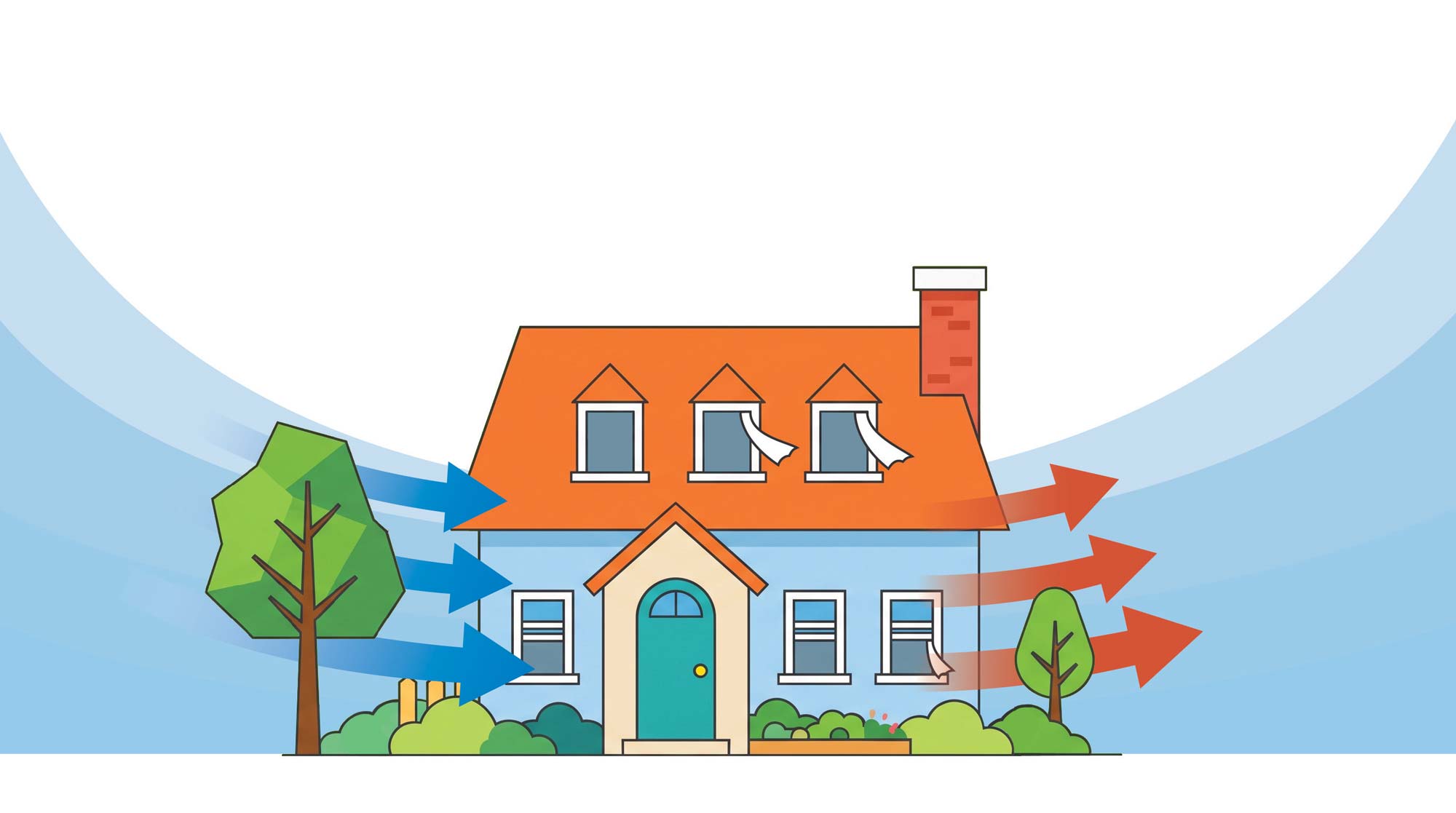
The German practice of lüften, or “house burping,” has become popular recently to improve indoor air quality. We spoke with Dan Jaffe, a professor at UW Bothell’s School of Science, Technology, Engineering & Mathematics and in the UW Department of Atmospheric Sciences, about the ways to reduce indoor air pollutants. His expertise, which has been highlighted on NPR, The New York Times and Outside Magazine, focuses on regional and long-range transport of pollutants, wildfire smoke, ozone photochemistry, mercury, diesel, coal-train emissions and the chemistry of smoke.
Jaffe: It’s the German practice of opening your windows and doors once a day to let in fresh air. What I do is focused on whether I run my stove. Or if there’s a big party with people in my house. I keep my doors open when I know there’s going to be a big increase in air pollutants in the home.
Pollutant emissions can come from many sources, for example, cooking on both an electric and gas stove, anytime you fry or grill foods. Even when making popcorn, you create particulate matter. If you have a gas stove, you’re also making carbon monoxide, nitrogen oxides and other pollutants and creating air pollution in your home. Unless you vent it, you’re going to have bad air quality.
Nitrogen oxides are known respiratory irritants and associated with a variety of health impacts, especially in young children. In one study, more than 12% of asthma in children was attributed to gas-stove use in homes.
Air fresheners release volatile organic compounds into the air and aren’t doing anything helpful. Candles create carbon dioxide and soot.
I definitely wouldn’t do it when there’s wildfire smoke outside! Pollen typically arises in spring and early summer. If I’m going to bring in outside air to ventilate, I want to filter it to get rid of pollen.
We measured the air quality across classrooms at UW Bothell. In some cases, we saw high levels of carbon dioxide exceeding 1,000 parts per million (ppm). Having a large number of students in a classroom generates carbon dioxide. If the room is not ventilated well, this can accumulate to high levels. People get sleepy and experience difficulty focusing at 1,000 ppm.
You can buy an indoor air monitor for about $200. I have a PurpleAir sensor that changes colors when air quality gets bad in my home. If I see it turn red in the dining room, when my wife and I are cooking, it’s a trigger for us to ventilate the air.