Appointments and awardees
Celebrate professors stepping into new leadership appointments and award-winning faculty pursuing international research projects.
Ronit Plank, who teaches a memoir course at the UW, talks about finding a voice, honing your craft and learning from others' stories.
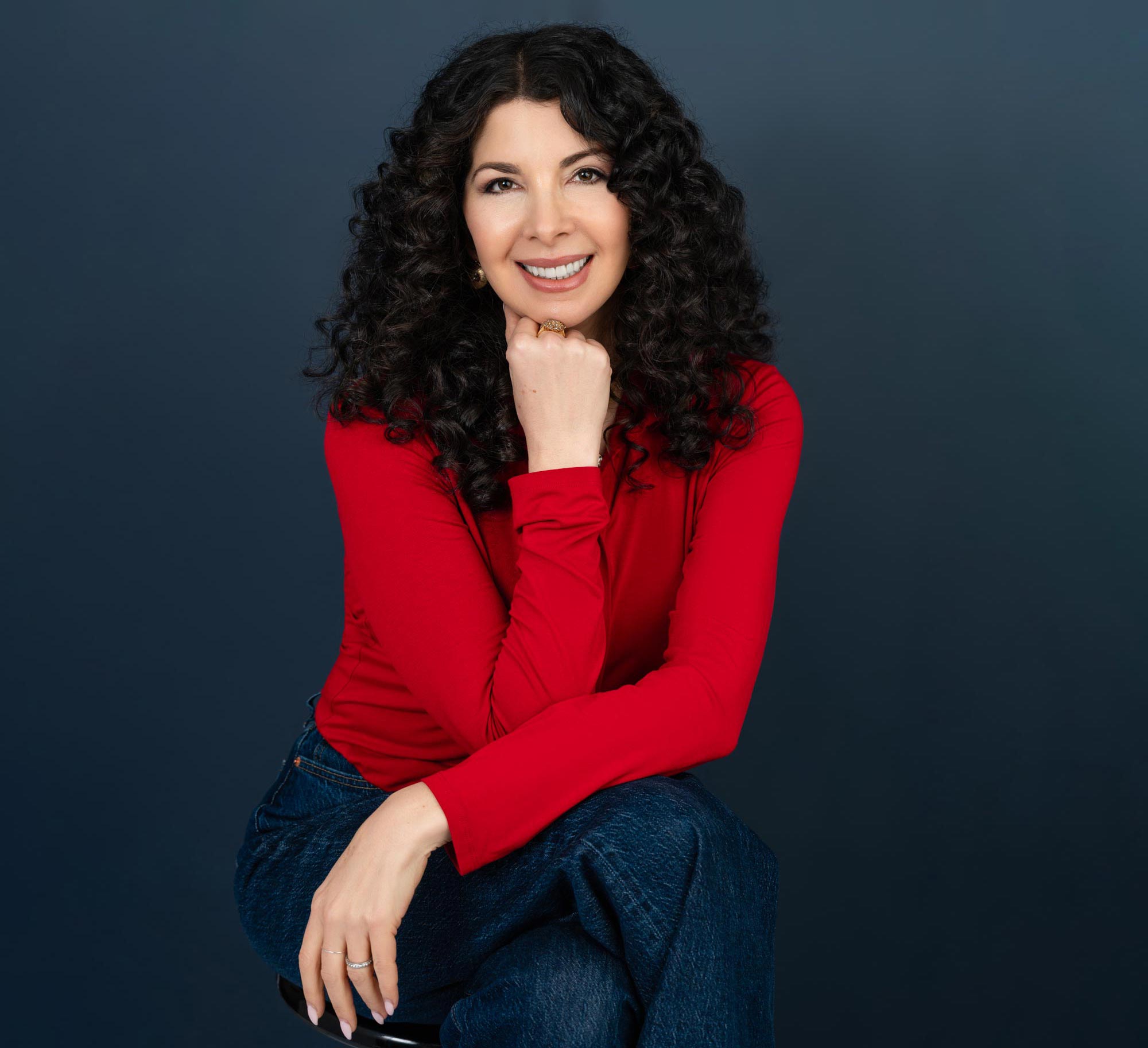
Ronit Plank wears many different hats: podcast host, writing coach, instructor and writer. But whether she’s interviewing a memoirist about their latest release, demystifying the publishing process on Substack or teaching people how to write about their experiences, one thing is clear: She finds the story in everything.
I sat down with Plank, who teaches memoir writing with the UW’s Professional and Continuing Education Program, to learn more about her approach to writing memoir and teaching future memoirists, what she loves about the genre, and her tips for finding your voice.
This conversation has been edited for clarity and length.
Surprisingly, I used to dislike memoir. I started as an actor in New York and L.A. When my kids were born, I needed a new creative outlet, so I took courses on fiction writing with Scott Driscoll at the UW’s Professional & Continuing Education Program. I kept masking my experience in fiction and short stories, but I eventually switched to writing my memoir. My memoir, “When She Comes Back,” eventually came out in 2021. A year later, I launched my podcast, Let’s Talk Memoir, where I interview memoirists about their writing process, challenges and lessons learned.
Memoir isn’t everything in your life, but a particular set of experiences that you’re looking closer at. It also has a lot more to do with the dynamic of the memoirist and what they’re trying to figure out. Why do certain things stay with them? What do their experiences mean to them now? The narration in memoir is about making sense of one’s experiences.
I realized that my memoir wasn’t only about the events that took place, but also what stayed with me and the behavior patterns and dynamics I had around them. My memoir was about the lasting effects of a parent leaving, how it made me feel and how I healed.
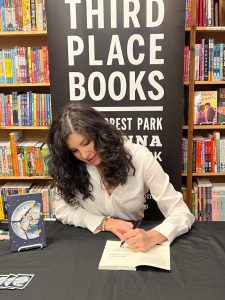
Ronit Plank signs copies of her memoir, “When She Comes Back,” at Third Place Books.
When I teach memoir, we always look at excerpts of memoirs and find elements that are effective so we can emulate them, learn from them, and decide where we want to lean in further. What can be especially challenging is writing as both the character-version of us and the narrator-version, and making meaning from what has occurred in our lives. That process can take a while.
In this course, students workshop their writing by reading each other’s work and leaving specific and constructive comments. It’s important for writers to articulate what they appreciate and what they notice, and it enables students to learn how their material is coming across and calibrate how they want to tell their story.
With memoir, people are not only talking about your writing craft, but also your life experience. In this course, we take time to actively participate and understand how others see the world, which helps build trust. Because we have so much time together, it’s a great way to engage and create a foundation of respect.
Memoirist Edgar Gomez, a guest on the podcast, talks about how he’d love to write without including anyone, but he’s always in relationship with others. It comes with the territory of being a person in the world.
I advise other writers to first write like no one is going to read their work. You’re crafting a narrative from your experience, and everyone remembers things differently. When it comes to memory, there is no 100% accurate truth unless you had a recording and a camera, and everyone agreed on the facial expressions and tone.
There’s no one way to tell a story, and as memoirists, we get to decide on the approach that feels right to us. In my case, I focused on the memories that were salient to me. If I wrote my story now, it would be different from what I wrote initially, but that’s OK. That is a snapshot of who I was, and I’ve grown in my understanding and my enthusiasm for memoir. I share that with students because this is their time to explore and to render what they understand on the page in the way that makes the most sense to them.
Interviewing memoirists for my podcast, Let’s Talk Memoir reminds me how long a memoir takes. Unofficially, the average time it takes to write a memoir among the people I’ve interviewed is 10 years.
No matter how old someone is or the family system they came from, memoir writing is challenging because we have to look at ourselves and re-evaluate what we’ve always known and whether we still believe that or need to let things go. This is part of why memoir can help us grow and become more well-rounded, generous and vulnerable.
You don’t need a photographic memory to write a memoir. You just need to think about the events or memories that have their hooks in you. Make a list of those memories, why they matter, and why you think they need to be in your memoir. Start writing one of them and see what happens. You can worry about the backstory and add the connective tissue later. You’ll probably have to make a mess at first, and as you work your material, it will come together if this ends up being a project you want to pursue.
If you don’t read memoir, I invite you to revisit the new kinds of memoirs out there and experience stories written by writers with a myriad of lived experiences. If you don’t like one, try another one.
Reading literature makes us better humans, and reading memoir in particular grows our empathy and self-understanding, and helps us remember that there’s room for our story too.
Registration for Memoir Writing: Finding Your Story opens January 13, 2027. Ronit Plank is the host of Let’s Talk Memoir, a podcast for memoir lovers, readers and writers.
About the author: Aleenah Ansari (she/her) is equal parts storyteller, creative problem solver, and journalist at heart who’s rooted in the stories of people behind products, companies and initiatives. She writes about travel, entrepreneurship, mental health, wellness and representation in media for Insider, The Seattle Times, Byrdie and more. You can usually find her searching for murals, reading a book by a BIPOC author or planning her next trip to New York. You can learn more at her website.