Fighting conscious erasure
Former UW professor Scott Kurashige spotlights history and community organizing in "American Peril."
The Black Embodiments Studio is building a new generation of arts writers.
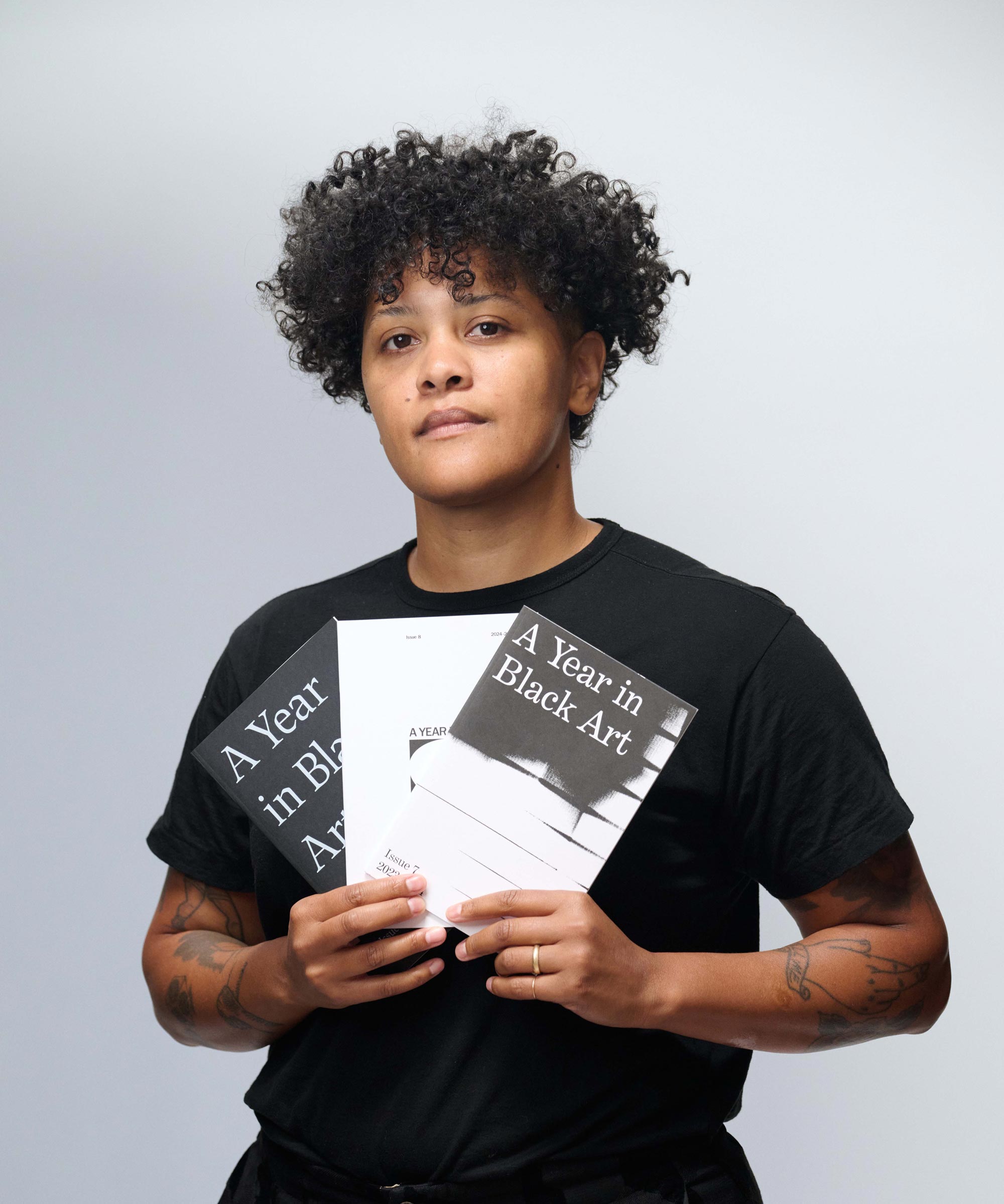
To Kemi Adeyemi, founder and executive director of Seattle-based arts organization Black Embodiments Studio (BES), nothing is inherently complicated about communicating the experience of art through words. “Anybody can write about art. It's that simple,” Adeyemi says. “Once you have been given the space to practice creating connections between description and interpretation, you're good to go.”
That belief has fueled BES since its inception in 2017 at the University of Washington. Over the last almost-decade, BES has grown into an arts organization rooted in bolstering the critical conversation around Black contemporary art. Through BES’ arts writing incubator, collaborations with Black artists and critics, and work with newspapers and its own publications, dozens of writers have had the time and space to grow their skills as critics.
Through Adeyemi’s leadership, BES approaches the often gated contemporary art world with open-minded experimentation and an unwavering thesis—to support Black art criticism. In fostering Black art critique, she isn’t prescriptive or rigid in her ideas. For her, effective arts criticism responds and adapts to its audience – getting people to think about art by meeting them where they are at. Art criticism is for the masses.
“The goal is for all of us to build discourse,” says Adeyemi, who is also an associate professor of women, gender, and sexuality studies at the UW.
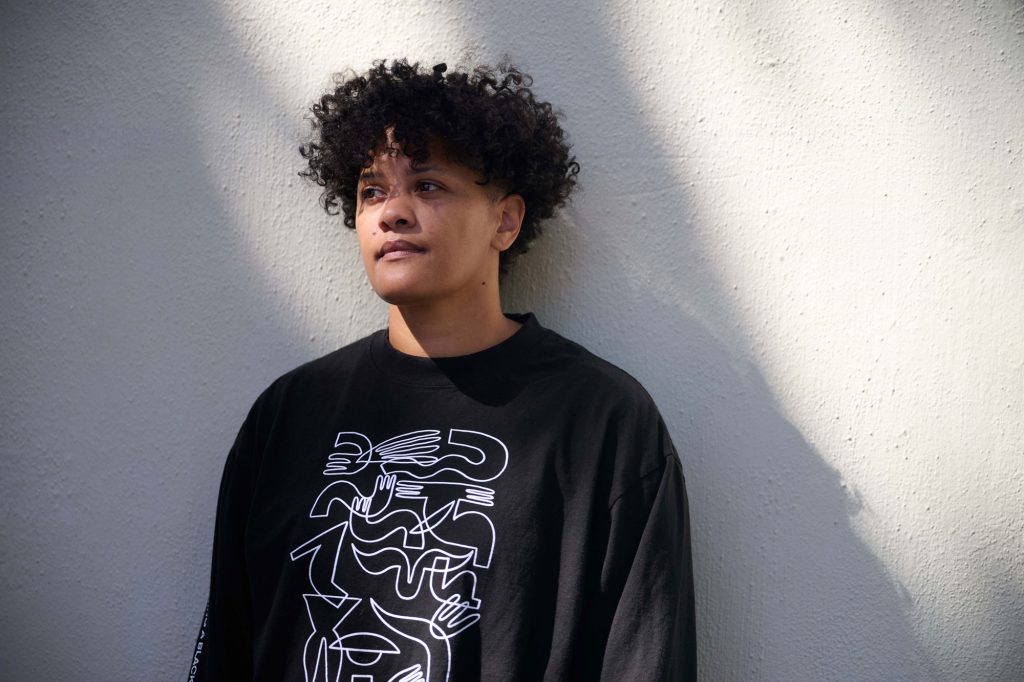
Kemi Adeyemi, founder of The Black Embodiments Studio
Every year, BES selects a group of writers for its yearlong Art Writing Incubator aimed at building critical muscle. Participants meet weekly to discuss readings by writers and critics like Cédric Fauq, Taylor Renee Aldridge, Jessica Bell Brown, Jillian Steinhauer and Aria Dean, and then respond to the readings with writing prompts. They also work on their specific writing projects—getting feedback from Adeyemi and one another—which will then be published in BES’ journal, A Year in Black Art, at the end of every session. In her guidance, Adeyemi believes it’s important to challenge her writers to think beyond the idea that arts writing inherently provides a space for rest, healing and liberation, instead encouraging them to ground their observations in material conditions and political contexts.
“Practically, whether it’s in our arts writing incubator sessions, whether it’s in the way that we’re editing work, it’s pushing somebody to go one step beyond that word ‘liberation,’” Adeyemi says. “We need six more words to say what you mean, when you mean it, how you mean it, toward what end you mean it—so it’s about detail and specificity.”
Though the incubator is now open to writers outside the UW, the project initially consisted of graduate students interested in making critical connections outside their specific academic lanes. Part of their training included going out to see art in the city at places like the Henry Art Gallery, Frye Art Museum, Photographic Center Northwest and On the Boards. Students who’ve been part of the incubator include Chari Glogovac-Smith, ’24, Matthew Howard, ’22, Anisa Jackson, ’15 and Jennifer Williams, ’18.
“[Grad students] have this great critical skill set that can be very generative to the art world,” says Adeyemi. “At the same time, their critical skill set is so niche and so disciplinary that practicing arts writing can help them expand their written voice and complement what they’re doing in their departments.”
Brittney Frantece, who received her Ph.D. in English Literature and Cultural Studies from the UW in 2024, joined BES in the organization’s early days. Her degree was housed in the English Department, but Frantece’s specific academic inquiry in cultural studies led her to apply to BES’ first writing cohort. “It felt like UW’s Black Studies Department,” she says. “It was fun to talk through Black studies, ideas, conversations, discourse, in a space where it was hard to really find that.” Her time working with Adeyemi and BES expanded her breadth and understanding of critical analysis and how looking and thinking about art can be an embodied experience.
“I really prioritize how my body feels in relation to the art that I’m experiencing. I think about how cultural productions allow us to experience things,” says Frantece, who is completing a Thurgood Marshall Fellowship at Dartmouth College. “BES gave me the room and language to communicate that experience.”
For Seattle-based artist, curator and writer Berette Macaulay, ’20, the incubator provided a needed counterpoint to the training she received in her master’s program where writing in an academic, institutional voice is centered over any type of creativity. Learning and growing alongside similarly minded academics at BES helped Macaulay bridge her analytic work with her desire to experiment.
“The ways that [Adeyemi] would prompt us or the ways that she would catch us on seeking permission in our writing was really great,” Macaulay says. “I wanted to experiment with how to blend poetic writing with critical writing, how to play with lyricism … and to do it inside of a structured space where you have a community that is going to read the work, review the work—I never had that experience before. That was very useful and stayed with me for sure.”
“What if you literally just put the work where the so-called community is?”
Kemi Adeyemi
BES moved out from under the UW’s auspices in 2020 to its own self-sustaining organization funded by grants from the Mellon Foundation and Ruth Arts, growing into a project that now has national and international reach. Its art criticism blog, The Brief, pays arts writers from around the world to write about shows they’ve loved (and hated) and features “reports from the field,” which consist of behind-the-scenes looks at what artists and writers have been up to in their work. And last year, BES launched a paid six-month art criticism apprenticeship at the Seattle Times as a way to embed art critique within a large regional newspaper. BES is continuing the project this year with the Houston-based magazine Scalawag.
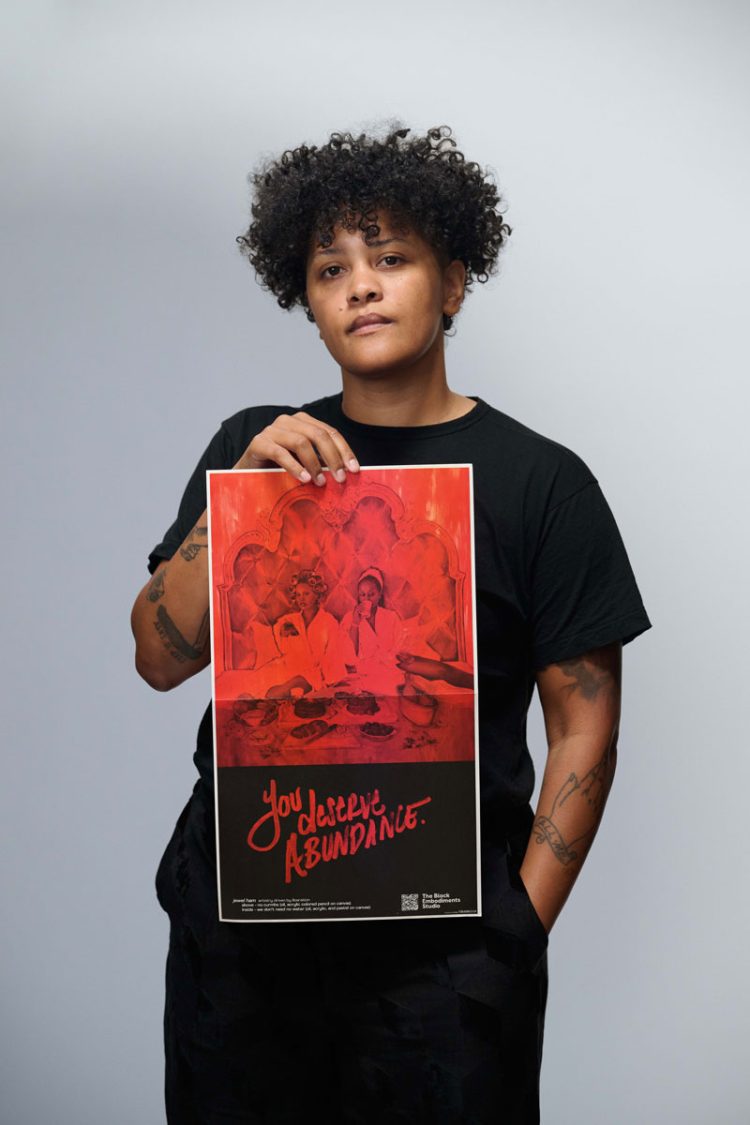
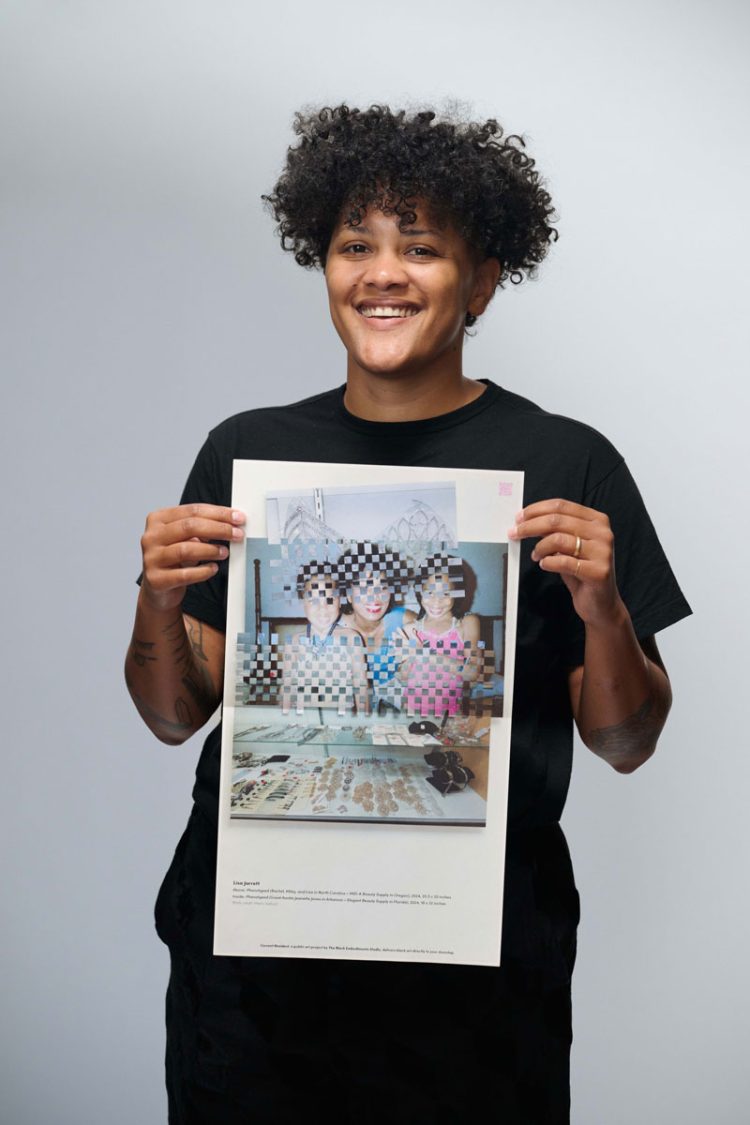
The organization also supports artists. Current Resident is BES’ public art project that commissions Black artists to make work embedded in direct-mail pamphlets (which usually serves as junk mail) sent to ZIP codes across the city and art interventions in online ad spaces “geofenced” in certain areas. Neither are places you expect to see the work of visual artists like Jewel Ham or Lisa Jarrett, but the fact that people from outside the conventional art-supporting community might encounter something that makes them stop and think feels like a huge win for Adeyemi.
“How do we get diverse communities into the museum? What if you literally just put the work where the so-called community is?” Adeyemi says. “The museum, art institutions and organizations, we have the resources to spread it around. Let’s see what happens when we give it to people for free.”
Another way Adeyemi and BES are furthering this is with their upcoming print newsletter called The Brief, that will be published three times a year and sent straight to subscribers’ homes. Inspired by New Left social movement newspapers and working-class feminist and queer newsletters, The Brief will contain how-to guides, op-eds, announcements and local, national and international art criticism in the form of short reviews, interviews and local art scene reports. Letters to the editors must be handwritten.
“I know that we are in the digital age, and beholden to these corporations in certain kinds of ways, but we don’t have to completely consent to all information being routed through them,” Adeyemi says. “I think [The Brief] also is just about having some sort of circulation of information that is not based on the internet.”
Originally from Minnesota, where her earliest experiences of art were at the Minneapolis Institute of Art, Adeyemi earned a Ph.D. in performance studies at Northwestern University. Her time in Chicago shaped her understanding of critical discourse. “I got asked to write people’s gallery and exhibition texts, so [arts writing] was just part of my intellectual and creative practice,” she says. Moving here in 2016 for her job post at the UW, Adeyemi found Seattle’s art scene to be insular and difficult to penetrate. Rather than seek out a creative community, she decided to build it herself through her resources at the UW.
Beginning in 2017, Adeyemi developed and launched BES at the UW within the Walter Chapin Simpson Center for the Humanities, where the program lived until 2019. Open to graduate students who wanted to improve their arts-writing skills, the center provided early financial and structural support for BES, something Adeyemi credits for her organization’s continued success.
“They were so generous in being transparent about what they wanted or what they see has worked or hasn’t worked and wanted the project to succeed. I think BES does that with other people too,” Adeyemi says. “We’re not protective about the process and that, I think, was really also modeled by the Simpson Center.”
As BES continues to grow in its programming, its organizational structure has grown too. BES now has a dedicated designer, program director, communications director and editor, all focused on increasing discourse around Black art. For Adeyemi, nurturing art criticism is essential, not just for the arts but for political and civic discussion at large.
“Arts literacy is central to civic literacy, civic competency, and building the muscle of critical thinking,” she says. “We can do that through the arts.”
Jas Keimig is an arts writer based in Seattle. Their work has appeared in The Stranger, the South Seattle Emerald, Cascade PBS and beyond. They served as the 2025-26 Black Embodiments Studio apprentice art critic at the Seattle Times, covering visual art, music, film and performance.