Myths, mortality and motherhood
Kristen Millares Young blends personal narrative with mythology and cultural inquiry in "Desire Lines."
Three-time Newbery Honor author Christina Soontornvat writes fantasy with a scientific lens.
As a public librarian in Yakima, her first job out of school at the UW, Beverly Cleary, ’39, met a little boy who wanted to read books “about kids like us.” Ordinary kids, with schoolwork and skinned knees and lost dogs. But there weren’t any.
“If you don’t see the book you want on the shelf,” Cleary famously said, “write it.”
Spencer G. Shaw had a similar ethos. Shaw, a longtime professor at the Information School (then the Graduate School of Library and Information Science), broke barriers in his hometown of Hartford, Conn., where he was the only Black student in his grade-school classes. “We are living in a pluralistic society,” he said in a 2005 interview with the Information School. “We have to develop cultural understanding and acceptance of others. One channel to use to accomplish this is through storytelling.”
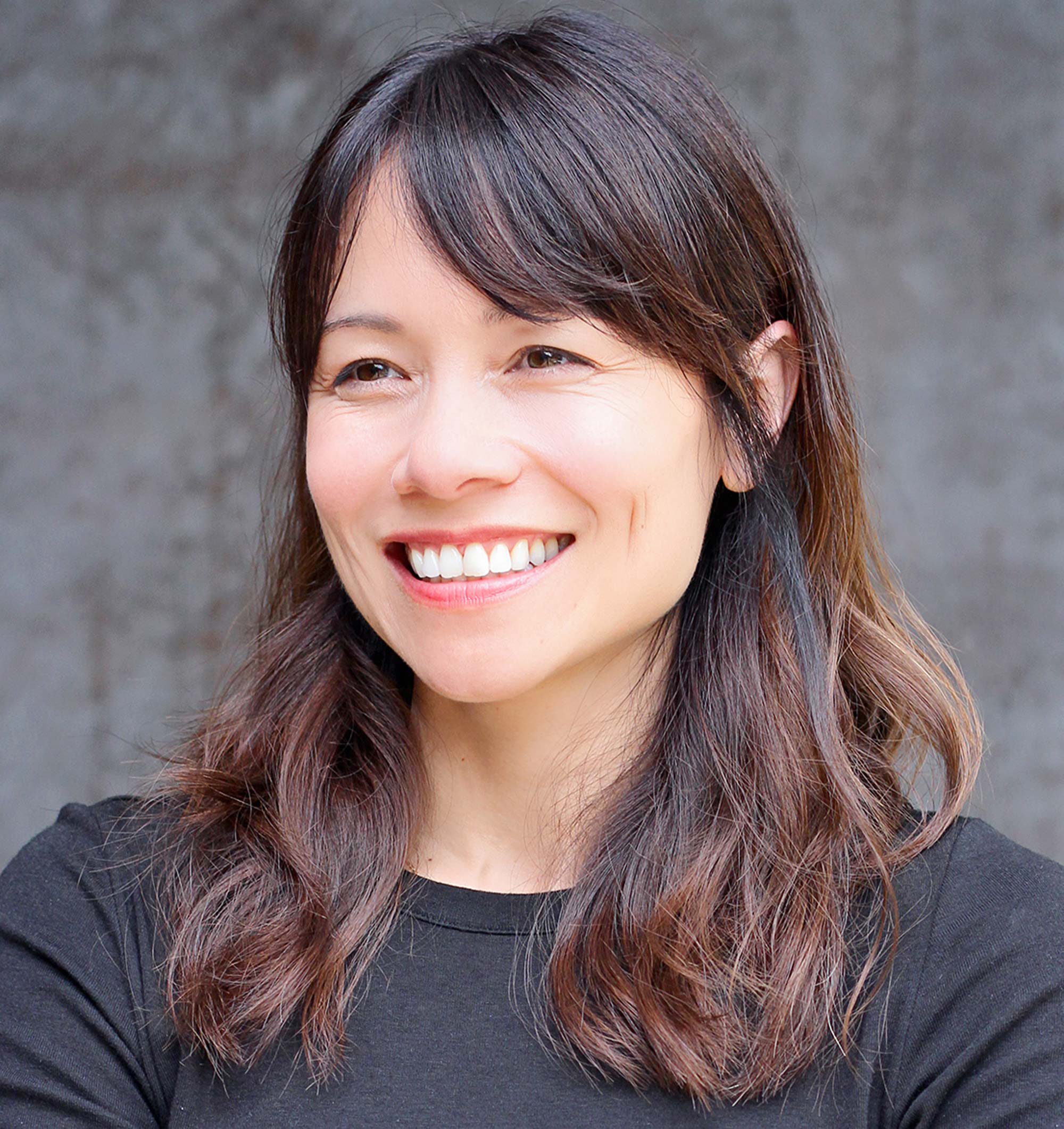
The UW’s Spencer G. Shaw Endowed Lecture Series invites leading figures in children’s literature to campus. This year’s lecturer is Christina Soontornvat, an award-winning author, engineer and STEM educator. Soontornvat’s books are about identity, family and discovery—but also about justice and belonging.
Soontornvat, who will speak at the UW on Oct. 8, met with University of Washington Magazine to talk about her beginnings as a writer, her collaborations with illustrators and the themes in her work.
This interview has been edited for clarity and brevity.
Christina Soontornvat: My path to becoming a children’s writer is very winding and unexpected. I was really into math and sciences, so I majored in mechanical engineering in college. But I always loved reading and making up stories.
When I was almost 30, I made up a bedtime story for my nieces, and that story just grew. They wanted to hear more, and it kept evolving so I wanted to write it as a children’s book.
I got hooked with writing, and the joy of knowing that kids are reading my stories, staying up late, leading to more books. I was imagining my nieces’ faces reading it, wanting them to keep going. And I never stopped—I’m now on book 27.
I mostly write fantasy, but I’m always thinking about things with a scientific lens. Even if there’s magic in the story, I try to make it as believable as possible.
When you train to be an engineer, you develop this mindset that there’s no problem you can’t solve. A book is just one big, massive problem with little problems along the way.
I loved fantasy. Some of my favorites were “Watership Down,” “The Lord of the Rings,” “The Lion, the Witch and the Wardrobe,” books by Roald Dahl. I wanted to escape the real world. But I also loved classics: Charles Dickens, “Les Misérables …”
Darkness has always been a part of children’s stories, like the Grimm fairy tales that are so well-known. There’s always a scary wolf waiting in the woods, or a witch putting you in an oven to eat you. But it’s by confronting the darkness that the character becomes the hero of the story. Children’s tales are so important because they allow young people to confront dark and scary things in a safe way, and to imagine themselves as the hero.
We don’t work directly with each other; I write my script and give it to them, and they interpret it. I don’t tell them exactly what every character should look like, how every scene should unfold.
We don’t talk until a project is finished. My illustrator for “Tryout” was relatively new to making graphic novels when we started working together. She shared sketches, I shared notes, but people would be surprised how much trust there is in that relationship. That’s how you come up with the best books—when the writer lets the illustrator work their magic.
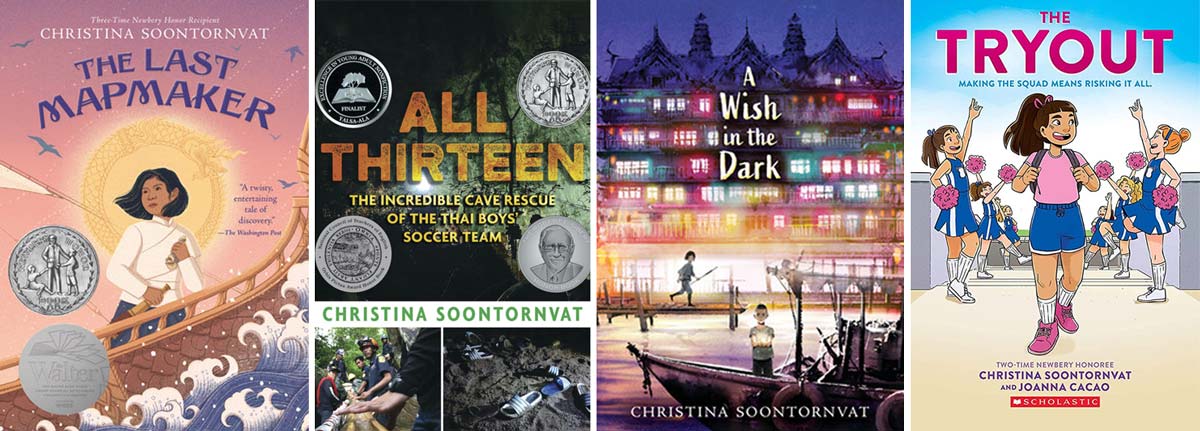
Along with her beloved “Diary of an Ice Princess” chapter book series, Soontornvat has written graphic novels, picture books and nonfiction—like “All Thirteen: The Incredible Cave Rescue of the Thai Boys Soccer Team.”
Whenever I hear from a young Thai reader or Southeast Asian or Asian American reader, that’s so special. I never read a book written by someone like me with a background like mine, with characters who looked like me. That might be why I never envisioned myself becoming an author.
I grew up in a small town where there weren’t a lot of Asian Americans. I felt different from the people around me. But I felt proud at the same time. I feel a great responsibility writing books for kids that reflect our culture and who we are. I hope I can keep doing it for a long time.
Get away from screens as much as possible. In the last year or two, I’ve been struck by how vital it is as a writer for me to get out and talk to people face-to-face, have personal interactions, walk my dog, walk through the grass without shoes on—real-life experiences. If you don’t have that, you don’t have anything to feed your writing.
Christina Soontornvat will give a keynote lecture, audience Q&A and book-signing reception at the Information School’s Spencer G. Shaw Lecture Series on Thurs., Oct. 8 at 7:30 p.m.