Trust, science and saving lives Trust, science and saving lives Trust, science and saving lives
Dr. William Foege used knowledge and action to halt resurgent disease.
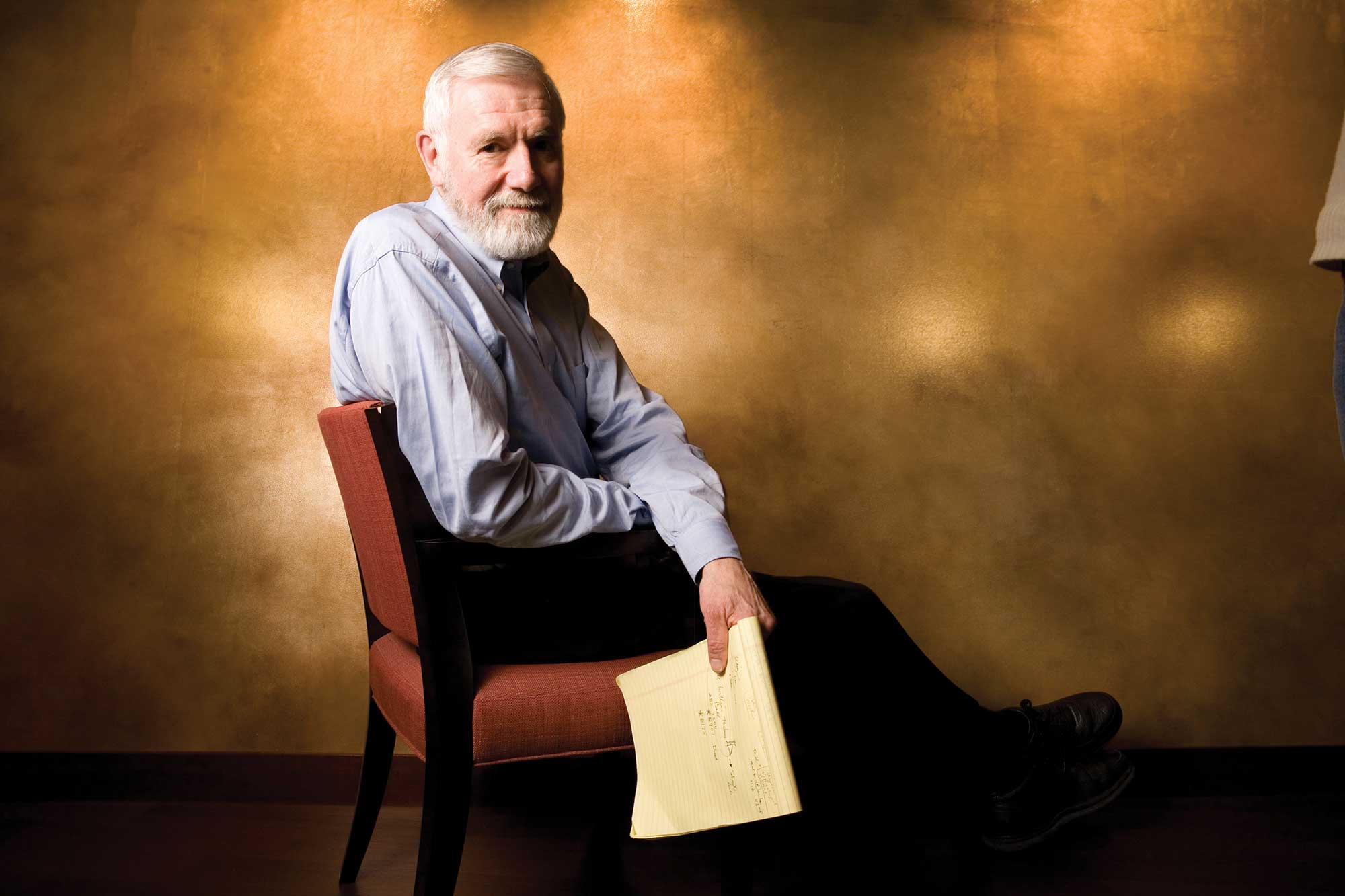
Dr. William Foege used knowledge and action to halt resurgent disease.
As the incidence of measles rises across the United States—with 588 confirmed cases reported in January alone—the death of Dr. William Foege comes at a moment of renewed urgency for public-health leaders. They are confronting a disease that was once nearly eliminated. Propelled by declining vaccination rates and persistent misinformation about vaccine safety, the resurgence of this dangerous illness is precisely what Foege spent his career warning against.
Foege, ’61, who died Jan. 24 at the age of 89, was a physician and epidemiologist who helped move measles from a widespread childhood disease to a rarity. Perhaps best known for his role in the global elimination of smallpox, he spent his career demonstrating how vaccines, trust in science and coordinated public action could save millions of lives. “Bill Foege is a lasting inspiration to others because of his unselfish dedication to protecting people from infectious diseases in the United States and globally,” says Dr. Tim Dellit, CEO of UW Medicine and dean of the UW School of Medicine.
Today’s outbreaks don’t reflect a failure of vaccines, but rather a failure of public confidence and shared responsibility that Foege championed. Dr. Helen Chu, ’12, an infectious-disease specialist at UW Medicine, recently noted in a School of Public Health interview that the effects of measles are often underestimated. “I think people have forgotten how bad measles can be when you’re a child: Not only does it have short-term consequences of making you very sick with pneumonia, with the infection of your brain and with all sorts of other things that can happen immediately, it also has long-term consequences.”
Perhaps best known for his role in the global elimination of smallpox, Foege spent his career demonstrating how vaccines, trust in science and coordinated public action could save millions of lives.
Foege’s lifework was rooted in preventing precisely the kind of backsliding the U.S. faces today. A graduate of the UW School of Medicine, he was working in Eastern Nigeria in 1966 when he promoted a surveillance and “ring vaccination” strategy that identified outbreaks and immunized those most likely to be infected. The approach proved especially effective in regions with limited vaccines and medical personnel. A little more than a decade later, after the strategy was widely adopted through the World Health Organization’s Smallpox Eradication Program, transmission of the disease had stopped worldwide. Smallpox was officially declared eradicated in 1980.
“Bill Foege figured out the process and carried out the difficult task of wiping out smallpox from the world,” says Dr. Wes Van Voorhis, a UW Medicine infectious-diseases specialist. “His contributions also set the pathway to eliminating other diseases that plague humanity.”
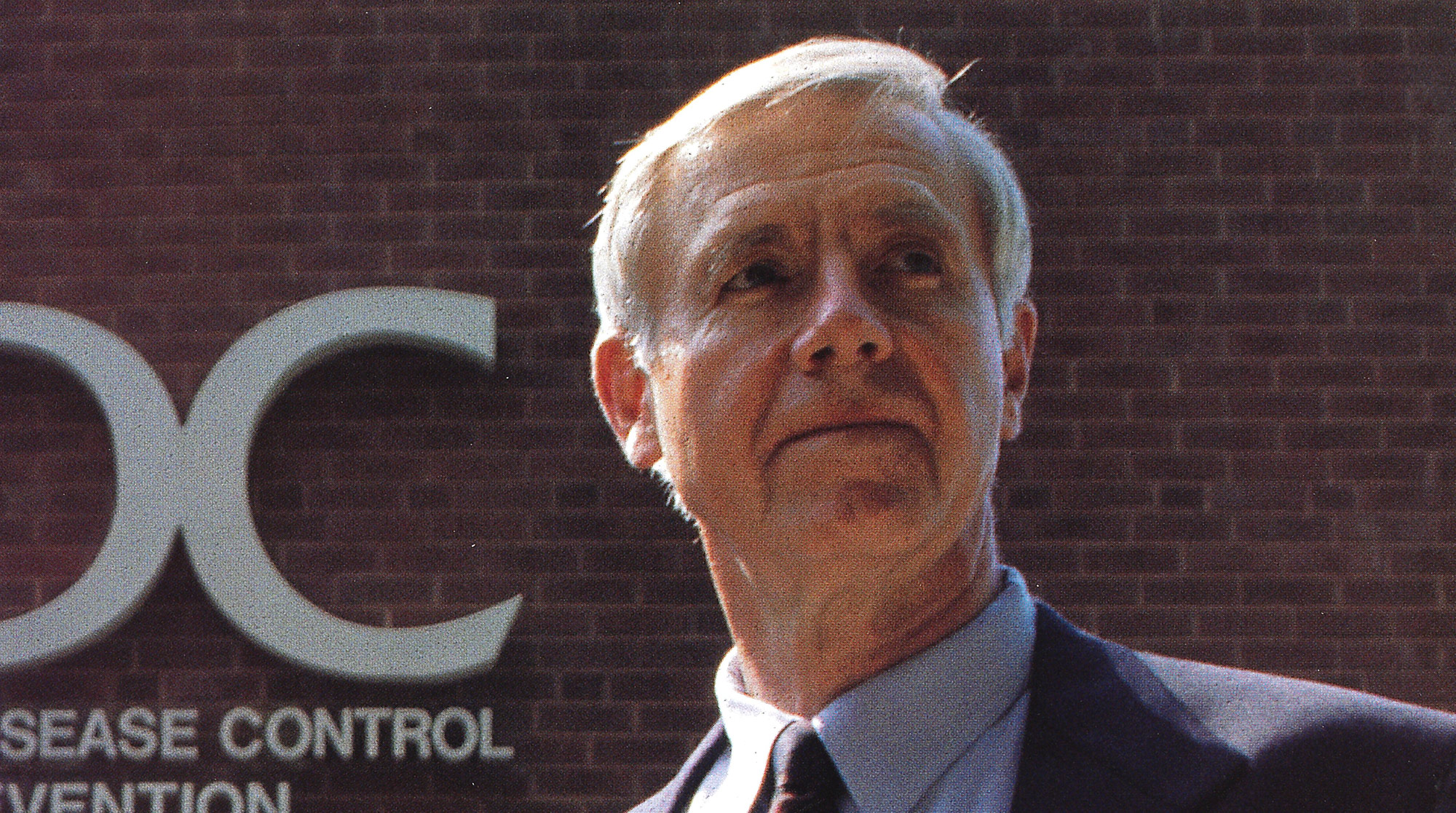
As director of the Centers for Disease Control and Prevention from 1977 to 1983, Foege navigated the identification of toxic shock syndrome and the start of the HIV/AIDS crisis. He was also instrumental in the rise of vaccination rates in developing nations. Throughout the 1980s and beyond, Foege continued his public-health leadership through the Task Force for Global Health, The Carter Center and the Bill & Melinda Gates Foundation. His work expanded into child survival, injury prevention and global-health policy—always guided by the belief that science must be paired with ethical clarity and public trust.
That belief took root early. The son of a minister, Foege developed an interest in global service as a teenager, inspired by medical missionaries and humanitarians. While a UW medical student, he worked at the Seattle–King County Health Department before joining the Epidemic Intelligence Service, serving in the Peace Corps and earning a Master of Public Health at Harvard.
He received numerous honors for his work. In 2006, the UW School of Medicine dedicated the William H. Foege Bioengineering-Genome Sciences Building. In 2012, he was awarded the Presidential Medal of Freedom.
As measles once again spreads, Foege’s legacy serves as a reminder and a way forward: vaccines work, but only when individuals trust the science and communities work together.
Leila Gray, a writer with UW Medicine, contributed to this story.