Art criticism for the masses
“Anybody can write about art,” says Kemi Adeyemi, founder of The Black Embodiments Studio, an arts organization rooted in bolstering the critical conversation around Black contemporary art.
Scott Kurashige's new book spotlights the "conscious erasure" of anti-Asian violence.
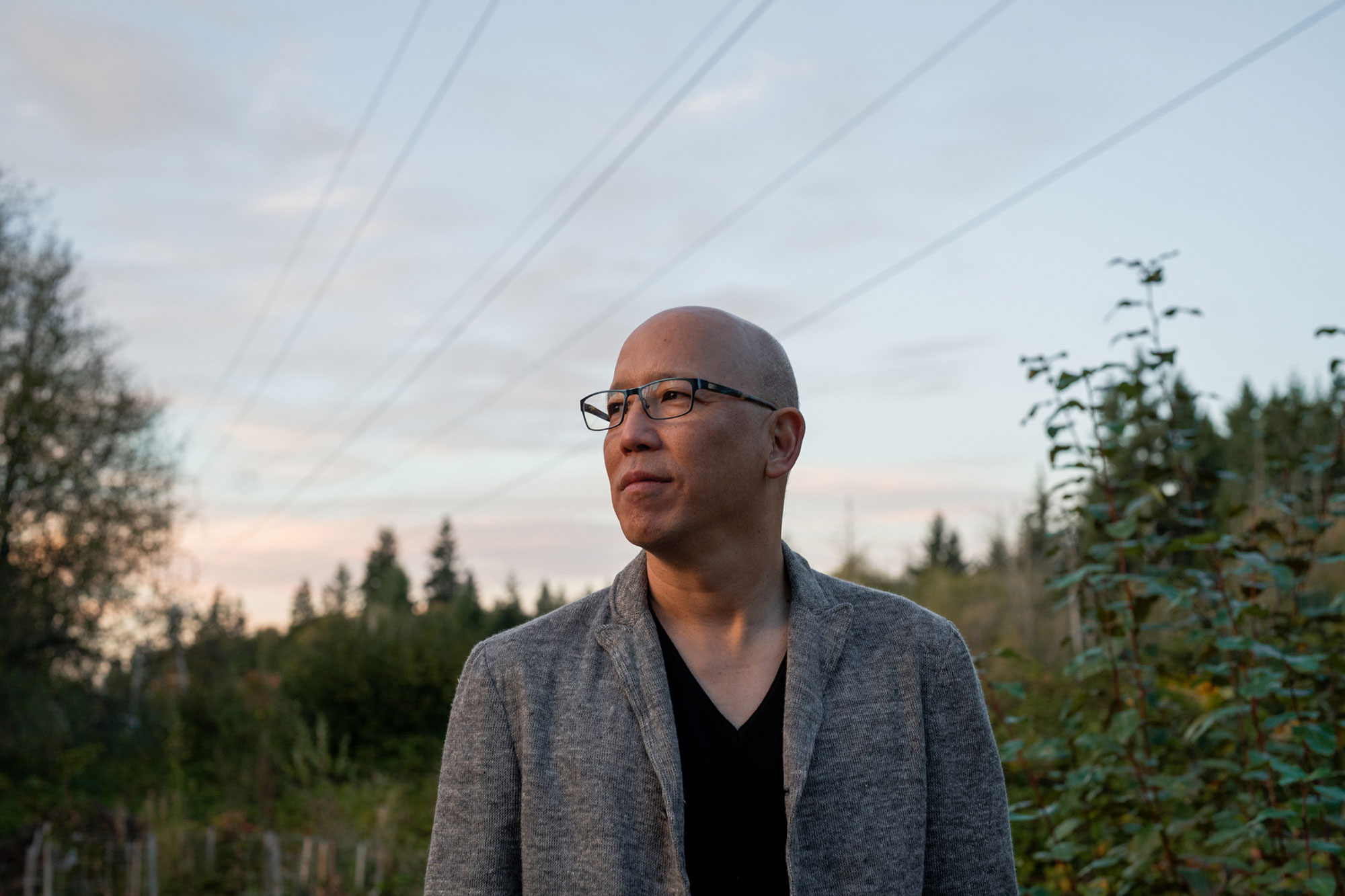
When Scott Kurashige took “American Peril: The Violent History of Anti-Asian Racism” (University of California Press, 2026) to the Seattle Central Library this past spring, the author didn’t come alone. He shared his spotlight with activist Troy Osaki, ’13, and organizer Ana Tanaka, ’23, to redirect attention toward their engagement and involvement with local community organizing against migrant detention.
The event was part of the former UW Bothell professor’s national book tour and his efforts to highlight organizations, activists and academics involved with movement building. Sharing the stage is an extension of Kurashige’s long career as a public scholar with deep community ties in Los Angeles, Philadelphia, Detroit and Seattle. His book can be read as a collectivist project, synthesizing the hard-won lessons of decades of organizing so that this knowledge can inform future grassroots mobilization.
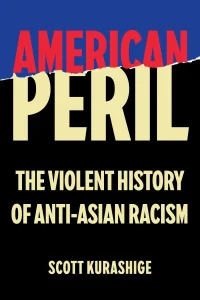 Responding to a wave of attention on anti-Asian violence during the pandemic, “American Peril” anticipates the current backlash by showing how past violence was repressed and chronicles the community organizing that endured eras of invisibility. “Like most people in the U.S., I learned next to nothing about Asian American studies in my K-12 education,” Kurashige told the library audience. “It’s a conscious erasure, with the space filled by misinformation and distortion.”
What is being erased, and what should readers remember?
The book’s history of anti-Asian violence goes back to the mid-1800s. Ethnic studies research has shown how pogroms throughout the American West, supported by racist laws, contributed to the organized ethnic cleansing of Chinese immigrants, ushering in an era of Asian exclusion. Here in Washington, violent mobs forced hundreds of Chinese Americans out of Seattle in 1886, following an earlier expulsion in Tacoma, whose rioters burned Chinatown to the ground. Popular media commended the “Tacoma Method” to other localities. In 1907, mobs drove an even larger number of South Asian Indian immigrants from Bellingham.
Kurashige aligns these domestic incidents with the violence of Western imperialism and U.S. militarism. From the 1871 conflict that killed hundreds of Koreans, to the bloody colonization of the Philippines beginning in 1899, to wars in Japan, Korea, Vietnam, Afghanistan, Iraq and now Iran, U.S. warmaking in Asia has shown a distinctive racial character. For communities whose origins can be traced to that imperial history—“we are here because you were there,” a popular slogan explains—its racial character shapes violence within the U.S. Kurashige finds similar imperial dynamics in the mass incarceration of Japanese Americans and assaults on Asian American women.
“So much of racist violence is state violence. It's through militarism and war, but also through police violence and detention.”
Scott Kurashige
“We often think about anti-Asian violence as some guy flips out in a bar,” he explained. “But so much of anti-Asian violence and racist violence and social violence in general is state violence. It’s through militarism and war, but also through police violence and detention.”
Ultimately, Kurashige calls for a structural understanding, based on relations of power. Rather than wondering if a perpetrator’s mental illness or economic anxiety cancels racist motivations, he asks how Asian Americans—particularly women and working-class folks—are collectively made vulnerable. This approach explains the ineffectiveness of hate-crime laws focused on individual intent, which also erase state violence, like the 2017 killing of Tommy Le in Burien by a King County sheriff’s deputy.
“American Peril” reads like two books in one, following its five-chapter survey of violence from the 1850s to the 1970s, with five other chapters on more recent organizing that focuses on anti-Asian violence. These activist traditions are rooted in the Justice for Vincent Chin movement, spurred by the 1982 murder in Detroit of a young Chinese American whose killers were allowed to take a lesser manslaughter plea and let off with probation and a small fine in a verdict widely decried as unjust. Kurashige, as both a scholar of and participant in this organizing tradition, explains how it evolved beyond a “hate crimes framework” to focus on “meeting human needs. This lesson is shaped by his long collaboration with the Chinese American philosopher Grace Lee Boggs, whose ideas are elaborated in their book, “The Next American Revolution.”
Echoing Boggs’s legendary Detroit organizing grounded in Black movements, Kurashige insists that fighting anti-Asian racism requires “multiracial alliances.” This counters the bitter facts that the visibility of anti-Asian violence often depends on its capacity to be used against Black political demands, and that legacies of Black-Asian solidarity are often overwritten in public memory.
Indeed, mass protests for Black lives during the pandemic inspired Asian American organizing, arising from a collective recognition that other social arrangements were possible, an insight worth preserving. Similarly, what “American Peril” saves from erasure is not a history of victimhood but a legacy of community building, care and mutual defense. What should be remembered is not the violence in itself but the collective organizing that, defying it, imagines other worlds.