Knowing nature
The Burke Museum combines their own specimens with interactive experiences, photography and Indigenous art in their new exhibit, "Knowing Nature."
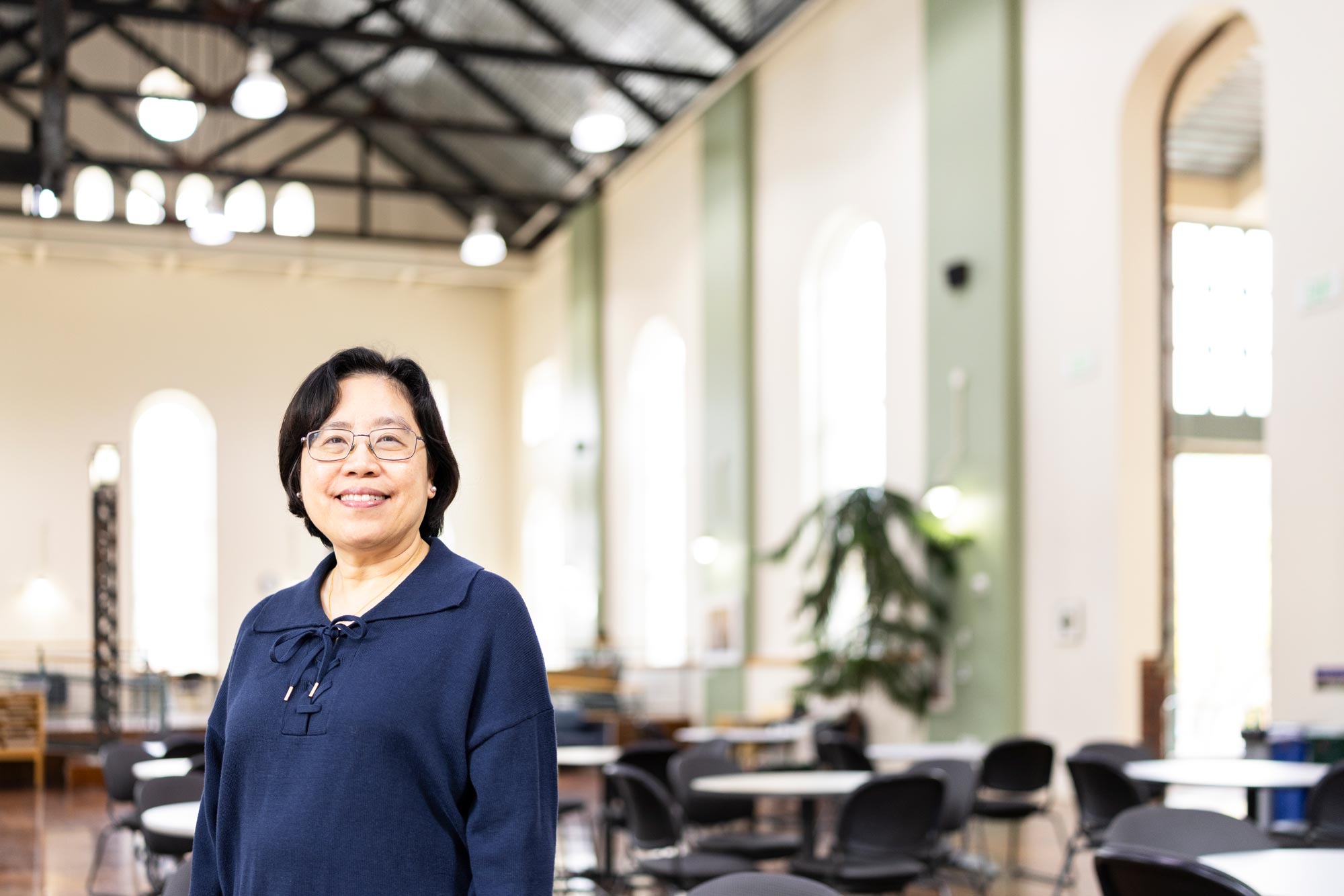
UW Tacoma professor Ka Yee Yeung brings together biology and computer science to reveal the lifesaving insights in medical data—for students, medical clinicians and the rest of us.
Nearly 30 years ago, while the Human Genome Project was mapping the three billion rungs of the DNA ladder, Ka Yee Yeung was at the University of Washington getting an introduction to bioinformatics—the field that combines biology and computer science to better understand medical data such as genetics.
Yeung, a Toronto transplant, was pursuing her UW doctorate in computer science, and a seminar professor paired her with a biology classmate for a project. Like most group work, it was a challenge—she and her partner struggled to bridge different approaches based on their disparate fields of study. But Yeung is one who leads with curiosity.
“I started asking questions: ‘When you say this, what do you mean?’ I realized we could be using the same terms, but mean completely different things,” she says. “The project was stressful. But I learned that having different back- grounds and perspectives greatly enhances what we can accomplish. Looking back, it was a rewarding, eye-opening experience. It completely changed what I wanted to do.”
It was her first encounter with the kind of interdisciplinary teamwork that has come to define both her career in bioinformatics and her ethos as a professor at UW Tacoma, where she holds the Virginia and Prentice Bloedel Endowed Professorship. And it would set her on the path to the life-changing, lifesaving work at the intersection of computer science and medicine.
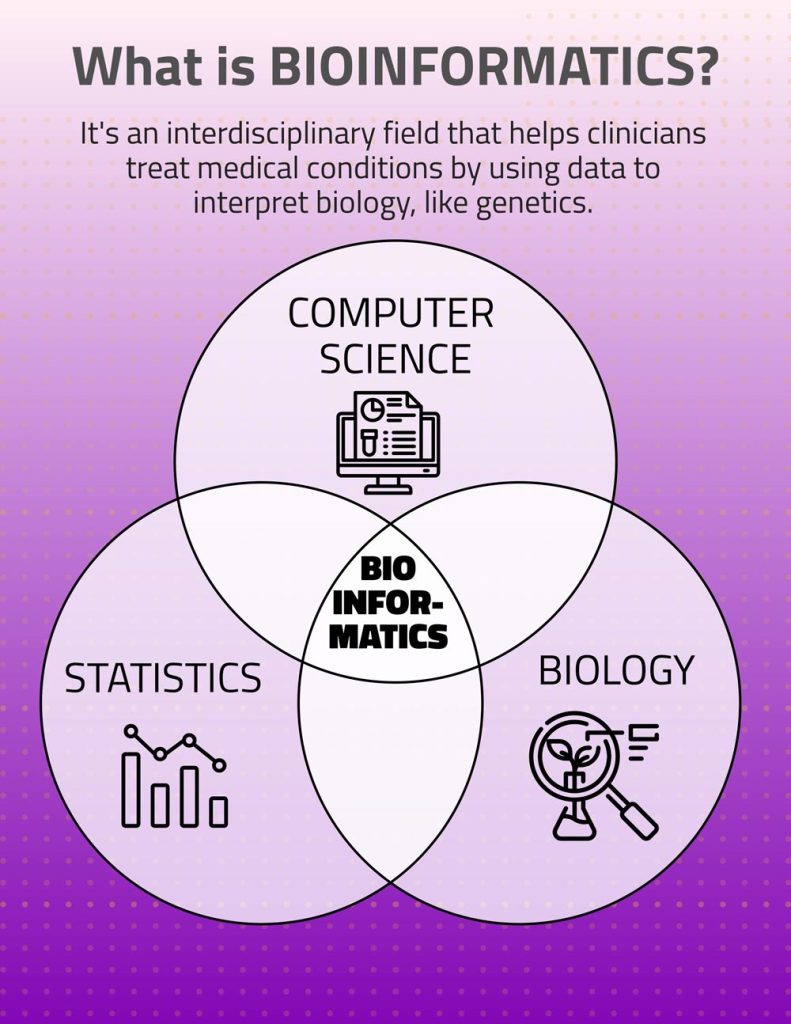
Bioinformatics is collaborative and cross-disciplinary, using computer algorithms to analyze and interpret biological data, like those in genetic mapping. From the time Yeung earned her doctorate in 2001 and became a research scientist at the UW School of Medicine’s Department of Microbiology, she’s dedicated her career to writing code and developing tools to help medical professionals gain crucial insights from data—and sharing that knowledge with students.
In 2014, Yeung became a professor in the UW Tacoma School of Engineering & Technology, while retaining an adjunct role at the School of Medicine. She’s seen a lot change during her years studying, working in and teaching bioinformatics. Producing genetic data used to involve multiple steps: A biologist would take a DNA sample, then prepare it in a lab to be read by a high-tech machine called a sequencer. The digital data file—spelling out the exact combinations of adenine, cytosine, guanine and thymine found in every molecule of the DNA sample—would be handed off to a computer scientist like Yeung to run specialized software that pieces the information together into a genetic blueprint. She’d share the result with the biologist, who’d examine the spreadsheets, flag any places where the data wasn’t adding up and send it back.
“That’s a lot of inefficiencies!” Yeung says. “We’re trying to democratize big data analysis, so everyone is able to do it in an interactive way.”
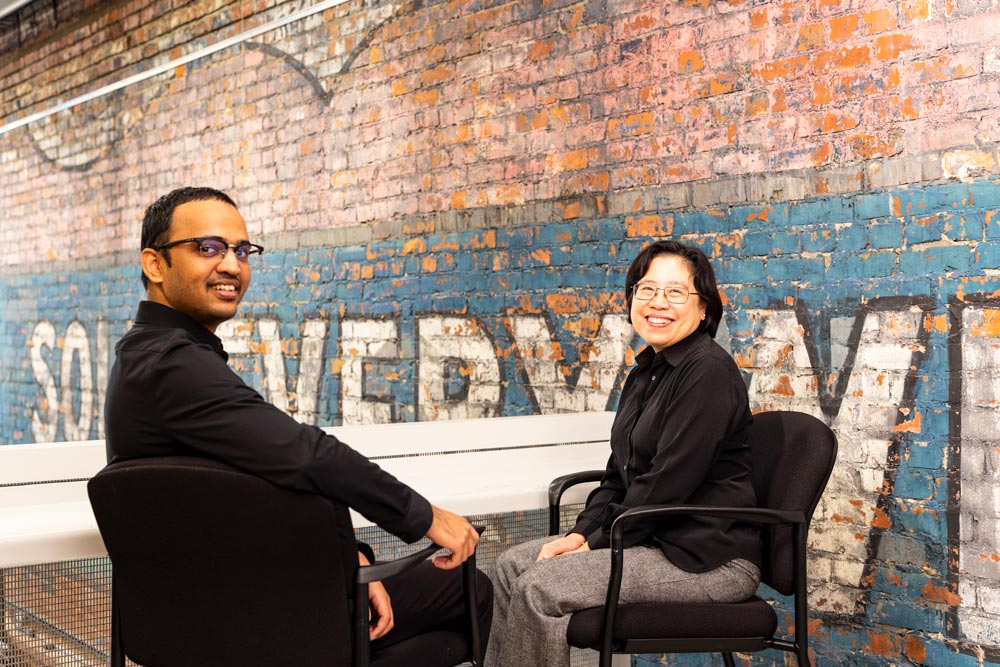
Rohan Avireddy, left, a doctoral student in Yeung’s lab, appreciates his mentor’s advocacy and support via the Virginia and Prentice Bloedel Endowed Professorship.
One of her greatest achievements to this end is BioDepot Workflow Builder, open-source software Yeung co-founded with fellow UW Tacoma professor Ling-Hong Hung. It allows researchers to drag and drop individualized tools and build a step-by-step process for analyzing their data. Yeung explains that each tool handles one part of the process, so it’s easy to make changes without starting from scratch or relying on a computer scientist to run it.
Ever a collaborative thinker, Yeung says tools like this, which are powered by machine learning, are designed to be a partnership between human researchers and artificial intelligence. Coders save a great deal of time by working with AI tools, but “the human in the loop is very important, to check both the code and the results.”
“The applications are wide-ranging. It’s such a blessing to work with people from different expertise and perspectives.”
Ka Yee Young, Professor, UW Tacoma School of Engineering & Technology
Dr. Cecilia Yeung (no relation), a molecular hemato- pathologist, works with Ka Yee Yeung to implement and refine these tools to make medical data more approachable. A professor in the UW School of Medicine Department of Pathology and Laboratory Medicine, Cecilia holds a dual appointment as professor in the Fred Hutch Cancer Center’s Translational Science and Therapeutics Division. Her area of expertise is understanding human genome sequencing and how it contributes to cancer biology. Working with Ka Yee’s team, she says, “has helped us build a pipeline for data analysis so we can get research-level data to patients— where it can be digested, understood and then turned into actual meaningful results.”
Before their collaboration, it could take three weeks to analyze a single case. But now, in preclinical trials, turnaround times “from patient samples hitting our door to when we’re able to release reports is 8 to 12 hours.” That could give a person with leukemia, for example, the chance to benefit from immediate targeted therapy.
These technological tools can benefit not only patients, but also the researchers and clinicians who can now process information faster and with greater understanding, no coding experience required. Results like this—quicker processing, ease of use and more aha moments of critical insight—are what Ka Yee Yeung loves about interdisciplinary work.
“Breaking the silos between departments, between schools—it’s everything,” she says. “The applications are wide-ranging. It’s such a blessing to work with people from different expertise and perspectives.”