Solutions
March 1, 2008

Sea levels on the rise
Melting glaciers in Greenland and Antarctica, combined with other effects of global climate change, are likely to raise sea levels in parts of Western Washington by the end of this century.
December 1, 2007

Obesity & economics
UW researchers found that the more affluent the neighborhood, the lower the obesity rate.

Soul searchers
If you kept changing your major and rethinking your career options while you were a UW student, you had lots of company, according to the first truly comprehensive study of undergraduate education in the nation—UW SOUL.
September 1, 2007

Genetics prize winner
According to the Gruber Foundation, the human genome would have been “an impossible jigsaw puzzle” without the work of UW Medicine and Genome Sciences Professor Maynard Olson.
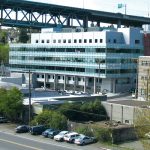
Honoring a legend
The University will salute UW Genome Sciences and Biology Professor Benjamin Hall Oct. 17 when it dedicates its newest research facility in his honor.
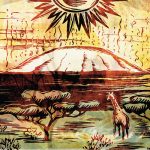
Woes of Kilimanjaro
UW researchers say global warming has nothing to do with the decline of Kilimanjaro’s ice, and using the mountain in northern Tanzania as a “poster child” for climate change is simply inaccurate.
Record research funding
The University of Washington received over $1 billion in grant and contract research funding for 2006-07, marking the first time it has reached this level.

$1 billion for research
Word came in August that the University of Washington finally had hit an elusive target—last fiscal year, more than one billion dollars in research funding poured into the University.
June 1, 2007

Bad blood
As many as 3 million Americans are carrying the hepatitis C virus — but most don’t even know it. The UW is trying to crack its code before more potential carriers get the bad news.

Toddlers take a cue
For the first time, UW researchers have confirmed that toddlers engage in “emotional eavesdropping”—changing their own behavior in response to an emotional exchange that does not involve them.

Ocean blues
Since the Industrial Revolution, Earth’s oceans have swallowed nearly half of all fossil-fuel carbon emissions. Damage could be reaching the tipping point.
March 1, 2007
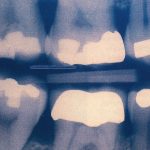
The metal debate
A pioneering UW study confirms that metal dental fillings are safe, but critics still aren't satisfied.

Immigrant mental health
Immigrants from Asia have lower rates of psychiatric disorders than American-born Asians and other native-born Americans, according to the first national epidemiological survey of Asian Americans in the United States.
Burial at sea
Some people will go to great lengths to obtain a dead whale. That includes David Duggins, supervisor of marine operations at the UW's Friday Harbor Laboratories.
December 1, 2006

New generation
UW scientists have made important first steps toward the day when they will be able to grow livers, hearts and other replacement tissue from stem cells.

Cool idea
University of Washington researchers have succeeded in building a cooling device tiny enough to fit on a computer chip.
September 1, 2006
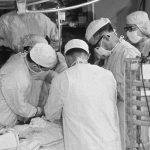
50 years for the heart
Fifty years ago, the UW perfected its own heart-lung machine and did the first open-heart bypass surgery in the West. Now advances are coming so quickly that they could put future cardiac surgeons out of business.

Fighting the blues
Taking a page from Alcoholics Anonymous and similar groups, UW researchers successfully tested a brief, low-cost “intervention” to deal with depression.
June 1, 2006
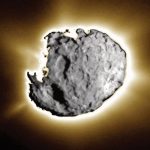
Gathering dust
The longest round trip in human history has brought back evidence that could yield clues to the origins of the solar system.

Funny papers
A map in The Daily seemed to be a helpful aid for campus newcomers. But those who followed it soon found themselves hopelessly lost—and miles from their intended destinations.