Research
March 1, 2014
Genetic echo
Researchers led by Dr. John Stamatoyannopoulos have discovered a second code hiding within DNA. This second code contains information that changes how scientists read the instructions contained in DNA and interpret mutations to make sense of health and disease.

Got data. Now what?
At the UW, the best minds are collaborating to ask questions and harness the power of “Big Data” to find answers and seek solutions to advance the common good.
December 1, 2013

Autism onset
Between ages 3 and 10, children with autism spectrum disorder exhibit distinct brain chemical changes that differ from children with developmental delays and those with typical development, according to a new study led by UW researchers.

Distracted drivers
In Washington state’s first study to examine driver use of electronic devices, UW investigators saw that more than 8 percent of drivers were engaging with such devices behind the wheel, higher than previously estimated.
Brain bonding
UW researchers have performed what they believe is the first noninvasive human-to-human brain interface, with one researcher able to send a brain signal via the Internet to control the hand motions of a fellow researcher.

Robot bonds
Julie Carpenter, who earned her doctorate in education from the UW in June, isn’t interested in fantasy movie robots. She wants to know something more serious: the social relationship between robots and their operators in the military.
September 1, 2013
The inspiration inquiry
Expanding the boundaries of knowledge in dance, theater and other performing arts requires research of a different stripe.

Wi-Fi lifestyle
Thanks to gesture-recognition technology developed by University of Washington computer scientists, you may soon be able to brew a pot of coffee, shut off your computer, and turn up the stereo with just a few waves of your hands.
Pollution pall
For years, scientists regarded the decades of drought in Central Africa that reached an apex in the 1980s as the result of poor agricultural practices and overgrazing. New University of Washington research, however, shows that the drought was caused at least in part by Northern Hemisphere air pollution.
Finding phosphorous
Life on Earth may have never come to exist if not for some meteorites that pelted the planet billions of years ago.
Keeping kids clean and sober
An answer to teen drug use isn’t quite as simple as “just say no.” Many teenagers know they are supposed to say no to tobacco, alcohol and other drugs but they don’t know why.
June 1, 2013
Planet unearthed
Using the Kepler telescope, scientists have been looking for Earth-like planets beyond the solar system since 2009. UW associate professor of astronomy Eric Agol has discovered perhaps the most Earth-like planet yet found outside the solar system.
Keeping cool
UW scientists have provided fresh insight into an issue that has vexed civilization since the beginning: how to keep a drink cold on a hot day.
December 1, 2012

More than 'junk'
For decades most scientists thought the bulk of the material in the human genome—up to 95 percent—was “junk DNA.” It now turns out much of this “junk” actually contains the vital instructions that switch genes on and off in all kinds of different cells.
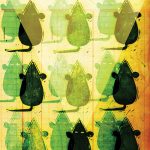
Blind mice see the light
Researchers who injected a new chemical into the eyes of blind mice made the mice sensitive to light, a finding that could hold promise for people with disease that cause blindness.

Smarter on asthma
Researchers at the UW and Seattle Children’s have developed a smartphone app that gives an accurate reading of lung function.
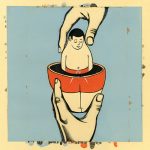
Fibbing on fat
When it comes to reporting whether we’ve lost or gained weight over the previous year, we may not be lying exactly but many of us are guilty of wishful thinking.
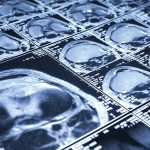
Better imaging
Lodespin Labs, a new company founded by UW researchers in the Department of Materials Science and Engineering with support from UW’s Center for Commercialization, may help solve a worrying problem in health care.
September 1, 2012

Stat star
Awards and honors aren’t what it’s about for the School of Public Health’s Daniela Witten, assistant professor in the nation’s No. 1 rated Biostatistics Department. She’s in it for the work.
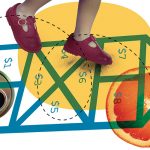
USDA report off base
If you fill your shopping cart with healthy foods, it will cost you less than if you purchased highly processed “junk” food full of high fat and sugar content, the U.S. Department of Agriculture says. Not so, says Adam Drewnowski, professor of epidemiology in the UW School of Public Health.