Solutions
June 1, 2010
Thought process
You might not think what you think you think. That’s the conclusion arising from the Implicit Association Test, a tool developed by UW Psychology Professor Anthony Greenwald to measure people’s unconscious attitudes.

Greener roads
A UW team has helped develop the world’s first system to rate the sustainability of road construction and maintenance projects.
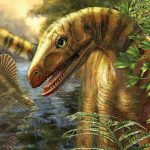
Aging dinosaurs
A new fossil find suggests that the roots of the dinosaurs’ family tree are deeper than previously thought.
March 1, 2010
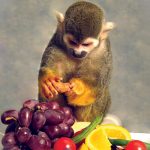
Seeing red
Jay and Maureen Neitz, who joined the UW School of Medicine faculty in 2008, reported in the journal Nature that they had cured color-blindness in two squirrel monkeys using gene therapy.
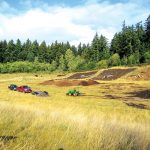
Getting the dirt
In a barren pit on Vashon Island, UW School of Forest Resources graduate student Kate Kurtz is growing a forest—and fighting climate change along the way.
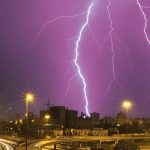
Lightning listener
Call him the lightning listener. Robert Holzworth, UW professor of earth and space sciences, directs the World Wide Lightning Location Network (WWLLN), a series of stations around the globe that monitor pulses of radio waves generated by lightning strokes.

Breast cancer detection
An inexpensive, noninvasive test can accurately detect breast cancer in younger women, and has the potential to spare thousands from unnecessary surgeries and biopsies, according to new UW research.
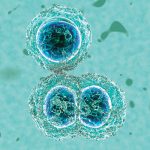
MRSA digs in
Dangerous antibiotic-resistant bacteria are gaining a foothold in the natural environment, suggests recent research from the UW School of Public Health.
December 1, 2009
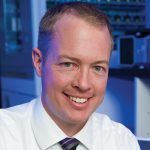
Turning to tech
Two University of Washington alums—Steve Singer, ’81, and Ryan Oftebro, ’95, ’03—are carrying on the School of Pharmacy’s tradition of pioneering innovations.

New prescription
The practice of pharmacy is changing these days, thanks in large part to the innovations developed by the University of Washington School of Pharmacy, a national leader in health-care research and in meeting the needs of the community.
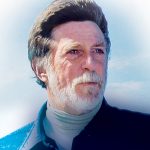
Record grant
The University of Washington is slated to receive its largest-ever federal award—$126 million over 5+ years—to connect the ocean to the Internet.
Vision for contacts
Babak Parviz’s vision of the future can be summed up in one word: plastic. A circle of flexible plastic imprinted with tiny electronic circuits, that is.
Self-destructing data
“The Internet never forgets.” That’s Tadayoshi Kohno, an assistant professor of computer science and engineering, explaining the inspiration behind a new program called Vanish, which causes data posted online to self-destruct.
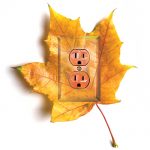
Tree power
Researchers at MIT discovered electrical currents in trees last year, and now a UW team has built an electronic circuit that runs on tree power.
September 1, 2009
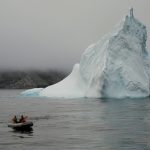
Long look underseas
Seagliders, under development since 1995 at the UW’s School of Oceanography and Applied Physics Laboratory, have repeatedly set world endurance and range records for autonomous underwater vehicles.
Clues to autism
UW scientists contributed to two recent studies that are beginning to unlock the genetic underpinnings of autism and related disorders.
Responding to H1N1
When a new influenza virus, Influenza A H1N1, or “swine flu,” emerged last spring, Anne Marie Kimball, a professor of epidemiology and health services at UW School of Public Health, was on the front lines of the information response.
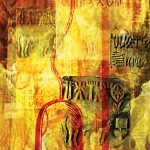
Tablets of mystery
An ancient mystery, a modern-day academic debate, and state-of-the-art computer science—these are the elements of recent research by Rajesh Rao, UW associate professor of computer science and engineering.
June 1, 2009

Sweet spot
Parents may be able to chalk up their children’s preference for the tooth-achingly sweet to growing pains. That’s the possibility raised by new research led by UW Professor of Dental Public Health Sciences Susan Coldwell.
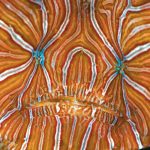
Rare fish find
When it comes to weird fish, Ted Pietsch, a UW professor of aquatic and fishery sciences and curator of fishes at the Burke Museum, has seen it all. But the creature discovered early last year off Ambon Island, in the Indonesian archipelago, surprised even him.