Research
June 1, 2010
Thought process
You might not think what you think you think. That’s the conclusion arising from the Implicit Association Test, a tool developed by UW Psychology Professor Anthony Greenwald to measure people’s unconscious attitudes.
Greener roads
A UW team has helped develop the world’s first system to rate the sustainability of road construction and maintenance projects.
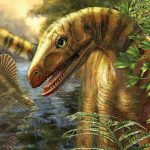
Aging dinosaurs
A new fossil find suggests that the roots of the dinosaurs’ family tree are deeper than previously thought.
March 1, 2010
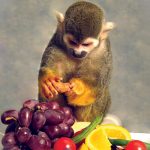
Seeing red
Jay and Maureen Neitz, who joined the UW School of Medicine faculty in 2008, reported in the journal Nature that they had cured color-blindness in two squirrel monkeys using gene therapy.
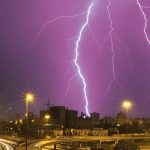
Lightning listener
Call him the lightning listener. Robert Holzworth, UW professor of earth and space sciences, directs the World Wide Lightning Location Network (WWLLN), a series of stations around the globe that monitor pulses of radio waves generated by lightning strokes.
December 1, 2009
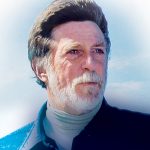
Record grant
The University of Washington is slated to receive its largest-ever federal award—$126 million over 5+ years—to connect the ocean to the Internet.
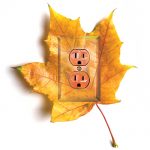
Tree power
Researchers at MIT discovered electrical currents in trees last year, and now a UW team has built an electronic circuit that runs on tree power.
September 1, 2009
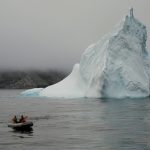
Long look underseas
Seagliders, under development since 1995 at the UW’s School of Oceanography and Applied Physics Laboratory, have repeatedly set world endurance and range records for autonomous underwater vehicles.
Clues to autism
UW scientists contributed to two recent studies that are beginning to unlock the genetic underpinnings of autism and related disorders.
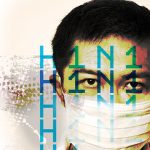
Responding to H1N1
When a new influenza virus, Influenza A H1N1, or “swine flu,” emerged last spring, Anne Marie Kimball, a professor of epidemiology and health services at UW School of Public Health, was on the front lines of the information response.
Tablets of mystery
An ancient mystery, a modern-day academic debate, and state-of-the-art computer science—these are the elements of recent research by Rajesh Rao, UW associate professor of computer science and engineering.
June 1, 2009
Sweet spot
Parents may be able to chalk up their children’s preference for the tooth-achingly sweet to growing pains. That’s the possibility raised by new research led by UW Professor of Dental Public Health Sciences Susan Coldwell.

Feeling the heat
A study commissioned by the state Legislature is the most comprehensive look yet at how climate change is likely to affect the state.
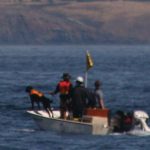
Orca's best friend
The best way to gauge a whale’s health is to study its scat, and that requires a little Lab work.
March 1, 2009

Songbirds' secrets
UW Professor of Psychology and Zoology Michael Beecher wanted to understand the social dimensions of learning how and from whom birds learn to sing in the wild. So he and his students began tramping through the thickets of Seattle's Discovery Park to find out.
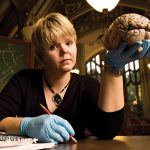
Knowing the enemy
A little more than 10 years ago, Kristin Swanson, a graduate student in applied mathematics at the UW, began work on an audacious project: an equation to model the growth and spread of brain tumors in individual patients.
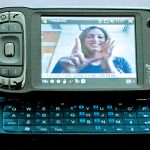
Lifelines and vital signs
Richard Ladner is developing a variety of accessibility technologies to help people who are blind or deaf use computers, communicate and — perhaps closest to his heart — learn.
December 1, 2008
Pepper protection
In a recent study of wild chili plants in Bolivia, researchers discovered that spice levels increase in peppers growing in areas threatened by fungus-carrying insects.
Potential breakthrough
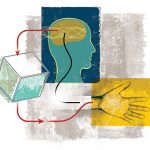
Aided by external wires that rerouted signals from their brains, two macaques regained control of their paralyzed wrists and played a simple video game.
Clean and green
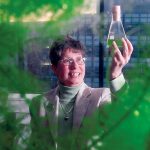
If, in 15 years, you’re driving a car powered by pond scum, you’ll probably have Rose Ann Cattolico to thank. The UW biology professor thinks algae is the most promising source of alternative energy out there.